As Spring 2017 was bursting forth across central Europe I spent a pleasant 5 days in Vienna. I knew from a previous visit that it was well known for its Heurige (wine taverns) out in the suburbs and its local white varietal field blend known as Gemischter Satz. What I hadn’t appreciated, was that the Viennese winemaking fraternity have well and truly thrown off the yoke of the anti-freeze scandal of the eighties and embarked on making in the main organic/biodynamic high quality wines that we see little of in the UK!
A little pre trip research indicated that the two must visit winemakers were Rainer Christ of Weingut Christ and Fritz Wieninger of Weingut Wieninger. Bacchus’ divine intervention was surely at play during my trip as a phone call to both Rainer and Fritz yielded two of the most enjoyable and interesting tasting visits that I’ve had the pleasure to indulge in across three continents!
Top 3 Viennese Wine Facts:
- Only capital city to have vineyards within the city limits.
- Wine has been grown in Vienna for over 2700 years.
- There are over 700 hectares of vines planted.
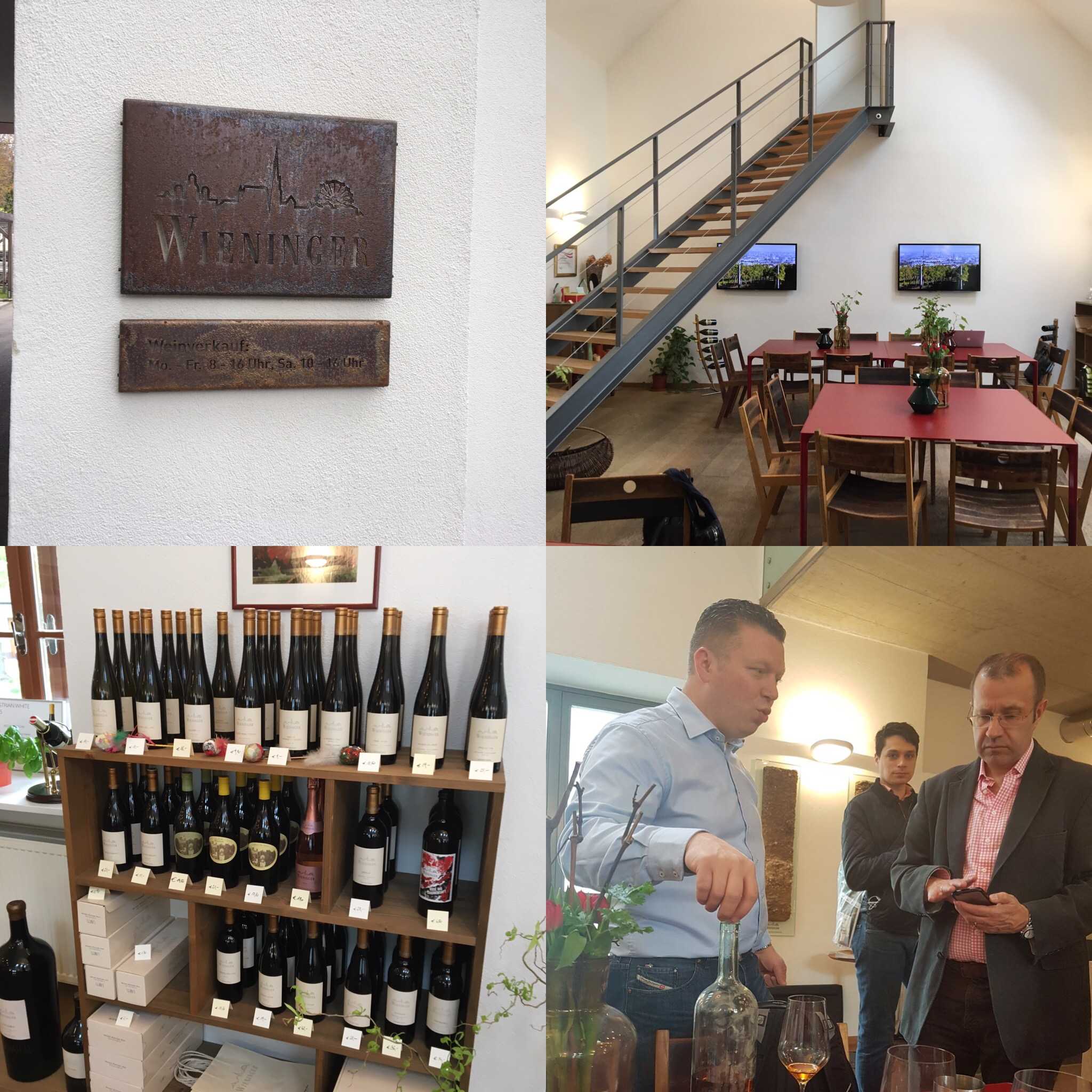
Weingut Wieninger
The wine district is no more than a 40 minute drive from the centre of Vienna. Leaving behind the imperial architecture of the Hapsburg era, passing semi industrial suburbs we climb the hills that surround the city and enter the enchanting area of the Heurige.
In the tasting room we are introduced to the sommelier and the dozen or so wines that we will try. Its a wine geeks paradise with display boards adorning the walls exhibiting the different types of terroir that make up the estate. It’s made really cosy with the glow of a wood burning fire.

My enthusiasm for sampling these wines rubs off on some friends who join me for the tasting. Its a throughly social experience and always enhanced by sharing the experience of exploring new wines.
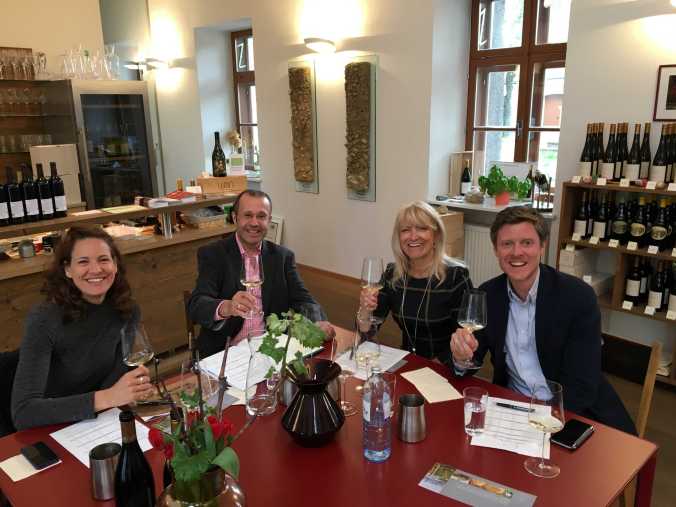
The tasting gets under way!

Kicking off the proceedings
Sekt Rose Cuvée Katharina
A blend of 80% Pinot Noir and 20% Zweigelt. Fermented in the methode traditionelle with just 5g/L dosage. Pale salmon in appearance with a nose of strawberry mousse that is of medium (-) intensity. Dry with medium (+) acidity, a feature of early picking, medium (-) body, medium alcohol with more notes of strawberry mousse and autolytic aromas on the palate. Good balance and complexity a good wine drinking well now.
Terroir
One of the many great things at Weingut Wieninger is that opportunity to really experience the impact that contrasting terroir have on a wine.
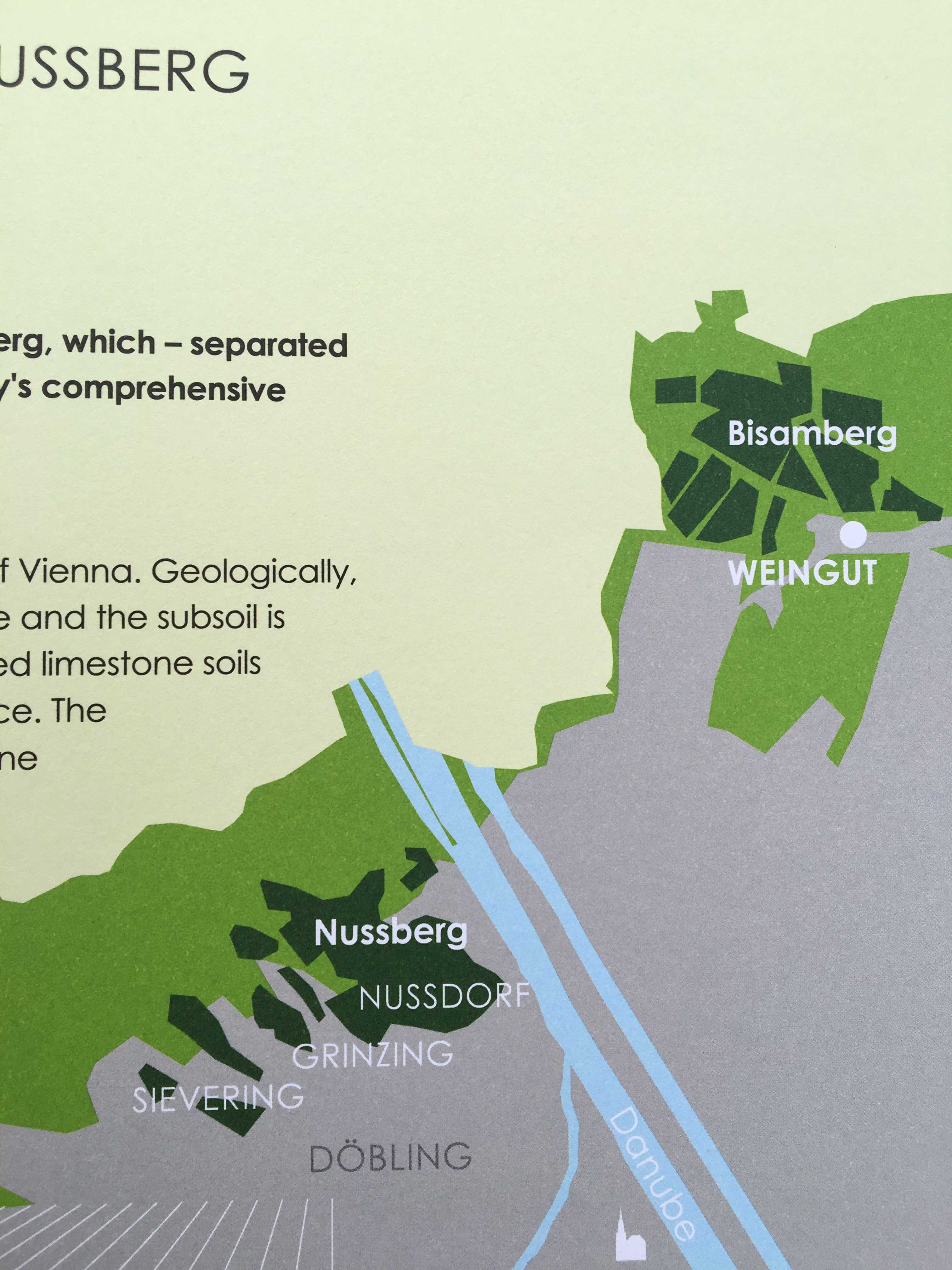
Our first introduction to this was in sampling Gruner Veltliner made on either side of the Danube from the Nussberg and Bisamberg sites.
Nussberg
Located on the west bank of the Danube is composed of shell limestone and weathered limestone soils with a subsoil of limestone rocks. This high limestone content yields excellent minerality. The clay content is distinctly higher than the Bisamberg on the opposite bank. The heavy soil with high limestone produces wines with a creamy texture, darker fruit tones and moderate acidity with a pronounced minerality. Suiting the local blend Gemischter Satz, Riesling, Traminer and Gruner Veltliner.
Bisamberg
Located on the east bank of the Danube. With a climate that has more wind, more sun and 20% less rain. Light and sandy loess soil that suit red varietals and Chardonnay with the later making a style that is fresh and light with a vibrant acidity.
Gruner Veltliner Nussberg 2016
Medium gold in appearance with nose of white flowers and nettle. On palate a sharp granny smith apple frehsness and acidity with stoney minerality from the limestone. Lovely balance and expression of the Nussberg terroir.
Gruner Veltliner Bisamberg Herrenholz 2016
Medium gold in appearance. A nose that is a mix of white flowers and fruit salad. On the palate, dry with a medium plus acidity, exquisite minerality, medium body, with notes of fruit salad and peach.
Riesling Nussberg 2015
The grapes for the Riesling Nussberg are usually from the Preussen on the Nussberg, but because of the small yields and high ripeness, grapes from other vineyards on the Nussberg – the Obere Schoss and Purgstall – were also used. Preussen translates from the German for Prussia and take its name from the site of the camp of the Prusssian army when defending Vienna in wars past. It was also a rose garden and its this feature which gives rise to a characteristic of this wine.
Appearance is pale gold with hints of green, aromatic nose of lychee, peach jam with honey and hints of petrol showing. On the palate dry with high acidity, medium plus body, medium alcohol culminating in a lengthy stone fruit infusion of peach and apricot.

Wiener Gemischter Satz DAC 2016
A fragrant and fresh young wine with a spicy fresh character. Pale gold in appearance with a dry refreshingly high acidity, medium alcohol and medium plus body with a fruit salad melange from the wider variety of grapes used. Medium finish.
Wiener Gemischter Satz DAC Bisamberg 2016
The Bisamberg soil is comprised of light, sandy loess covering massive limestone and is very calcareous. The varieties growing in this vineyard, which is approximately 40 years old,are Weissburgunder (40%), Grauburgunder (40%) and Chardonnay (20%). Appearance is pale gold with a nose of smoky grapefruit and stone fruit. Dry with high acidity, medium body and a medium plus finish.
Wiener Gemischter Satz DAC Nussberg 2015
This Wiener Gemischte Satz consists of 9 grape varieties – Weissburgunder, Neuburger, Welschriesling, Grüner Veltliner, Sylvaner, Zierfandler, Rotgipfler, Traminer and Riesling. All handpicked and processed together following the careful elimination of any botrytised grapes. Fermentation in 75% cooled steel tanks and another 25% in large old oak barrels. After 10 months maturation on the fine lees the different tanks and barrels were put together and the wine was bottled.
This wine exudes a nose of complex aromas a heady cocktail of of lemon, peach, pineapples, herbs and wild flowers. An aposite expression of Gemischter Satz whose DAC rules dictate that as a field blend all the grape varietals are grown, harvested and fermented together even though they ripen at different times! The skill of the winemaker judges the best trade off between under and over ripe fruit and produces this distinctive wine style. With an increasingly large cohort of growers adopting organic and biodynamic principles many of theses field blends see wild flowers and herbs growing alongside the vines influencing the terroir and its precious fruit as well as increasing the biodiversity of the area.
The palate dry with medium plus acidity, medium alcohol and medium plus body, primary fruit aromas follow through from the nose and are integrated and balanced with secondary aromas of butter and toast ending in a rich mouthfeel with of long finish.

Chardonnay Classic 2016
The grapes for the Chardonnay Classic 2015 are almost solely from Vienna’s Bisamberg vineyards, though some come from a small single vineyard on the Nussberg.
The wine is a very pale gold in appearance, with a nose of citrus and some stone fruit. On the palate it is dry with high acidity with medium body. Culminating in a medium plus finish the wine is drinking well now.
Chardonnay Grand Select 2015
The grapes for the Chardonnay Grand Select 2013 came exclusively from the Wiener Bisamberg, specifically from the two oldest and best Chardonnay vineyards of the winery – Ried Breiten and Ried Kritschen. For the fermentation, the juice spent a short time in stainless steel tanks and was then transferred into 60%-new and 40%-used barriques. It then spent just under 30 months in oak.
The wine is medium gold in appearance. On the nose there are notes of cedar and vanilla with string aromas of citrus and stone fruits. The palate has notes of citrus and apricot with exotic fruits such as melon and pineapple wound in a creamy texture from the malolactic fermentation and a pleasant toasty from the batonnage.
The wine has very good balance, a lengthy finish and complexity and will undoubtedly age well. Its a great example of a very good Chardonnay.
Chardonnay Grand Select 2013
This vintage was not available for tasting and there are few bottles left for sale but we managed to secure one and tasted it the next day although I’ll include the tasting notes here for continuity.
Deep gold in appearance. Nose pronounced secondary aromas of butter and toast while still exuding the exotic flavours of pineapple and mango. On the palate the wine is dry, with medium plus acidity and full body. There is more secondary flavours of butter and toast, and primary fruits of pineapple following through from the nose, culminating in long and richly textured finish.
An excellent example of a Chardonnay and my favourite wine of the vineyard.

Pinot Noir Select 2015
Maturation in Burgundian barriques, 25% of them new. Pale ruby in appearance. Nose of ripe red cherry with delicate spice from the new oak. On the palate dry, with medium body, medium plus acidity medium soft tannin and medium alcohol with more cherry fruit. The elegance of a Burgundian Pinot with a pure finish and good potential for development.
Wiener Trilogie 2014
The Wiener Trilogie 2014 is a blend comprised of 70% Zweigelt, 20% Cabernet Sauvignon and 10% Merlot, with the grape varieties harvested at different times. Medium ruby in appearance, this wine reveals an intense red berry nose with delicate spice from 20% exposure to oak, green pepper and cigar leaves. On the palate are more juicy, red cherry fruit notes with gentle tannins, dry with medium plus acidity. A great everyday day drinking wine.
St. Laurent Grand Select 2013
The wine is matured in oak barrels for up to 26 months. Dark ruby garnet in appearance. A nose of red cherry with herbs and tobacco notes. On the palate more red cherry and blackcurrant juicy fruit exudes sweetness. Dry with medium plus body and well integrated tannins also hints of tarmac as a indication of ageing.
Danubis Grand Select 2008
Danubis Grand Select 2008 consists of 50 % Cabernet Sauvignon, 40 % Merlot and 10 % Zweigelt. 30 months, barrique maturation and a further one year in bottle before release. Nose of black fruits with hints of tobacco and spice. More juicy blackberry fruits follow through on the palate giving a rich mouthfeel with firm rounded tannins.
Blown away by the combination of volume and quality of wines and the wonderful hospitality afford us we head back into the city unequivocal and unanimous in agreement that Viennese wines rock!
These wines are available in the UK from
Connolly´s Wine Merchants
Arch 13, 220 Livery Street
Birmingham. B31EU
England
show location Phone number: +44 12123 69269
Fax number: +44 1212 332 33
Email: sales@connollyswine.co.uk
http://www.connollyswine.co.uk
Liberty Wines Ltd
6 Timbermill Way
LONDON
SW4 6LY
show location Phone number: +44 (0) 20 7819 0315
Fax number:
Email: order@libertywines.co.uk
http://www.libertywines.co.uk
In Part 2 we visit Rainer Christ vineyard and look forward to sharing more Viennese delights with you.
 tims food and wine travels