Wines of Vienna – Part 2 Rainer Christ

This post is so overdue if it were a library book the fine would be equivalent to the GDP of small country!

The truth is, in the fast paced world of social media I went for the instant gratification of the Instagram post and story rather than the reflective and therefore more time consuming yet rewarding Blog post.

Two things changed last week….

(1) I posted for the first time since 30th July last year!  Like the rest of the world, I’m on Lockdown and  have had a little more time on my hands!

(2) I received really positive feedback from some of my followers who are working on the front line in the battle against Coronavirus in the NHS who said they enjoyed reading my Post on downtime from their valiant duties!

I can’t deny that I get enormous pleasure from writing and spurred on by this positive feedback will commit to upping the anti and delivering more content henceforth!

My second visit to Vienna was in March 2017 and while there on work business in my previous non wine life I was determined to visit a few heuriger (wine taverns) and learn as much about Viennese wine as I could!

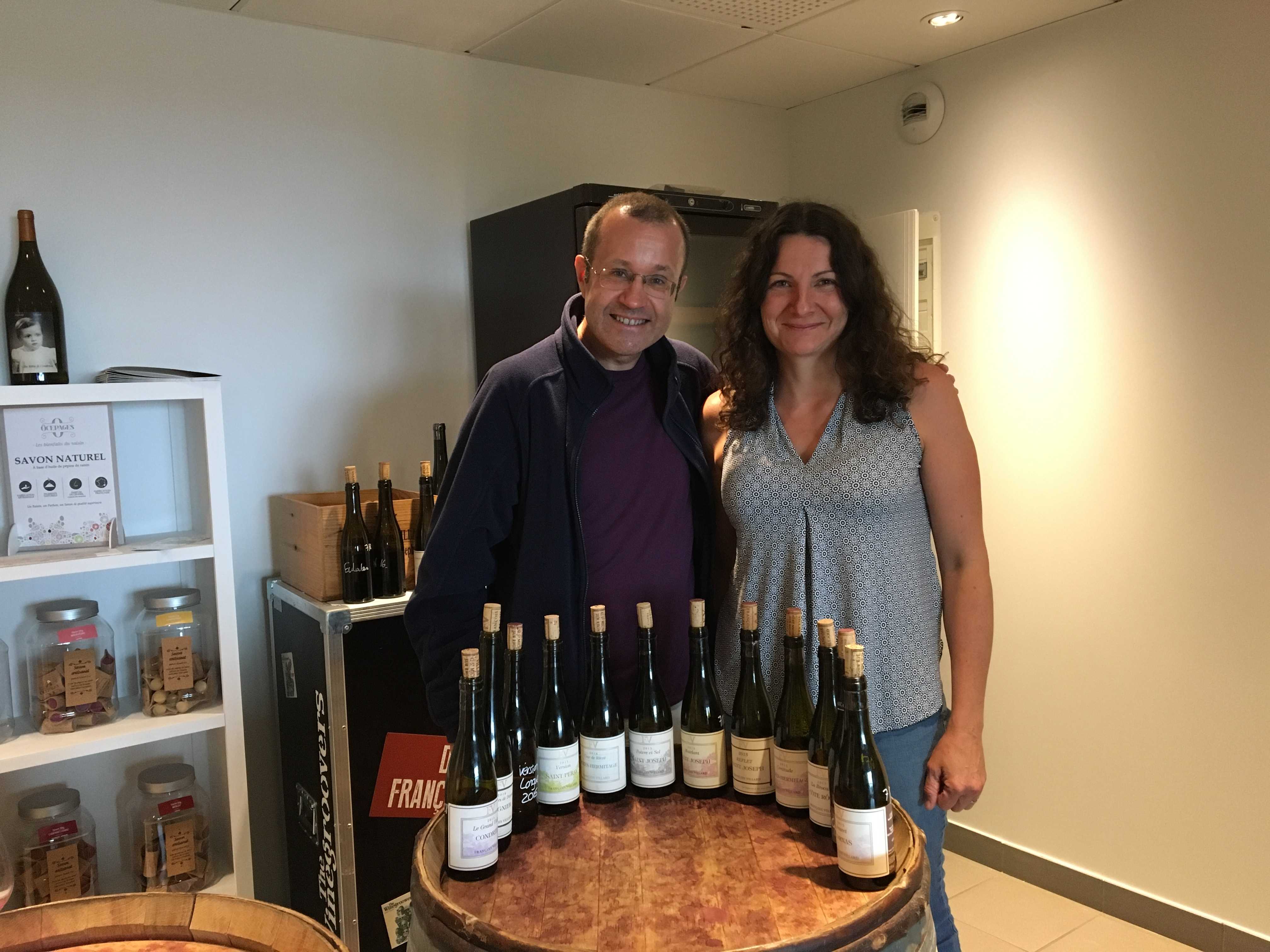
In a previous post I covered Viennese Wine; The best of Austrian wine from Grüner Veltliner to Gemischter Satz!Part 1 – Weingut Weininger while on the same trip, in this post I will take an in depth look at the wines of Rainer Christ. A winemaker who has a special place in my heart as while searching for his wines on my return to England several years later it led me to Alpine Wines, http://www.alpinewines.co.uk , his UK distributor.

As I started my new life as a self employed wine consultant, last year, it was a chance meeting with Alpine Wines that led to me working with them as trade Business Development Manager.

Back to the that awesome visit to Weingut Christ in 2017; Weingut Christ is located in the Jedlersdorf (21st District) about a 20 min cab ride from the Spanish Riding School our base in the centre of Vienna.

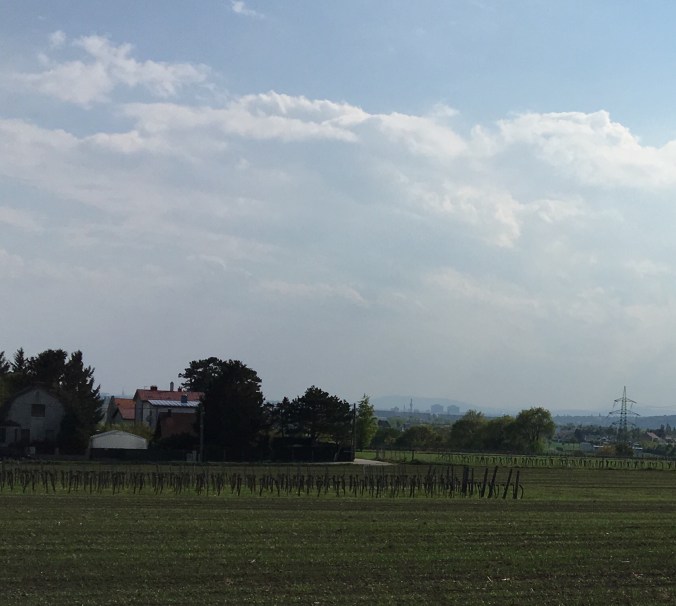
Tasting a range of his wines and learning about the revival of the Gemischter Satz and its subsequent DAC, I marvelled that Vienna is the only city in Europe to have vineyards within its city limits (Forty Hall in Enfield being the UK exception).
IMG_E0969

Vineyards in the foreground with the high rise blocks of Vienna in the background
IMG_0970

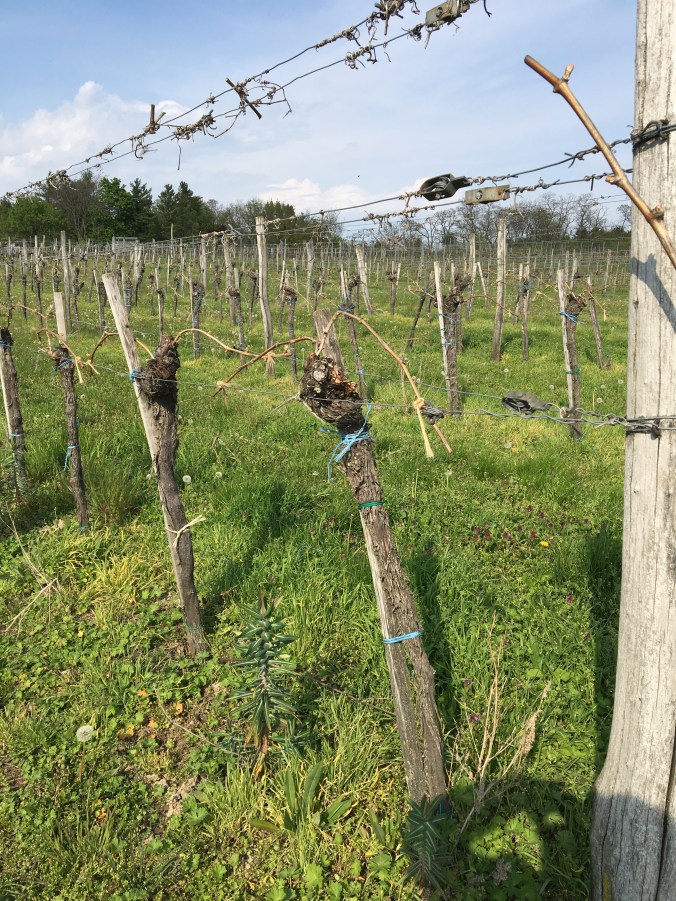
Spring is a great time to visit the vineyards as not too busy and it affords the opportunity to see the vines up close, defying spring frosts to break into bud burst, the first signs that the new vintage is on its growing cycle…..

Rainer’s vineyards are only located on the left bank of the Danube. Mainly around the Bisamberg. His philosophy is trying to show the individual identity of the wine combined with sustainable farming; It’s a fact that Viennese vineyards have been free of insecticides for 20 years! NO herbicides are used either. The trend across Europe is that wine acreage is decreasing but in Vienna this trend is reversed!

Some of the highlights on this trip were these two! There is nothing quintessentially more Viennese than Gemischter Satz. A field blend that used to be popular in Vienna in the last century. Different and complimentary grape varieties were planted together in the vineyard, then harvested and co-fermented together. It helped the winegrower to guard against crop failure through under or over ripe grapes.  It fell out of fashion as single variety wines became more popular as winemakers strove to show off their wine-making prowess and new skills that they had acquired. Thanks to a small band of winemakers (Rainer Christ one of them) this Viennese speciality has not only been revived but has its own appellation in the form of the Wiener Gemischter Satz DAC.

Rules stipulate that the grapes must be grown in a Viennese vineyard, with at least three quality grape varieties used; From Grüner Veltliner, Riesling, Chardonnay, Weissburgunder, Welschriesling and Neuburger but aromatic varieties such as Müller Thurgau, Sauvignon Blanc, Traminer and Gelber Muskateller are also included. All grapes must be grown, harvested and pressed together. The largest portion of any variety is limited to 50% with the third largest proportion being at least 10%.

This Gemischter Satz comprises; Grüner Veltliner, Riesling, Chardonnay, Traminer, the super rare Roter Veltliner and Welschriesling.

The grapes are harvested by hand. Careful handling in the winery focuses on maintaining the varietal character of the wine. Processing is by gravity without pumping and gentle pressing is conducted by use of a pneumatic press. The wine is matured in steel tanks for 6 months and is sterile filtered and is therefore suitable for Vegans.

Tasting note:

Refreshing acidity and minerality with a fine spicy seasoning, notes of green apple, and ripe citrus notes on the nose more evident on the palate. A medium plus finish on the length.

Apart from tasting great and being the signature wine of Vienna there’s another important side to Gemischter Satz, I remember Rainer saying that there’s a greater biodiversity in one hectare of a Gemischter Satz vineyard than in a hectare of Austrian forest!

The Bruch Grüner Veltliner grows on the Bisamberg on a mixture of slate and ice age gravel soils which lend the wines a lovely minerality which fuse with a complex range of citrus notes including white grapefruit and lemon with signature white pepper spice. A great food friendly wine in much the same way that Champagne is happy to handle those bête noire foods like eggs and asparagus.

Mephisto 2014 was a blend of 50% Zweigelt/40% Merlot and 10% Cabernet Sauvignon. A Viennese style Bordeaux Blend if you like! The percentages in the blend change each year to reflect the house style. A very good wine with long finish, great balance and length. Unfiltered with lots of juicy black and red fruits and lots of gentle spice with silky tannins. 

The Zweigelt  2014 another all rounder like the Grüner Veltliner had 25 months  in small French oak barrels with a light toast. It delivered pronounced aromas of pepper spice, and blackcurrants wrapped up in a toasty cedar and vanilla envelope.

While visiting the tasting room and winery I also had the chance to eat like a King in his Heuriger  and sample more of his wines with local Viennese cuisine. It’s a must if you ever get to visit this wonderful city!! It really was an epic way to end some of the most memorable hours that I spent in Vienna and I can’t wait to visit again when the pandemic is over!!

Epilogue:

Since my visit in 2017 I met Rainer again at Prowein in Dusseldorf in 2019 and was due to meet him again at this year’s event as part of the buying trip for Alpine Wines until it was postponed because of the Coronavirus pandemic.
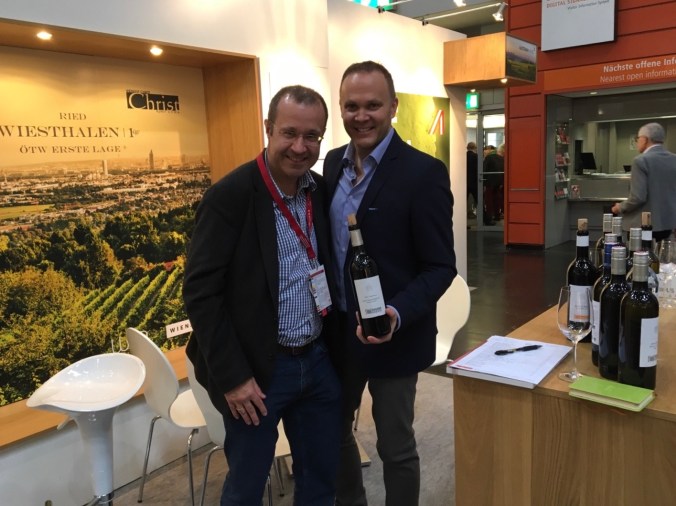
IMG_2173

Re-acquainting myself with Rainer and his wonderful wines at Prowein 2019

I couldn’t possibly conclude this piece without waxing lyrical about my new favourite Christ wine…

I showed that this at the Wines of Austria trade tasting at the Science Museum in London in February 2020 with Alpine Wines and then featured it at a tasting for the Dulwich Wine Society a month later to a rapturous reception.

Christ Vollmonden Weissburgunder  2017 (Wien) – Pinot Blanc 

2017 was a very warm vintage with rich wines

Considered by Austrian wine expert Stephen Brook to be Christ’s most intriguing wine; The oaked VOLLMONDWEIN (full moon wine) from WEISSBURGUNDER (Pinot Blanc) grown on a limestone plateau high up on the Bisamberg 350m above sea level. It’s a cool site that is harvested during the full moon. This single vineyard known as the Ried Falkenberg has chalky mineral subsoil composed mostly of mussel limestone sediment. This makes it the perfect terroir for the Pinot family.

After pressing, the juice is exposed to a smidgen of skin contact for anything up to 4 hours which enables Rainer to keep SO2 to a minimum.  Natural yeasts are used for fermentation which is 75% in stainless/steel tanks and 25% French oak barrels. After fermentation the wine is left on its fine lees for between 6-10 months.

The wines are suitable for Vegans and Vegetarians as Vegan certified as no fining and sterile filtration.

These wines have good ageing potential with it not unusual to be still drinking well 10-12 years after release.

It’s no secret that I love white Burgundy and this wine has a rich mouthfeel that is so Burgundian in style, yet with a lovely freshness and balance that is the sign of quality wine-making and the limestone sediment rounds the party off with a searing minerality.

Pair this with Mushroom risotto, veal. guinea fowl, Poulet-Bresse, rabbit, mushroom dishes and hard cheese

abv 13.5%

R/S 6.9 g/L

T/A 5.8 g/L

£24.76 from Alpine Wines http://www.alpinewines.co.uk


Which wine experience sparked my love affair with wine??

Thinking about which wine experience transitioned me from a wine consumer to wine lover has been a cause for a joyous journey of self reflection!

I cast my mind back to the early nineteen seventies; I grew up in the New Forest and home was a collection of buildings that had once been a old coaching inn many hundreds of years old. What’s more it had a cellar.


I remember the first time my small frame pulled back the huge trapdoor and I descended into the cellar below. Like a figure from ancient mythology waiting to cross the river Styx. I think my imagination was running wild and I saw a three headed dog before I fumbled for the light switch! As the 40W bulb partially illuminated the cellar I saw several rows of dusty bottles. As a curious ten year old I noticed some of the bottles were covered in wire netting. On the labels the words Marqués de Riscal which meant nothing to me until several decades later! This however was not my catalyst.


I fast forwarded eight years; my first job was in retail management with a major supermarket chain. After a few months I had the pleasure of running the beers wines and spirits section. How exciting I thought naively! Little did I know that it would mean much longer hours, hauling cases from the secure part of the warehouse and having to apprehend any shoplifters who wanted their own Christmas cheer on the house!

Despite this, I learnt things like Saumur was a méthode champenoise. I remember
being asked for a case of Chablis Premier Cru by a sophisticated lady and wondering what event she was planning!

I can recall other names from that time; a Vin de Pays de L’Ardeche from France, a Jumila from Spain and an Entre deux Mers from Bordeaux. These names seemed enchanting and conjured up in my mind travels to lands to discover their origin. They provided a natural escapism from the grey tedium of South West London but as you may have guessed despite providing a frisson of interest it was not yet that magic spark that would ignite a passion for wine.

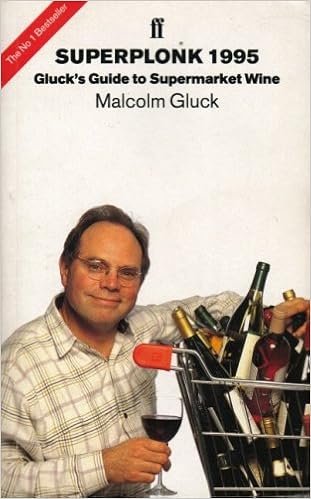
In my late twenties I became a Guardian reader thanks to Malcolm Gluck. His no nonsense approach to wine writing based on the simple premise of how to spot the best wines for under five pounds made his column appealing. His first book “Superplonk” became my bible as much as Hugh Johnson’s Pocket Wine Guide today!


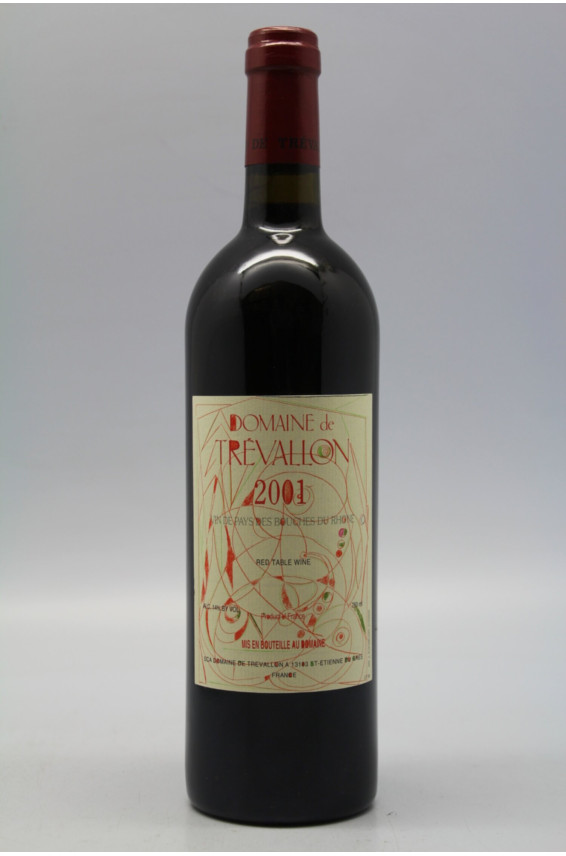
I celebrated my 50th Birthday back in 2016. A good friend and someone with whom I regularly enjoy discussing all things related to wine, took my wife and I to dinner at the Quality Chop House, in London. To accompany this carnivorous celebration of bone marrow on toast and Chateaubriand he had brought a Magnum of Domaine de Trevallon 2001 from his cellar. I was more excited than a child in a candy store!

Trévallon 2001 - VINS & MILLESIMES

The wine was a triumph! Deep ruby in colour with a hint of garnet. A nose that was consistent with its age of mushrooms, game, garrigue and forest floor. On the its superb balance of acidity and tannin levels were still sufficiently high for me to know it would last for another 10 years or more. Developed fruit flavours of fig, prune and black currant were interwoven with more forest floor and game with leather too. I remember thinking that it was distinctly Bordeaux in style and like one of the grandest of all wines from that region.

The Trevallon was a really nice touch as it took me back to five years earlier when my wife and I were planning a short trip to the Luberon. The same friend, suggested we try to visit Domaine de Trevallon.

Not knowing the legend of Trevallon I inquisitively asked why especially as they produced a declassified wine. My oenophile friend began to narrate the story of Eloi Dürrbach.

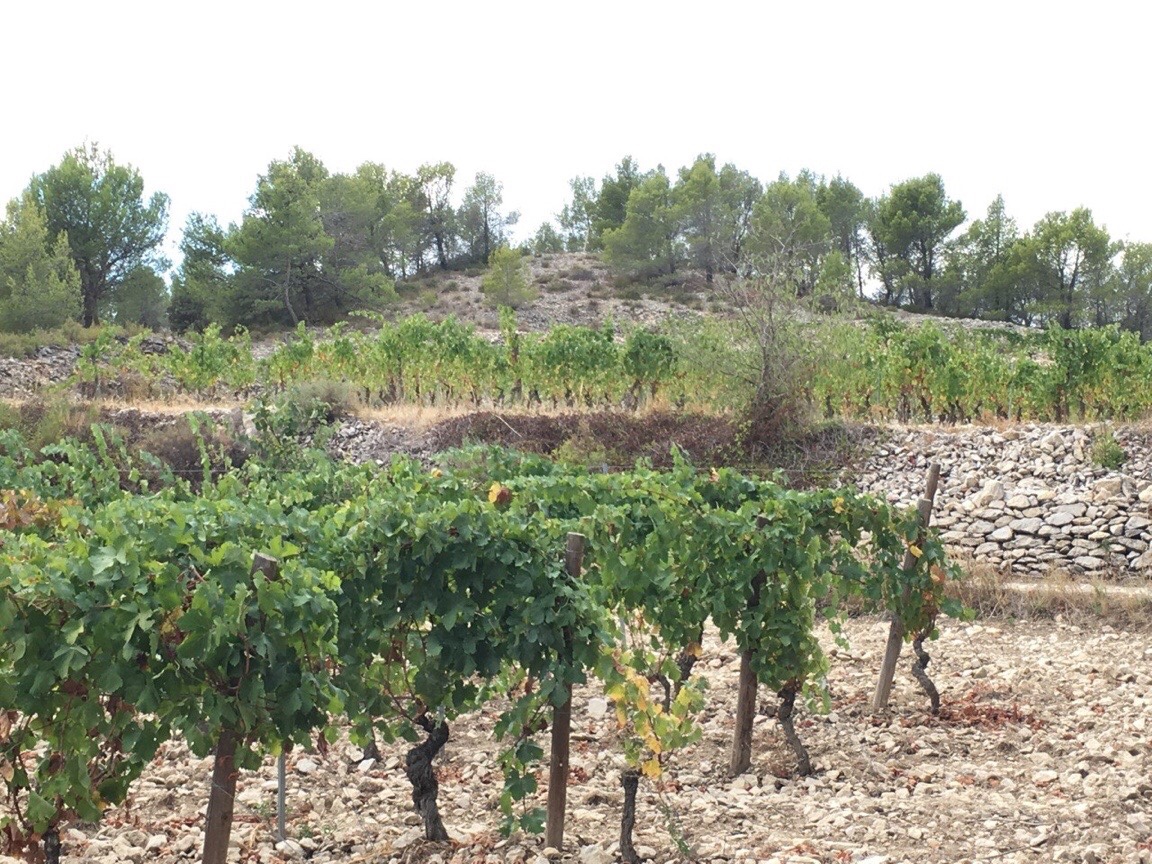
In 1950 Eloi’s father fell in love with the area around Trevallon and purchased a property with some land. The Alpilles close to Saint-Rémy-de-Provence provided a fairly challenging terroir for a vineyard. Yet Rene Dürrbach confided in his young son Eloi that the terroir would one day produce great wine!

Limestone is the dominant rock form here and integrating the vines into this landscape was a major piece of work. The rocky ground was blown up and the limestone fragments ploughed back into the ground.

The first vineyard was planted in 1973. The choice of grapes guided by heritage and reason. Cabernet Sauvignon had been grown in Provence in the pre-phylloxera era and Syrah a grape that was permitted and thrived. Eloi’s passion for wanting to make a natural wine led him to choose to declassify his wine to a Vin de Pays rather than betray the personality of the wines.

That was it! That was the moment I feel in love with wine. It was when the magic of the back story inspired me to want to discover, to live and breathe that wine. To want to see for myself what was so special about the terroir of the Alpilles. To want to meet Eloi or his daughter Ostiane, who is now the winemaker at the Domaine to truly understand their passion and then taste exactly what the wine was all about!

img_2100

So on a sunny day in August 2011 we travelled along the windy roads of The Alpilles and found ourselves at Domaine de Trevallon. We were so lucky Ostiane had no other visitors and took us for a walk around the estate. I have enough grasp of French to understand her and the story came to life!

I love learning about wines that I’ve never tried before, but for me what takes it to another level is when that act of learning uncovers a back story that is as good as the wine itself. It means that when you pull the cork from the bottle and take the first sip your olfactory senses work overtime as your brain processes the sensory information with the story. For me it’s the ultimate legal high when that synergy between the back story and the wine comes to life as it did in the cellars of Trevallon when Ostiane pulled the cork on the 2008 red that we tasted!

img_2098

Château Léoube – An Organic Paradise

On our 2017 Wine Tour we had an invitation to visit Château Léoube near Bormes-les-Mimosa in Provence. This is a short account of one amazing day!

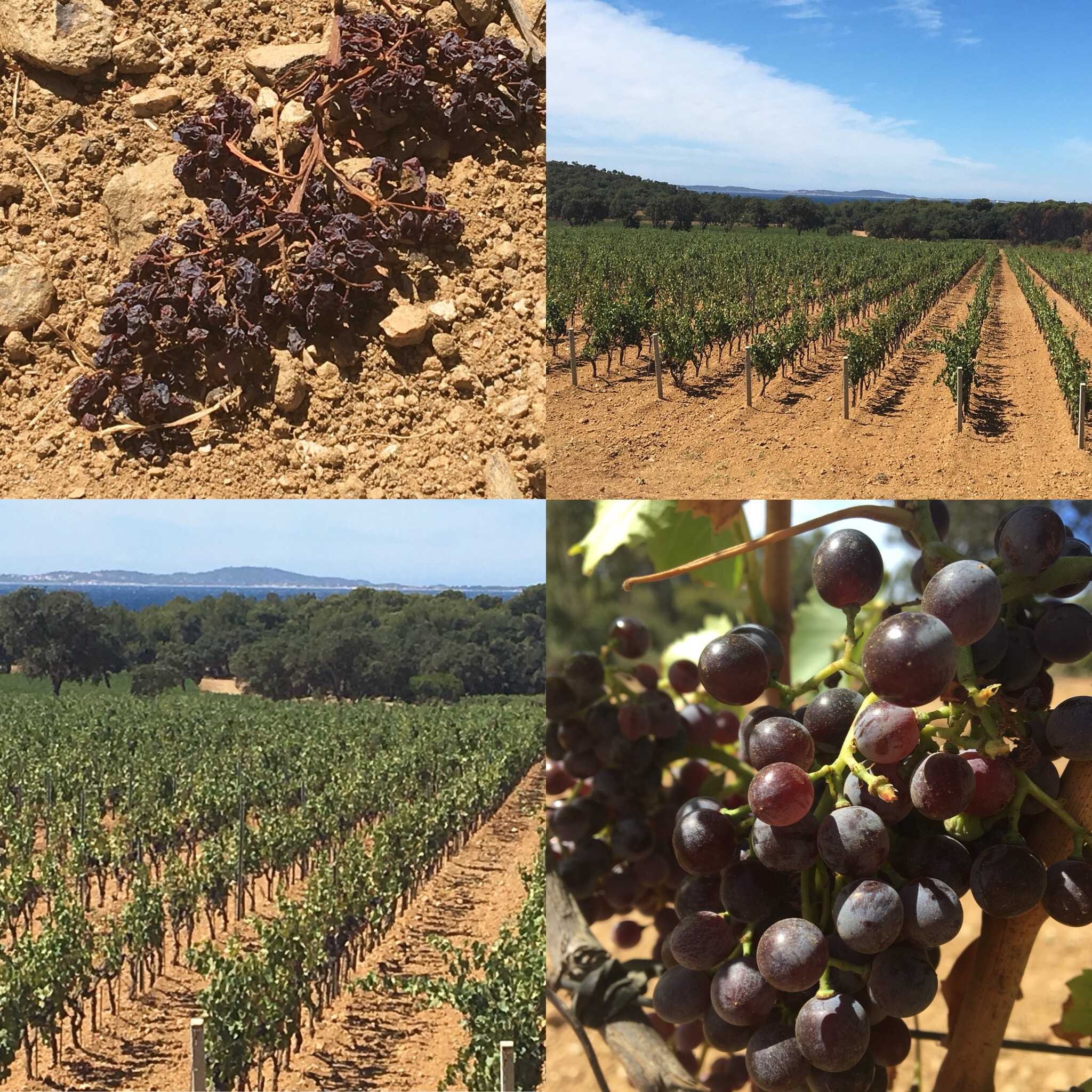
Exiting the Autoroute, we find ourselves meandering along a narrow road sandwiched between vines and olive groves set against a clear Mediterranean blue sky. It’s enchanting and magical in equal proportions and even though Mother Nature has been scarred by the terrible fires of the previous month she is still resplendent in her beauty.

Jérôme Pernot, Sales and Marketing Director at Château Léoube has arranged for his colleague Alexandre Ferrand, UK Sales Manager to meet us on arrival at the Château for a tour of the estate and winery. Climbing into the estate Land Rover, we head out to explore the vineyard and learn more about this enchanting place.

The estate is beautiful. Lovingly restored; with a huge investment by the current owners Lord and Lady Bamford of JCB and Daylesford Organics. It strikes me that one of the things that makes Château Léoube really special is the same passion and dedication that Cassie Bamford has applied to the Daylesford brand. Provenance and sustainability are central to the ethos of Léoube.  Demonstrating how it’s possible to produce food and or wine in a way that is a partnership with nature. If the end product tastes great and you can turn a profit then that’s a bonus,

1A06C824-F1A6-46A7-AEE5-8CD3DC4277BC

Our tour of the estate takes around an hour. We learn about the organic viticultural practices and appreciate just how close the vineyards are to the sea. The cooling Mediterranean Sea breezes helping to provide optimal growing conditions for the grapes ripening in the scorching Provencal sun.

A mixture of schist and clay soils are the main soil type found in Léoube. This combination assists with drainage and some degree of water retention whilst also giving the wines a rather pleasing mineral note.

In the distance we see the hillsides blackened by the burnt vegetation of the wild fires from the month before.

Short clip of the fire ravaged landscape near Leoube

560453EE-2981-4A2A-9001-A35CB92399E4

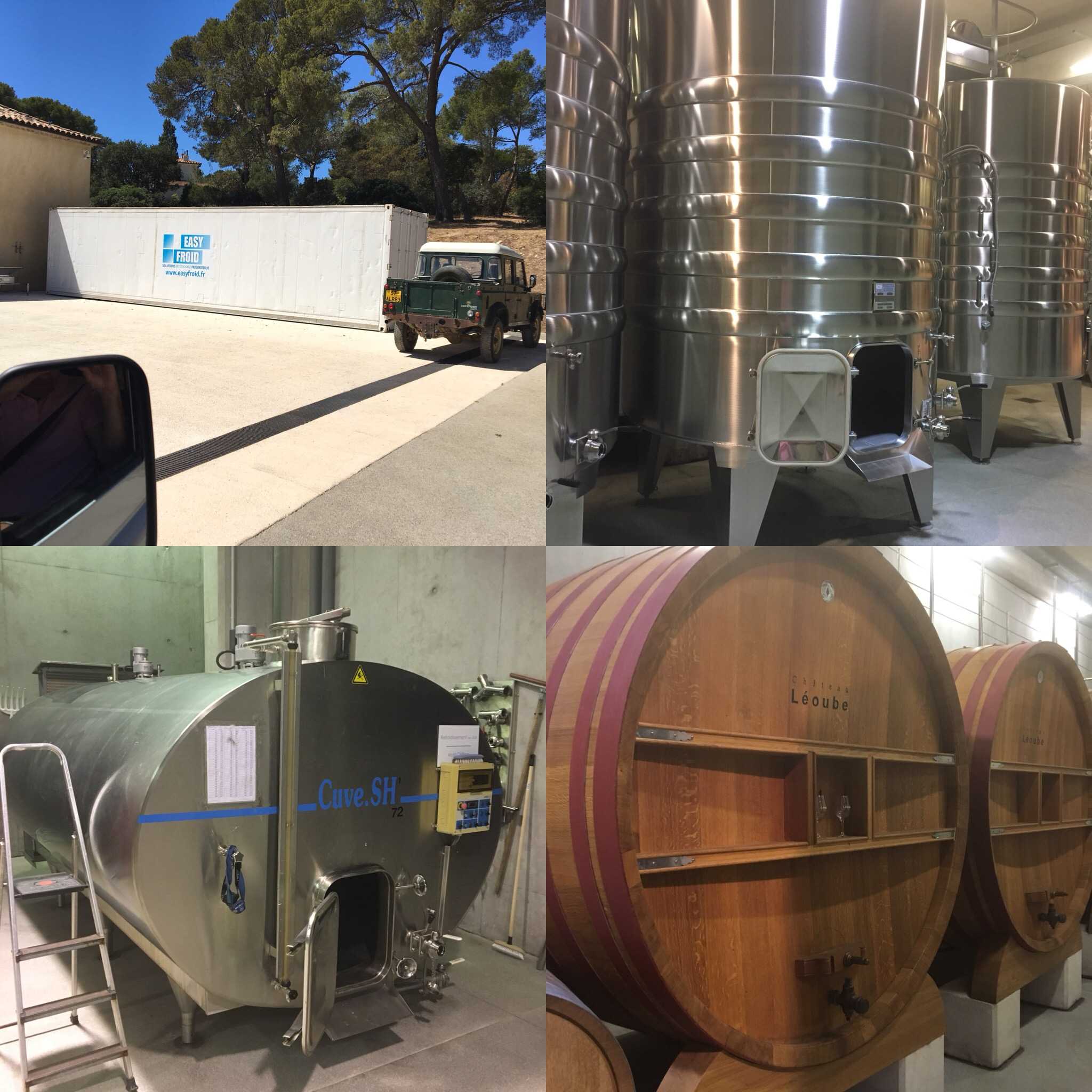
On our return to the winery we get to see how they deal with the grapes once harvested. Great care is taken to ensure that there is no premature oxidation as maintaining the freshness of the grapes is paramount so protective winemaking practices employed. The theme of investment continues with up to date technology used to ensure the ideal pressing conditions to allow the winemaker to achieve the desired results.

0BD4FC2E-0582-4DD1-9E59-1A1E19DB6C58

After the tour Alex takes over to the tasting room and shop. The place is bustling with locals and visitors eager to sample the delicious organic wines and organic produce (oils, figs tapenade etc…)  on sale in the shop. I eagerly anticipate the first of the 7 wines from the Léoube range which we will taste!

All Léoube wines are 100% organic with a commitment to follow biodynamic principles including encouraging biodiversity within the vineyard and employing traditional growing methods and using only natural non toxic preparations to treat pests and disease. In line with this the harvest follows the lunar calendar. The grapes are hand harvested to ensure only high quality fruit enters the presses.

Tasting notes as at August 2017.

Léoube Blanc 2016 AOC COTES DE PROVENCE

Made from 50% Semillon, 25% Rolle and 25% Ugni Blanc. Gentle pressing and MLF. Pale lemon in appearance. A nose that’s M+ intensity of salinity and minerality, with white flowers and pear and a herbal note from the surrounding garrique. Youthful.  Palate: Dry, high acidity, M+ body, M alcohol and M+ finish. Medium + intensity of citrus lemon, pear, mineral stone and salinity. Delightfully refreshing with great balance, intensity and complexity. A very good wine.

Rosé de Léoube 2016 AOC COTES DE PROVENCE

A blend of 40% Grenache, 40% Cinsault, 15% Syrah and 5% Mouvèdre. Appearance: Pale salmon. Nose: M+ intensity, of red fruits: wild strawberry, with some stoney minerality and salinity. Youthful. Palate: Dry, M+acidity, M body, M alcohol, M+ intensity of tropical pineapple and strawberry with stoney minerality and salinity. The creaminess from MLF finishes off the wine a treat! Great balance, intensity and complexity. A very good Rosé; perfect with fish/shellfish, grilled vegetables, goat’s cheese and even desserts ( as we later found out as a sublime pairing with the Léoube fig crumble!)

Secret of Léoube 2016 AOC COTES DE PROVENCE

A blend of 40% Grenache, 40% Cinsault, 20% Cabernet Sauvignon. The addition of 20% Cabernet adds volume, structure and backbone to this Rosé. More pale pink in appearance than its stable mate. But with higher acidity and drier. More body and some stone fruit M+ finish. A bold Rosé that can handle grilled meats and tartare in addition to  shellfish and grilled vegetables which often pair so well with the Provençal Rosé. A very good wine.

Léoube La Londe 2015 AOC COTES DE PROVENCE LA LONDE

A micro appellation within the Léoube estate. A Cuvée made to reflect the schist soils found in Léoube from the same grapes found in the Rosé de Léoube:  – Grenache, Cinsault, Syrah, Mourvèdre. A slow gentle pressing by gravity is used to help preserve some of the unique character of this wine.  A nose that’s strawberries and cream with a hint of white peach which follows through to the palate. Crisp and dry, with M+ acidity, Medium body and alcohol and M+ finish. A very good wine.

Rouge de Léoube  2015 AOC COTES DE PROVENCE

80% Syrah dominant blend with 10% Cinsault and 10% Grenache. Loads of fresh blackberry fruit with spicy notes of pepper and cinnamon. Dry, with high acidity, high tannin, medium alcohol, M+ body and M+ finish.

Les Forts de Léoube  2015 AOC COTES DE PROVENCE

Aged for 18 months in Foudres (Large old oak barrels) allowing gentle micro-oxidation. A blend of equal parts of Grenache, Cinsault, Cabernet Sauvignon and Syrah. Deep Ruby in colour. A nose of smoky oak and herbal garrique with blackberry and spice. On the palate: Dry, high acidity, high tannin, high alcohol, M+ body, and a long finish. More blackberry and spice with cedar and smoke. A very good wine with ageing potential for 5-10 years.

Léoube Collection 2012

This wine although outside of the AOC is one of the most interesting! It comes from a project that Lord Bamford embarked upon to produce a “Super” Provençal wine that could be long ageing. These wines are known in France as “Vin de Garde”. A wine to be kept. The project was 10 years in the making. Made from 100% Cabernet Franc. Matured in Demi-Muids (600L oak barrels) for 24 months. Garnet in appearance indicative of its ageing. Nose: black cherries and black plums with a herbaceous green pepper note. Palate: Dry, high acidity, M+ tannin, high alcohol, full bodied, long finish. Pronounced intensity of black cherries and black plums with chocolate and tobacco. An outstanding wine drinking well now with ageing potential for a further 10 plus years.

FD8FA351-0564-4E19-8BEF-DEECB90281ED

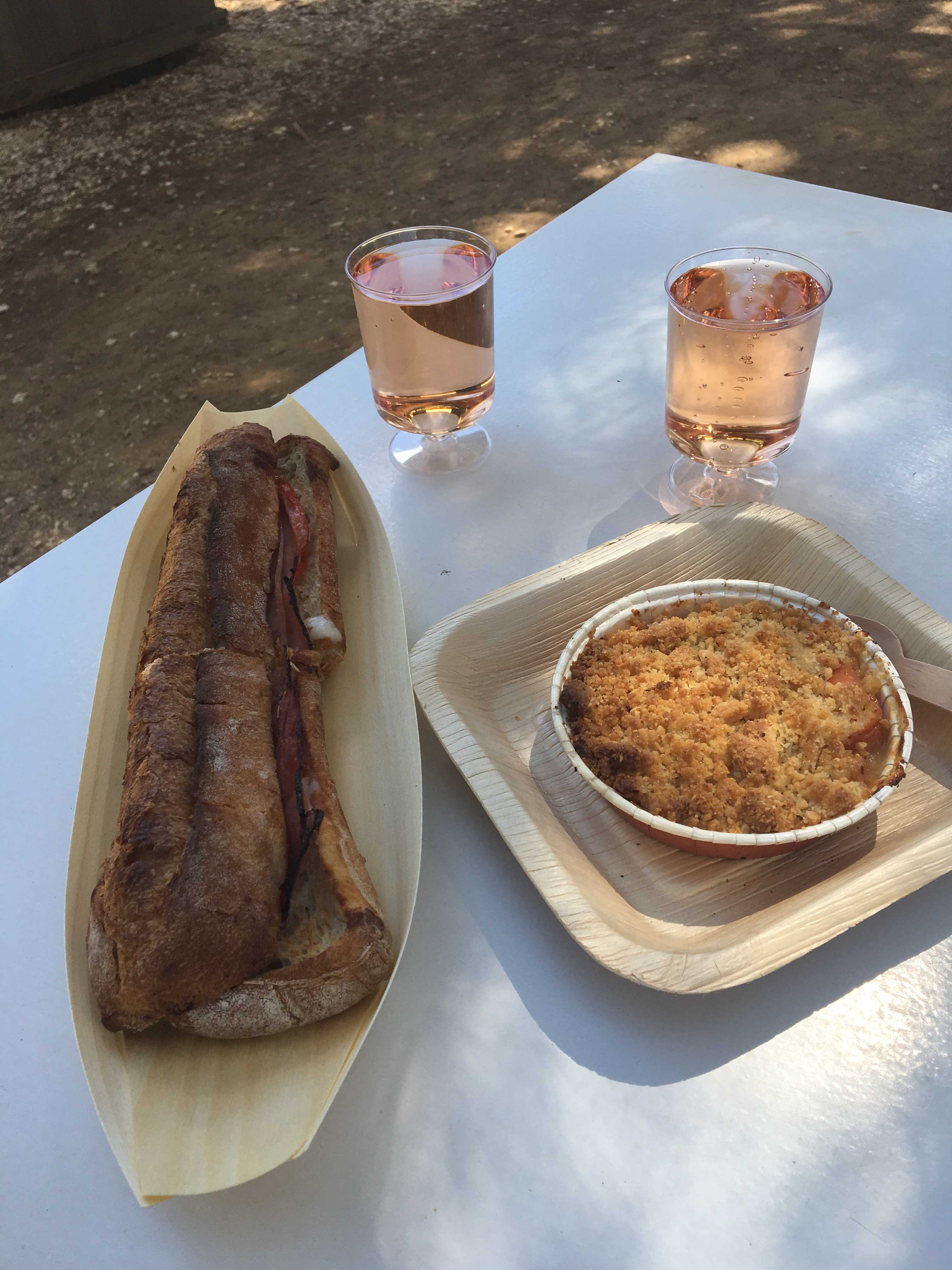
After the tasting we take a short drive to the nearby beach of Plage du Pellegrin which forms part of the extensive Château Léoube estate. The funky Cafe de Léoube sells simple but tasty food. We are seduced by a goats cheese panini and a fig crumble that is made with figs from he estate; accompanied of course by a chilled glass of Rosé de Léoube!

675E8FBF-A910-45DE-929C-AF2B97BEA235

The organic fig orchards bursting with fruit.

010DE293-AEAA-4C79-9DBA-BA259ABD968D

The beach cafe also is the gateway to a series of coves and wild beaches with a coastal path that is both challenging and beautiful in equal proportions. After a late lunch we take the coastal path for a bracing walk before plunging into the crystal clear refreshing cool Mediterranean waters which provide temporary respite from the scorching Provençal sun. Remarkably, even in the height of the French school holidays, this place is not jam packed full of tourists and beach goers!

6EFB148A-AFCB-4753-A86D-8C193F56ABBC

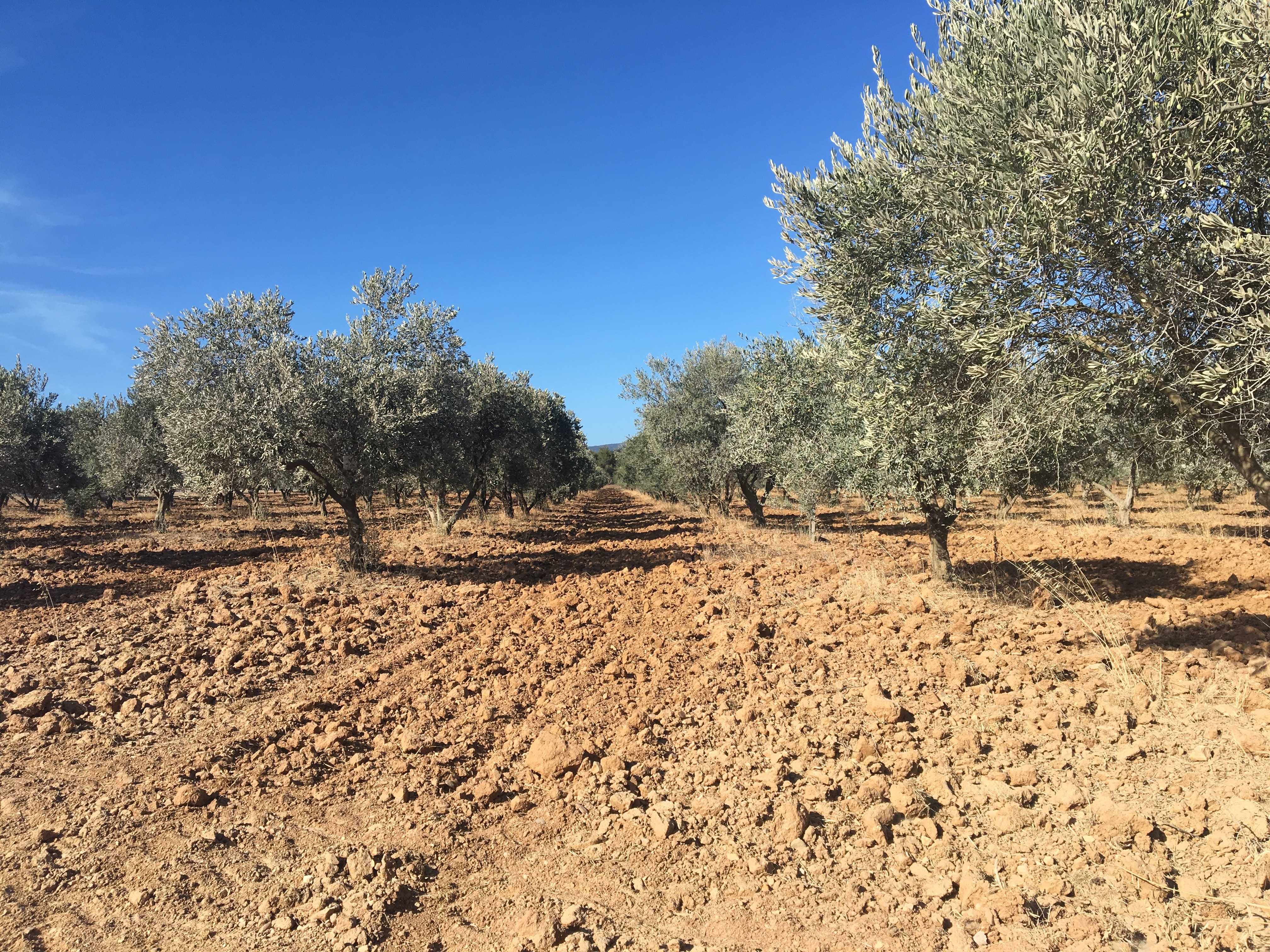
The organic olive groves of Léoube.

After our beach walk and swim we head back to the Cafe de Léoube where a 4 piece Acid Jazz band are playing some funky grooves as the wind picks up. Ordering another chilled glass of Rosé de Léoube, listening to the soulful saxophonist blast out Donald Byrd’s Cantaloupe:

Cantaloupe – Proévencal Acid Jazz

with the sun setting, it’s the perfect finale to an incredible day spent at Château Léoube!


Domaine La Suffrene AOC Bandol; Visit and Tasting Notes

A brilliant afternoon @domainelasuffrene tasting a range of there wines. Hosted by the lovely Audrey, on arrival she presented us with an extensive list and asked which we would like to taste. We opted for a mix of white, rosé and reds with a back vintage from 2003 as it was our 15th Wedding Anniversary and we wanted to find a special bottle for the occasion!

EC77D41C-C567-4E22-B410-87F6566D7507

Tasting notes of the wines we liked the best and bought! 

La Suffrene Tradition Rosé 2017 AOC Bandol Rosé

40% Mourvèdre 30% Cinsault 20% Grenache 10% Carignan

Pale salmon in appearance. 

Nose: red fruits of strawberries and raspberries mixed with a stony minerality.

Palate: Dry, medium plus acidity, medium body, medium alcohol, medium plus finish and medium plus intensity of more strawberry and raspberry aromas culminating in a medium finish. A good everyday Rosé for drinking now.

La Suffrene Sainte Catherine 2015 AOC Bandol Rosé

This was a great contrast to the Tradition. Made with 90% Mourvèdre and just 10% Carignan. 

Two years bottle ageing give this wine a medium salmon appearance.

Nose: incredible nose of red fruits, red cherries mainly with hints of cream. Not surprising in a blind tasting the nose led tasters to think it was a red! 

Palate. More cherries combined with a velvety cream and a minerality that’s structured. Dry, with medium acidity medium body and medium alcohol culminating in a medium plus finish. This wine has  great balance and length with some complexity and intensity making it a very good wine. A good example of a Bandol Rosé that is a gastronomic wine that improves with some age, in this case peaking at 2 years post release thanks to the high Mourvèdre content and the terroir of this area. 

2003 La Suffrene Les Lauuves AOC Bandol Red

Appearance: medium garnet 

Nose: medium plus tertiary aromas hit you with forest floor, leather, and wet leaves.

Some dried fruit especially dried plum. Developing in age.

Palate: Dry, medium plus acidity, medium plus body, medium alcohol, medium plus tannin, more medium plus flavour intensity of primary damson mixed with tertiary dried fruits of dried plum and damson with spicy notes of clove and a little pepper. More tertiary notes of leather and spice and gamey aromas with a length that lasts and lasts! 

Great balance, length, intensity and complexity making it an outstanding Wine that is ready for drinking now but will continue to improve no doubt over the next ten years!  The grapes in this wine come from a one hectare chalky plot to the north of the Domaine.

The Domaine also makes 2 declassified Vin de 

A 2013 white made from 100% Sauvignon Blanc that is barrel aged in oak to give to some toasty smokiness and produces a sweet wine balanced with that all important background acidity.

A 2011 red made from 100% Grenache. A beautiful deep garnet colour with a medium plus nose of dried plum/ damson. Palate: sweet, medium acidity, medium plus body, medium alcohol more medium plus intensity of dried plum/ damson delivering a pleasing medium plus finish.

Thanks again to Audrey for the knowledge and tasting and pushing my French Wine vocabulary to new levels. 


Biblical Rains, A Bar with a Killer wine list and Thirteen wines tasted! The tour just gets better

Waking to the sound of torrential rain pounding the tarmac outside our room we reflect on how lucky we had been yesterday with a dry day for cycling the Cote Rotie.

Summer Storm Video in Condrieu

We bid “au Revoir” to Julian our friendly waiter and dodging the Biblical rains we check out and go in search of breakfast.

IMG_3319

Finding a boulangerie with a selection of pastries to fortify the soul, pre wine tasting, we go in search of the other staple ingredient of a continental breakfast- Coffee!

Winding our way around Condrieu’s narrow streets we find coffee in a bar. Walking in to it feels like the set of a wine movie! A veritable cast of rugged rustic types perched on bar stools. Some with an espresso others a glass of wine at 9am! All in boiler suits and wellies taking a break from tending their vines!

With a clientele such as this it’s no surprise to see they have an amazing wine list! In addition there’s also a huge range by the glass and with very little mark up!!

After our coffee stop we leave behind the town of Condrieu and make our steep ascent to the vineyards of Francois Villard in nearby Saint-Michel-sur-Rhône. Sometimes trying to find a winemakers caveau is a little like a puzzle or initiation test. Often there’s no clear signage, neither Googlemaps nor my Sat Nav are our frinds but eventually we find our way into the reception.

IMG_3328

Our host Letitia guides us through a veritable line up of Monsieur Villard’s wines. I have to conceal my excitement as I’m a little like a small child in a candy store!

Legend has it that Francois is self-taught but in fact he trained as a chef which led him into sommellerie, and then onto grape-growing and oenology.

Letitia tells that Francois produces around 300,000 bottles a year. 12 years ago it was just a quarter of that!

To the whites first!

2016 Crozes Hermitage ” Cour de Récré” . Medium Lemon in appearance with a nose of medium plus intensity and greengages, made from 100% Marsanne. Rich intense aromas of yellow fruit, dry, with medium (+) acidity, high alcohol, and resinous overtones from 30% oak exposure culminating in a medium (+) finish.

2016 Saint-Peray, a blend of 80% Marsanne/20% Rousanne, with a nose of honey and honeysuckle flowers, on the palate dry with medium (+) acidity, medium alcohol and medium (+) body and medium plus finish.

2015 Saint-Peray Version Longue: The big brother, 100% Marsanne and a bolder style of winemaking. 35% new oak and 18 months of lees ageing. Pale gold in appearance with pronounced aromas of pineapple and dried apricot. On the palate same fruits follow through from the nose. Dry with medium (+) acidity, high alcohol, medium (+) body and very long finish.

2016 Viognier Les Contours de Deponcins. An IGT wine made from 100% Viognier that’s located just above the Condrieu AOC contour limit of 250m. Nose of honey, white flowers, toasted nuts, white peach and violet. Aged in oak for a fuller richer style more aromas follow through from the nose dry, with medium (+) acidity, medium alcohol and medium (+) body and a pleasing long finish.

2015 Les Grand Vallon Condrieu. This wine is fermented in oak barrels and matures in a mixture of 35% new oak and 65% 3/5 year old oak barrels. Pale gold in appearance with a bouquet of white peach and apricot and complex smoky notes form oak. Developing in age with aromas of more white peach on the palate dry, with medium (+) acidity, medium (+) body, medium alcohol, a seductive smoky toasted oakiness and long finish. This wine exhibits great balance, good finish well integrated primary and secondary aromas and a degree of complexity. It’s an outstanding example of a Condrieu.

IMG_3321

and then the reds…

2015 Saint Joseph “Poivre et Sol” (Pepper and Soil). 100% Syrah. Medium purple in appearance. Aromas of animal, truffle and cassis. On the palate dry, medium (+) tannin, medium (+) body, medium alcohol and high acidity. More blackcurrant and a little vanilla. Long finish drinking well now.

2015 Saint Joseph “Mairlant”. 100% Syrah Medium purple in appearance. Notes of cassis on the nose. On the palate dry with high tannins, medium (+) alcohol, high acidity, aromas of blackcurrant and vanilla with a long finish. Needs minimum of 3 years in bottle to soften acidity and tannins.

2015 Saint Joseph “Reflet”. 100% SyrahDeep purple in appearance, a pronounced nose of cassis, violets, and myrrh. Developing in age, dry with high acidity, high tannins, full body, high alcohol, further aromas of cassis, myrtle berry and myrrh with secondary oak aromas of vanilla and toast. Lovely long finish integrated and well balanced.

2015 Le Gallet Blanc, Cote Rôtie. 100% Syrah. Matured in in oak for 18 months (30% new 70% 2/4 years old). Deep purple in appearance, Bone dry, with high acidity, full bodied, high tannin. Aromas of cassis and myrrh, vanilla and cream. Long integrated finish but still a baby with many years more to give.

2015 Cornas. Francois likes to make a Cornas that you can drink now! Its got fruit and spice and certainly doesn’t show the temperament of wine that usually needs to be tamed by 7 years plus in bottle. Dry, high alcohol, high tannins, medium (+) acidity, a balanced and complex mix of cassis and creaminess. Leaves you with a pleasurable long finish.

IMG_3323

IMG_3324

We thank Letitia for the dégustation and leave behind us the sensuous contours of the Rhone valley.  In no time at all we are back on the A7 Autoroute du Soleil. The rains of yesterday are a distant memory and the temperature starts to increase as we head into Provence. As we pass Avignon we can’t resist a quick detour to the heart of the Luberon to the picturesque perched village of Gordes, our base for our first French road trip many years before.

IMG_3330

We stop for coffee at the cafe that was one of the main locations in Ridley Scott’s A Good Year set in and around Gordes…Russell Crowe’s character in the movie uses the adjective “intoxicating” to describe the enchanting atmosphere of this area and it couldn’t be more appropriate.

Revived and refreshed we get back on the A7 and blast our way past majestic mountains  set against azure blue skies and vineyards laden with fruit to La Cadière D’Azur our next destination. The prettiest and most typical of perched villages in this part of the Bandol AOC we arrive just after 7pm. We are greeted warmly by Madame Bérard of L’Hostellerie Berard and check in to our room overlooking the pool. It’s a Tuesday night and the little village is buzzing as we make our way down the  narrow main street to the Restaurant Regain.

Trio in La Cadiere D’Azur Part 1

IMG_3329

We are both blown away by the simple home cooked food and local wines! We choose a Domaine de la Garenne 2011,Comte Jean de Balincourt. It’s a deep ruby in appearance with complex tertiary aromas already evident on the nose of meat, game, leather, tar and stewed damson fruit.
On the palate it’s dry with medium plus tannin, high alcohol, medium plus acidity, full body, well defined stewed damson fruit with secondary aromas of cedar, charred wood toast and clove.
Beautiful balance with medium plus length, intense tertiary fruits aplenty and a level of complexity that is disproportionate to its modest price!
An outstanding Bandol wine that still could yield more to those who wait but is a killer partner to a rare entrecôte steak in a Provençal village this evening!

Settling our bill we walk back down the main street in the village to the soundtrack of a local French band entertaining the locals.

Trio in La Cadiere D’Azur Part 2

We settle down with a Pastis and soak up the balmy atmosphere, a fusion of cicadas and flutes and gruff but melodic Provençal voices. It’s a world away from our day jobs and beautifully hypnotic!


Viennese Wine; The best of Austrian wine from Grüner Veltliner to Gemischter Satz!Part 1 – Weingut Weininger

As Spring 2017 was bursting forth across central Europe I spent a pleasant 5 days in Vienna. I knew from a previous visit that it  was well known for its Heurige (wine taverns) out in the suburbs and its local white varietal field blend known as Gemischter Satz. What I hadn’t appreciated,  was that the Viennese winemaking fraternity have well and truly thrown off the yoke of the anti-freeze scandal of the eighties and embarked on making in the main organic/biodynamic high quality wines that we see little of in the UK!

A little pre trip research indicated that the two must visit winemakers were Rainer Christ of Weingut Christ and Fritz Wieninger of Weingut Wieninger. Bacchus’ divine intervention was surely at play during my trip as a phone call to both Rainer and Fritz yielded two of the most enjoyable and interesting tasting visits that I’ve had the pleasure to indulge in across three continents!

Top 3 Viennese Wine Facts:

  1. Only capital city to have vineyards within the city limits.
  2. Wine has been grown in Vienna for over 2700 years.
  3. There are over 700 hectares of vines planted.

Weingut Wieninger

The wine district is no more than a 40 minute drive from the centre of Vienna. Leaving behind the imperial architecture of the Hapsburg era, passing semi industrial suburbs we climb the hills that surround the city and enter the enchanting area of the Heurige. 


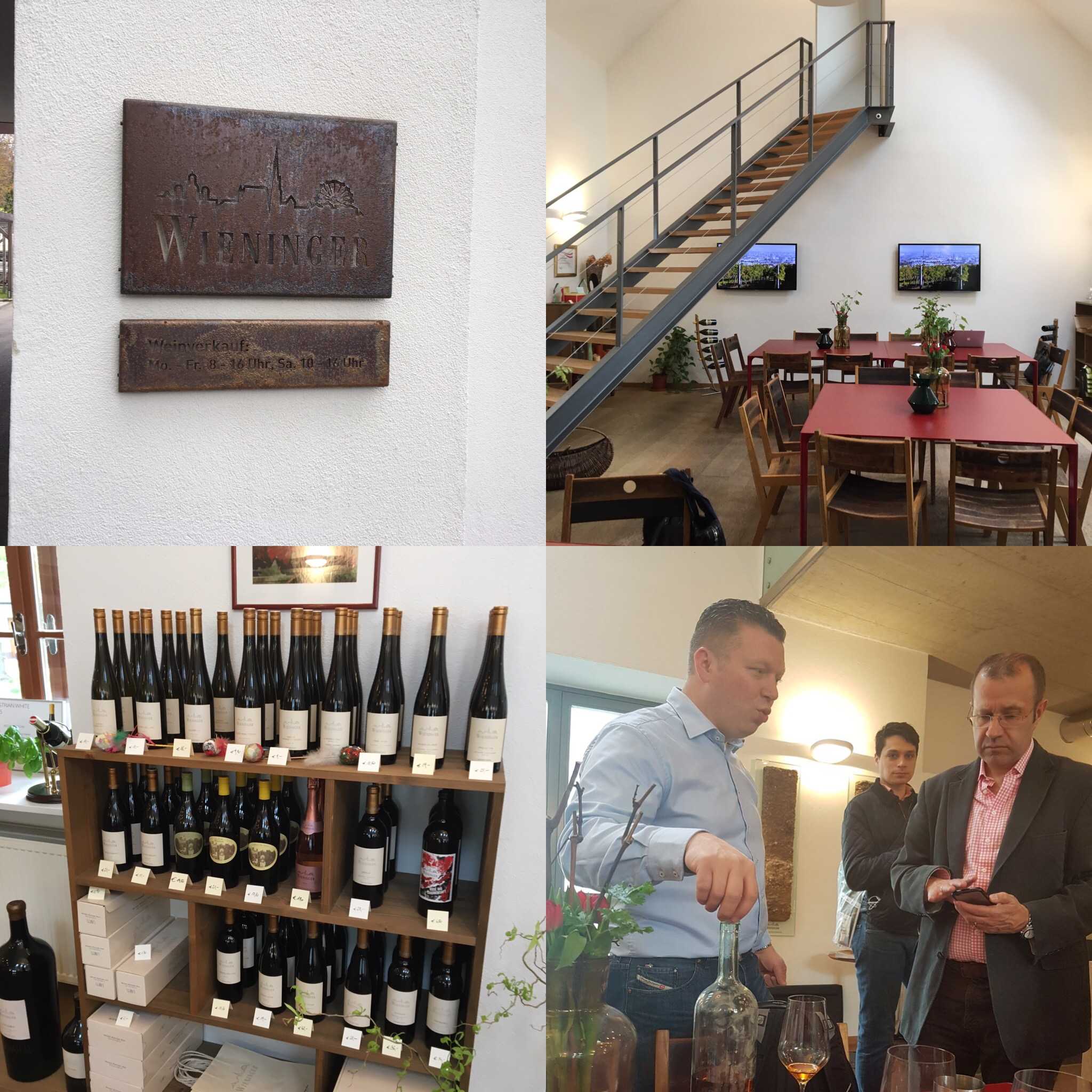
In the tasting room we are introduced to the sommelier and the dozen or so wines that we will try. Its a wine geeks paradise with display boards adorning the walls exhibiting the different types of terroir that make up the estate. It’s made really cosy with the glow of a wood burning fire.

3378A821-9853-4D05-B8F8-4B9587889DEF

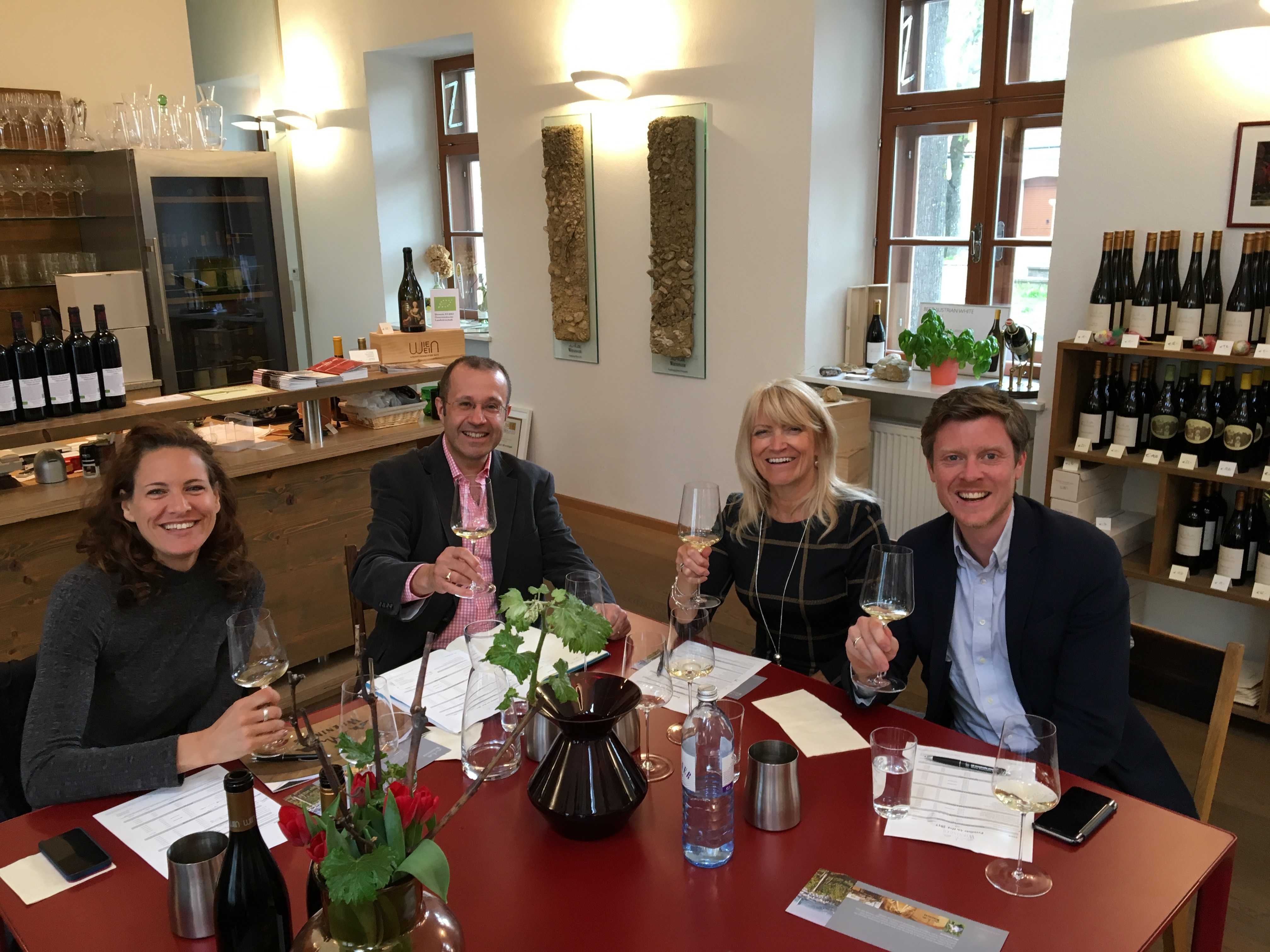
My enthusiasm for sampling these wines rubs off on some friends who join me for the tasting. Its a throughly social experience and always enhanced by sharing the experience of exploring new wines.

B90AC878-DC17-4B11-82E9-09C27A7DD2C5

The tasting gets under way!


Kicking off the proceedings

Sekt Rose Cuvée Katharina 

A blend of 80% Pinot Noir and 20% Zweigelt. Fermented in the methode traditionelle with just 5g/L dosage. Pale salmon in appearance with a nose of strawberry mousse that is of medium (-) intensity. Dry with medium (+) acidity, a feature of early picking, medium (-) body, medium alcohol with more notes of strawberry mousse and autolytic aromas on the palate. Good balance and complexity a good wine drinking well now.

Terroir

One of the many great things at Weingut Wieninger is that opportunity to really experience the impact that contrasting terroir have on a wine.

Our first introduction to this was in sampling Gruner Veltliner made on either side of the Danube from the Nussberg and Bisamberg sites.

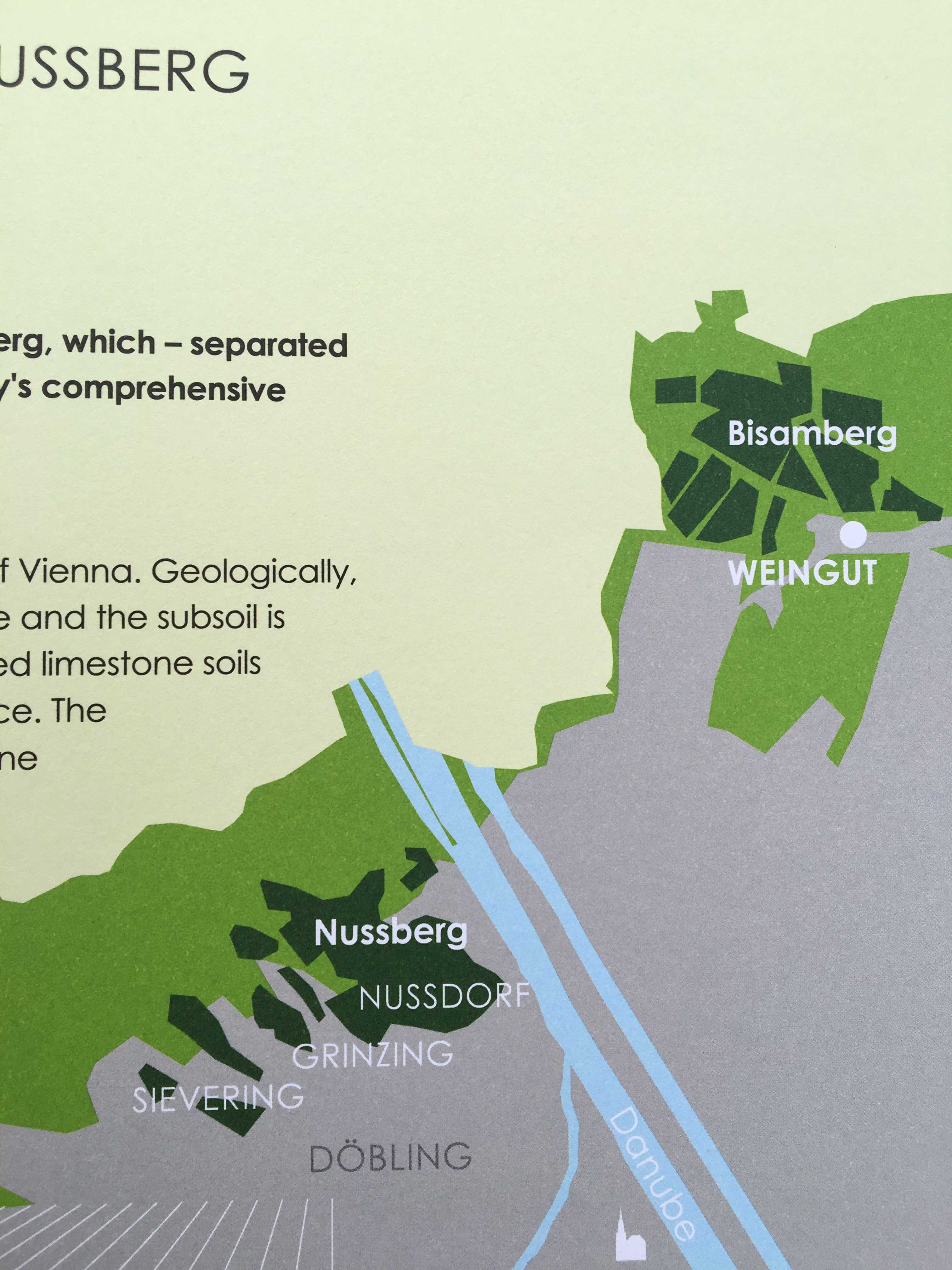
Nussberg

Located on the west bank of the Danube is composed of shell limestone and weathered limestone soils with a subsoil of limestone rocks. This high limestone content yields excellent minerality. The clay content is distinctly higher than the Bisamberg on the opposite bank. The heavy soil with high limestone produces wines with a creamy texture, darker fruit tones and moderate acidity with a pronounced minerality. Suiting the local blend Gemischter Satz, Riesling, Traminer and Gruner Veltliner.

Bisamberg 

Located on the east bank of the Danube. With a climate that has more wind, more sun and 20% less rain. Light and sandy loess soil that suit red varietals and Chardonnay with the later making a style that is fresh and light with a vibrant acidity.

Gruner Veltliner Nussberg 2016

Medium gold in appearance with nose of white flowers and nettle. On palate a sharp granny smith apple frehsness and acidity with stoney minerality from the limestone. Lovely balance and expression of the Nussberg terroir.

Gruner Veltliner Bisamberg Herrenholz 2016

Medium gold in appearance. A nose that is a mix of white flowers and fruit salad. On the palate, dry with a medium plus acidity, exquisite minerality, medium body, with notes of fruit salad and peach.

Riesling Nussberg 2015

The grapes for the Riesling Nussberg are usually from the Preussen on the Nussberg, but because of the small yields and high ripeness, grapes from other vineyards on the Nussberg – the Obere Schoss and Purgstall – were also used. Preussen translates from the German for Prussia and take its name from the site of the camp of the Prusssian army when defending Vienna in wars past.  It was also a rose garden and its this feature which gives rise to a characteristic of this wine.

Appearance is pale gold with hints of green, aromatic nose of lychee, peach jam with honey and hints of petrol showing. On the palate dry with high acidity, medium plus body, medium alcohol culminating in a lengthy stone fruit infusion of peach and apricot.

9F0AFED9-EE5F-447D-8BB4-32CC67C46724

Wiener Gemischter Satz DAC 2016  

A fragrant and fresh young wine with a spicy fresh character. Pale gold in appearance with a dry refreshingly high acidity, medium alcohol and medium plus body with a fruit salad melange from the wider variety of grapes used. Medium finish.

Wiener Gemischter Satz DAC Bisamberg 2016

The Bisamberg soil is comprised of light, sandy loess covering massive limestone and is very calcareous. The varieties growing in this vineyard, which is approximately 40 years old,are Weissburgunder (40%), Grauburgunder (40%) and Chardonnay (20%). Appearance is pale gold with a nose of smoky grapefruit and stone fruit. Dry with high acidity, medium body and a medium plus finish.

Wiener Gemischter Satz DAC Nussberg 2015

This Wiener Gemischte Satz consists of 9 grape varieties – Weissburgunder, Neuburger, Welschriesling, Grüner Veltliner, Sylvaner, Zierfandler, Rotgipfler, Traminer and Riesling. All handpicked and processed together following the careful elimination of any botrytised grapes. Fermentation in 75% cooled steel tanks and another 25% in large old oak barrels. After 10 months maturation on the fine lees the different tanks and barrels were put together and the wine was bottled.

This wine exudes a nose of complex aromas a heady cocktail of  of lemon, peach, pineapples, herbs and wild flowers. An aposite expression of Gemischter Satz whose DAC rules dictate that as a field blend all the grape varietals are grown, harvested and fermented together even though they ripen at different times! The skill of the winemaker judges the best trade off between under and over ripe fruit and produces this distinctive wine style. With an increasingly large cohort of growers adopting organic and biodynamic principles many of theses field blends see wild flowers and herbs growing alongside the vines influencing the terroir and its precious fruit as well as increasing the biodiversity of the area.

The palate dry with medium plus acidity, medium alcohol and medium plus body, primary fruit aromas follow through from the nose and are integrated and balanced with secondary aromas of butter and toast ending in a rich mouthfeel with of long finish.

1E599BD3-FF5D-434A-95CD-A32467297E91

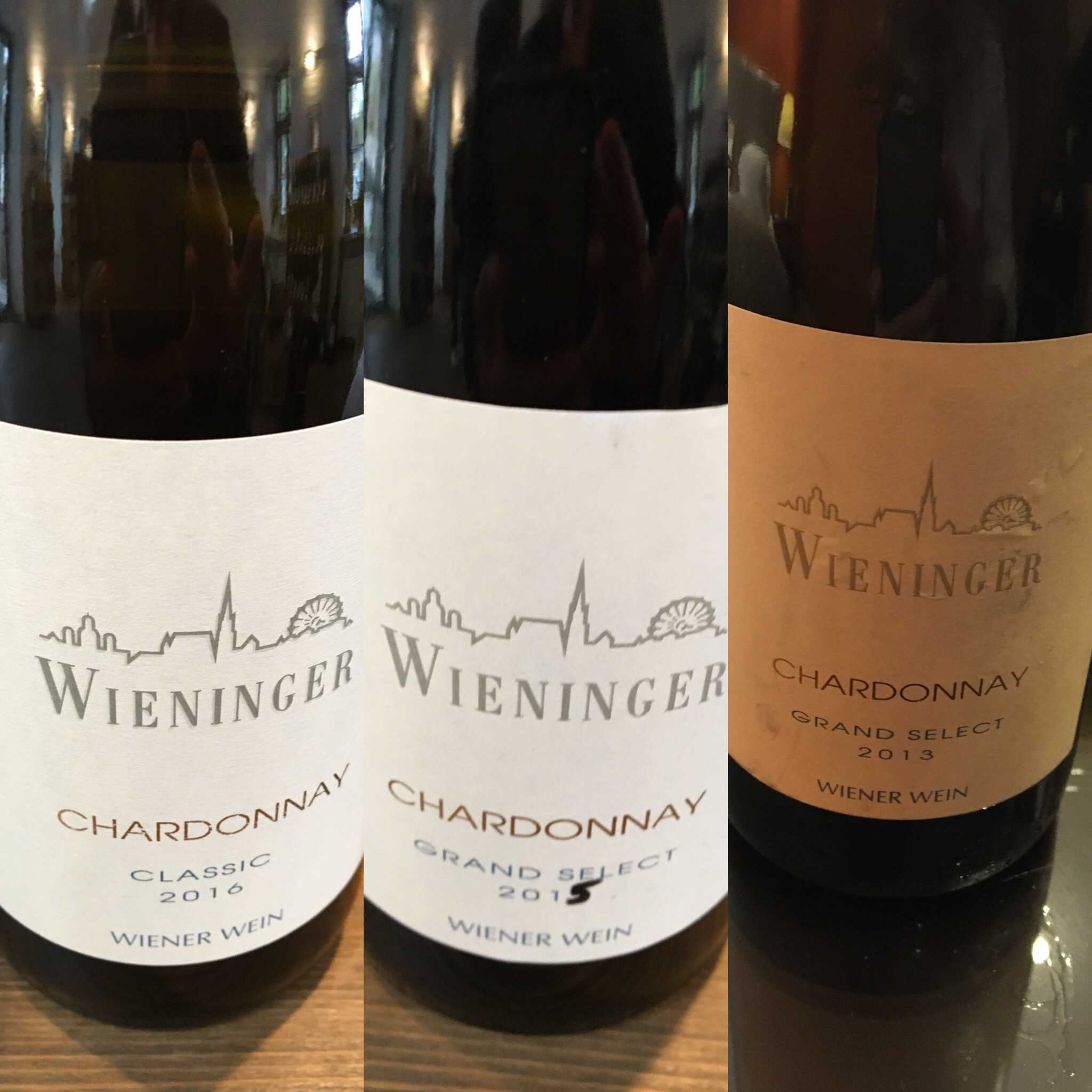
Chardonnay Classic 2016

The grapes for the Chardonnay Classic 2015 are almost solely from Vienna’s Bisamberg vineyards, though some come from a small single vineyard on the Nussberg.

The wine is a very pale gold in appearance, with a nose of citrus and some stone fruit. On the palate it is dry with high acidity with medium body. Culminating in a medium plus finish the wine is drinking well now.

Chardonnay Grand Select 2015

The grapes for the Chardonnay Grand Select 2013 came exclusively from the Wiener Bisamberg, specifically from the two oldest and best Chardonnay vineyards of the winery – Ried Breiten and Ried Kritschen. For the fermentation, the juice spent a short time in stainless steel tanks and was then transferred into 60%-new and 40%-used barriques. It then spent just under 30 months in oak.

The wine is medium gold in appearance. On the nose there are notes of cedar and vanilla  with string aromas of citrus and stone fruits. The palate has notes of citrus and apricot with exotic fruits such as melon and pineapple wound in a creamy texture from the malolactic fermentation and a pleasant toasty from the batonnage.

The wine has very good balance, a lengthy finish and complexity and will undoubtedly age well. Its a great example of a very good Chardonnay.

Chardonnay Grand Select 2013

This vintage was not available for tasting and there are few bottles left for sale but we managed to secure one and tasted it the next day although I’ll include the tasting notes here for continuity.

Deep gold in appearance. Nose pronounced secondary aromas of butter and toast while still exuding the exotic flavours of pineapple and mango. On the palate the wine is dry, with medium plus acidity and full body. There is more secondary flavours of butter and toast, and primary fruits of pineapple following through from the nose, culminating in long and richly textured finish.

An excellent example of a Chardonnay and my favourite wine of the vineyard.

2E71FB82-7BB5-4070-A74B-0C08D44A4B01

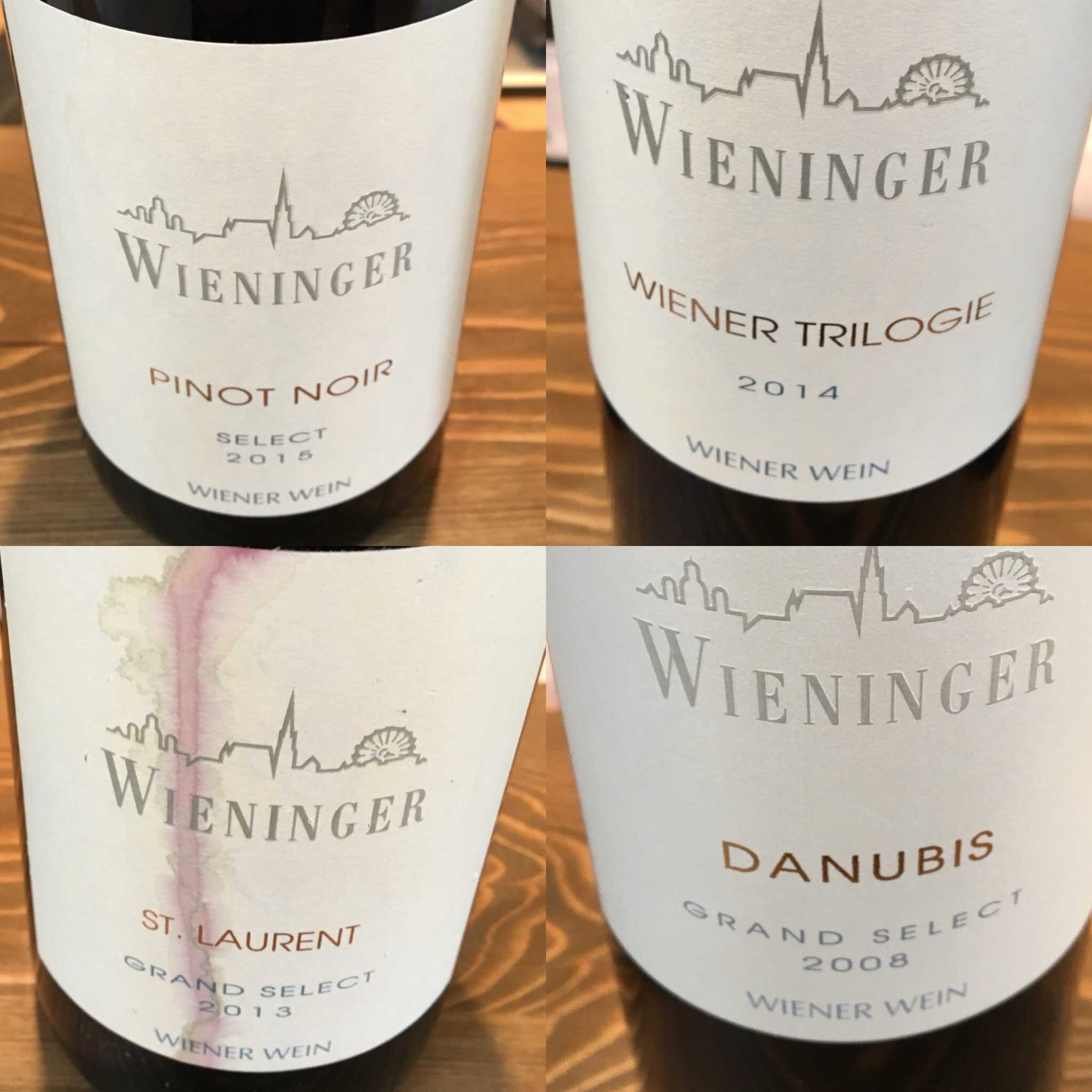
Pinot Noir Select 2015

Maturation in Burgundian barriques, 25% of them new. Pale ruby in appearance. Nose of  ripe red cherry with delicate spice from the new oak. On the palate dry, with medium body, medium plus acidity medium soft tannin and medium alcohol with more cherry fruit. The elegance of a Burgundian Pinot with a pure finish and good potential for development.

Wiener Trilogie 2014

The Wiener Trilogie 2014 is a blend comprised of 70% Zweigelt, 20% Cabernet Sauvignon and 10% Merlot, with the grape varieties harvested at different times. Medium ruby in appearance, this wine reveals an intense red berry nose with delicate spice from 20% exposure to oak, green pepper and cigar leaves. On the palate are more juicy, red cherry fruit notes  with gentle tannins, dry with medium plus acidity.  A great everyday day drinking wine.

St. Laurent Grand Select 2013

The wine is matured in oak barrels for up to 26 months. Dark ruby ​​garnet in appearance.  A nose of red cherry with herbs and tobacco notes. On the palate more red cherry and blackcurrant juicy fruit exudes sweetness. Dry with medium plus body and well integrated tannins also hints of tarmac as a indication of ageing.

Danubis Grand Select 2008

Danubis Grand Select 2008 consists of 50 % Cabernet Sauvignon, 40 % Merlot and 10 % Zweigelt. 30 months, barrique maturation and a further one year in bottle before release. Nose of black fruits with hints of tobacco and spice. More juicy blackberry fruits follow through on the palate giving a rich mouthfeel with firm rounded tannins.

Blown away by the combination of volume and quality of wines and the wonderful hospitality afford us we head back into the city unequivocal and unanimous in agreement that Viennese wines rock!

These wines are available in the UK from

Connolly´s Wine Merchants

Arch 13, 220 Livery Street
Birmingham. B31EU
England
show location Phone number: +44 12123 69269
Fax number: +44 1212 332 33
Email: sales@connollyswine.co.uk
http://www.connollyswine.co.uk

Liberty Wines Ltd

6 Timbermill Way
LONDON
SW4 6LY
show location Phone number: +44 (0) 20 7819 0315
Fax number:
Email: order@libertywines.co.uk
http://www.libertywines.co.uk
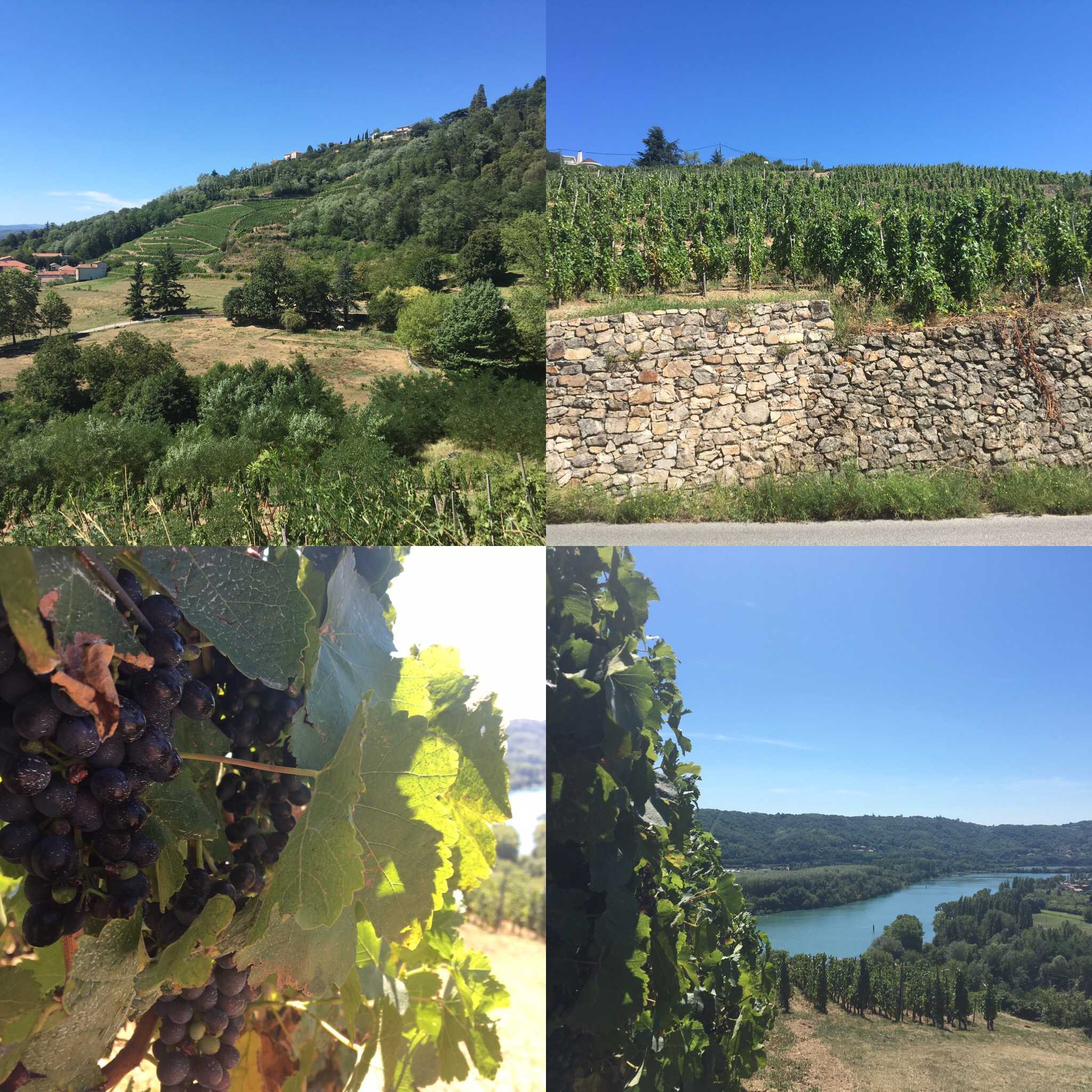
In Part 2 we visit Rainer Christ vineyard and look forward to sharing more Viennese delights with you.


Condrieu AOC and the Côte-Rôtie AOC on two wheels!

As the hotel prep our bikes for us we have a little time to take in this stunning view of the  Rhone adjacent to Le Beau Rivage Hotel.

River Rhone by Le Beau RivageIMG_3261

We cycle into Condrieu at a moderate pace in search of a Boulangerie. On route we compose a wish list of must visit winemakers in Condrieu and the Côte Rôtie, naively thinking our list would be complete by the end of the day!

Breakfast is a simple affair of pain au chocolat, it’s only 11:45am and we have Domaine Georges Vernay in our sights. We hurry across the road into their tasting room opposite the boulangerie and are disappointed to learn that it’s about to close for lunch and advised to return after 2pm!

We see a sign for the local Tourist Office and decide to get some intel on the other winemakers on our wish list. Schoolboy error! Most winemakers in Condrieu are taking two weeks off before the vendage!

We cut our losses and decide to venture to the Côte Rôtie. As we pedal leisurely along the car free ViaRhôna greenway we can already feel the sun burning our arms and the warm breeze from the river on our faces.

As we reach a roundabout it’s decision time! Either rejoin the busy main road to Ampuis and dodge some French HGV drivers fuelled up on their mid morning plat du jour et demi bouteille de vin or dig deep and take the quiet and almost traffic free 1 in 5 ascent to the town of Tupin-et-Semons at the top of the plateau of the Côte Rôtie.

The gears work their magic and our legs push hard on the pedals as we pass rows of vines. It’s obvious that these grapes are all tended to and harvest by hand and it helps to give some understanding of the labour intensive costs associated with these wines.

IMG_3255

As we reach the summit we feel a mixture of exhaustion and exhilaration?

IMG_3260

Just past the church down a little lane we spot Auberge de la Source  A welcome oasis where we hope to take lunch and rehydrate!

The restaurant has the most incredible views across the Rhône and Côte Rôtie.

We meet the delightful Lucy, one of the co-proprietors who has recently taken over the running of the Auberge. She explains that they are full as they have a block booking from a local care home, the place is packed with local pensioners tucking into traditional Lyonnaise cooking.

It’s a really heartwarming sight to see the care and respect afforded to these senior citizens who are laughing and enjoying themselves, a model of care that should be aspired too, we think!

Lucy brings us a large jug of ice cool water and we order a glass of chilled St. Joseph white and one of a Condrieu, kick back and take in the panoramic view.

IMG_3256

We get a further boost when Lucy tells us that her partner and chef is happy to rustle up 2 Salade Niçoise during a break in service. We gratefully order and spontaeously ask for the wine list! After all it is our wedding anniversary and for once neither of us is driving!

We order a stunning Condrieu Maison Christophe Pichon 2016
It’s pale gold in appearance with a medium plus intensity on the nose of white peach, wet stones and white blossom. On the nose it’s dry, with medium acidity, a full body, high alcohol with fresh apricot notes and high turpines. Ending on a very long finish with a full and pleasing mouthfeel. This Condrieu is youthful at present drinking well now with good balance and length with is great!  It’s also showing enough intensity and complexity to keep you coming back for more. An outstanding wine.

We descend down the Côte Rôtie and head towards the river to pick up the ViaRhôna once again.

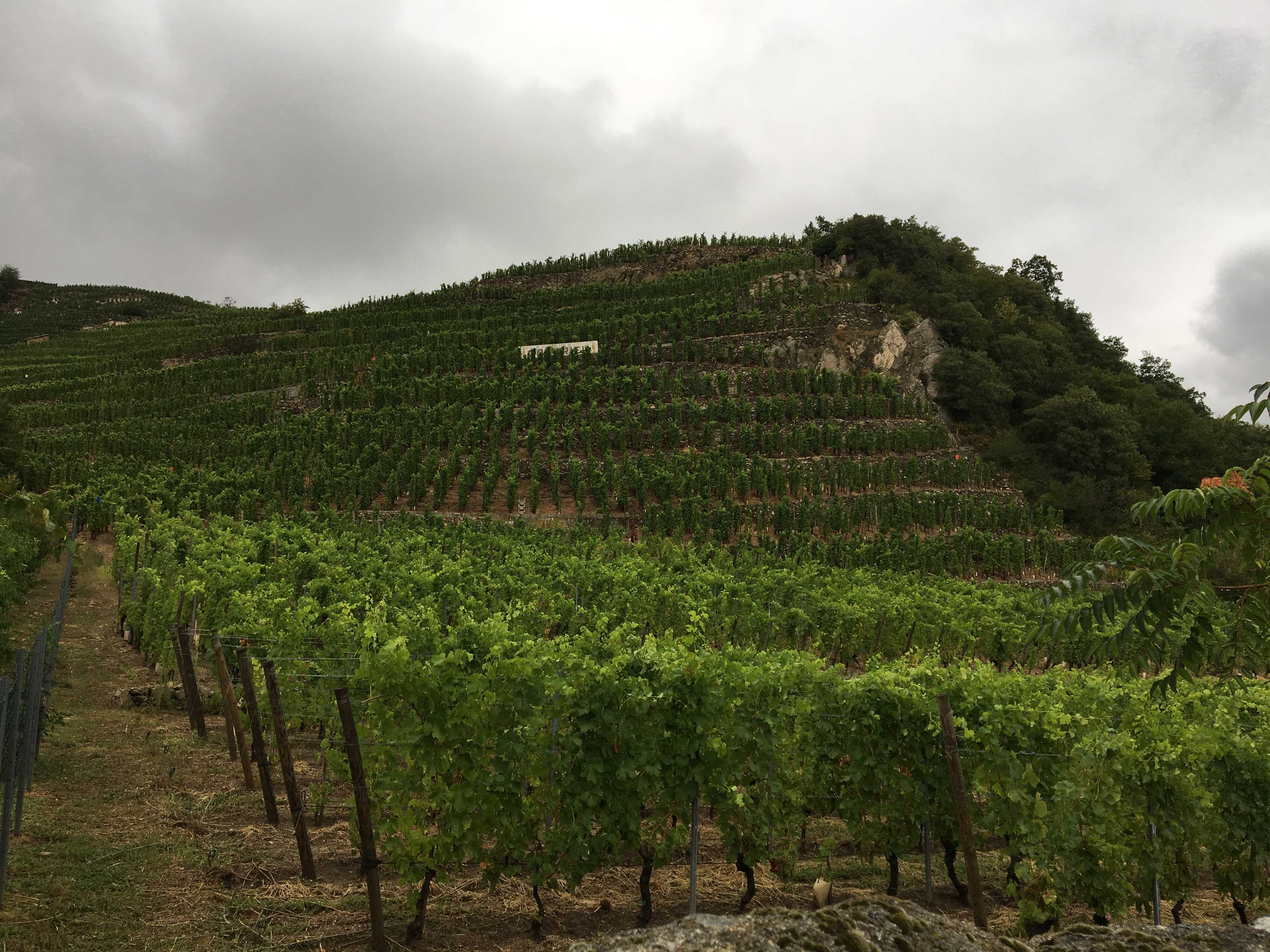
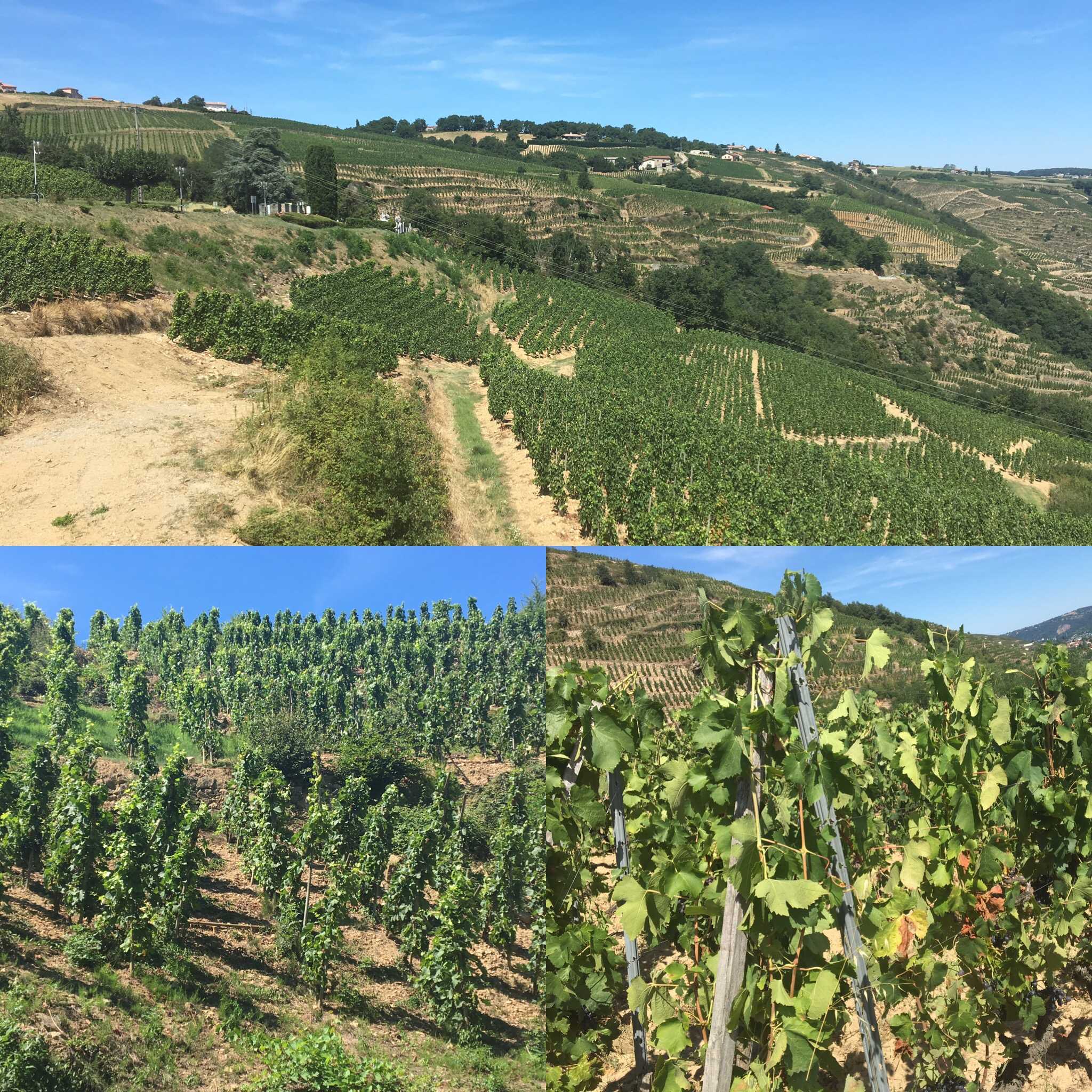
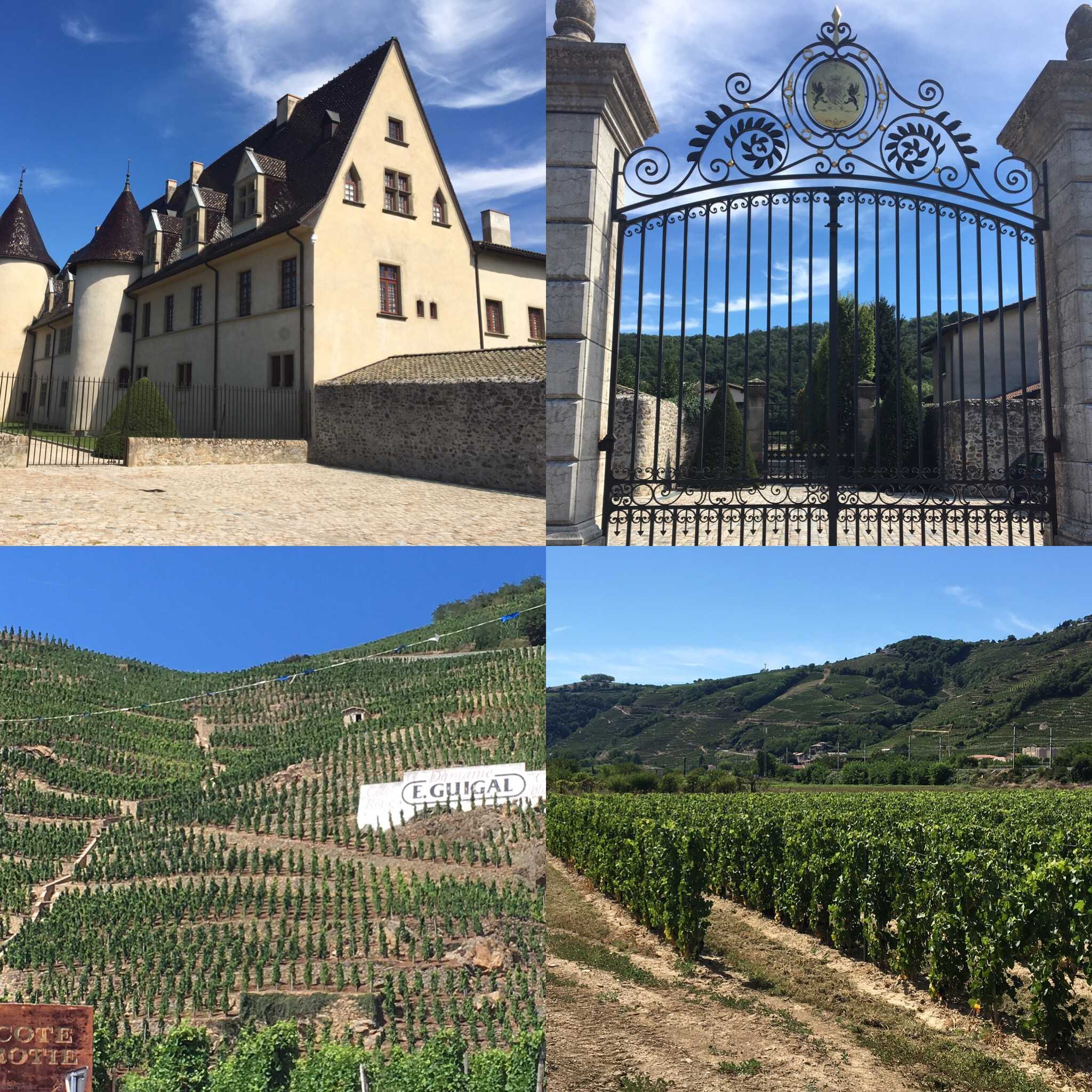
Cote Rotie vineyards near Tupin-et-Semons

Passing a vista of terraces planted with Syrah and a smattering of Viognier. A combination of the topography and the effects of the Mistral necessitating  different forms of viticulture as seen below. Bottom left bush vines free standing whilst bottom right they are tied at the top for resilience and support against the winds!

IMG_3257

Standing majestically just a few metres from the river is the iconic Domaine E. Guigal

IMG_3258

We arrive back in Condrieu in time for a visit to the legendary Domaine Georges Vernay . Georges is long retired and his daughter, Christine, is now running the Domaine and expanding its range to major in both reds as well as the historic whites, her father’s legacy. It’s incredible that there were 170 hectares under the AOC when granted in 1940.

By the 1950s there were just 6 hectares left with many producers giving up on the back breaking and labour intensive terraced viticulture that is a central feature of this AOC. At a time when his neighbours were pulling back Georges showed commitment and dedication to the terroir by clearing land on the slopes of the Coteau du Vernon of dense acacia and oak to plant a further acre! Today Christine has 22 hectares under viticulture all organically farmed.

IMG_3267

Inside the tasting room we opt to taste a range of wines.

Vin de Pays des Collines Rhodaniennes
Viognier: Pied de Samson 2016

Made from 100% Viognier but grown just above the 300m upper altitude limit of the Condrieu AOC and so classified as an IGP.  Fermented and matured in stainless steel, this wine is pale gold and made in a light style of Condrieu with lots of fresh stone fruit aromas of peach and apricot. It has medium plus acidity and medium to light medium alcohol with a medium finish.

Les Terrasses de L’empire Condrieu 2016

Classic nose of stone fruits all apricot and white peach with a hint of almond. Following through on the palate with medium body and medium plus acidity. Drinking well now with 2/4 years ageing potential. Fermented and matured in oak foudré for a richer style of Condrieu.

Les Chailles de L’Enfer Condrieu 2014

A Condrieu made in a style for ageing. Palate aromas of yellow fruit, especially ripe apricot more than white stone fruit but with a balanced background minerality. Medium plus body with medium acidity and long refined finish. A great wine that is delicately balanced with refined length and superb balance and complexity.

Vin de Pays des Collines Rhodaniennes Syrah: Fleurs du Mai 2016
Made from 100% Syrah but grown just above the 300m upper altitude limit of the Côte Rôtie AOC and so classified as an IGP.  Matured for 6 months in old wood barrels. Aromas of red cherry and tar secondary aromas on the nose with a purple/ruby appearance. Nose aromas continue on the palate with medium plus tannin and medium plus acidity. Drinking well now but will continue to improve over the next 4/5 years.

2015 Cote Rotie Blonde du Seigneur
A blend of 95% Syrah, 5% Viognier.Matured in 25% new oak barrel.
Medium purple appearance, jammy black currant nose with notes of toast and tar from secondary aromas. On the palate, dry with medium plus tannin, medium plus body, medium alcohol, medium plus acidity and long finish. A classic style for this AOC with great balance length, intensity and complexity, a little young now and will age for another 15 years or so.
After our boozy tasting we cycle back to the hotel, drop off our bottles and pick up our swim things for a dip in the municipal Lido on the other side of the river.

Here I fall foul of the Lido police who inset that my swimming shorts are too long and prohibit me from taking a refreshing dip in the pool. I fall on the mercy of the changing room attendant who passes me a pair of speedo trunks as my passport to the pool! With no options left I take the trunks and make for the pool. It’s so worth it! The pool is clean and refreshing and the perfect way to cool down after and cycling adventure.

With our body temperatures back to normal we cycle back to the hotel and turn around quickly. It’s a gorgeous evening and the restaurant manager decides to host service in the gardens by the river.

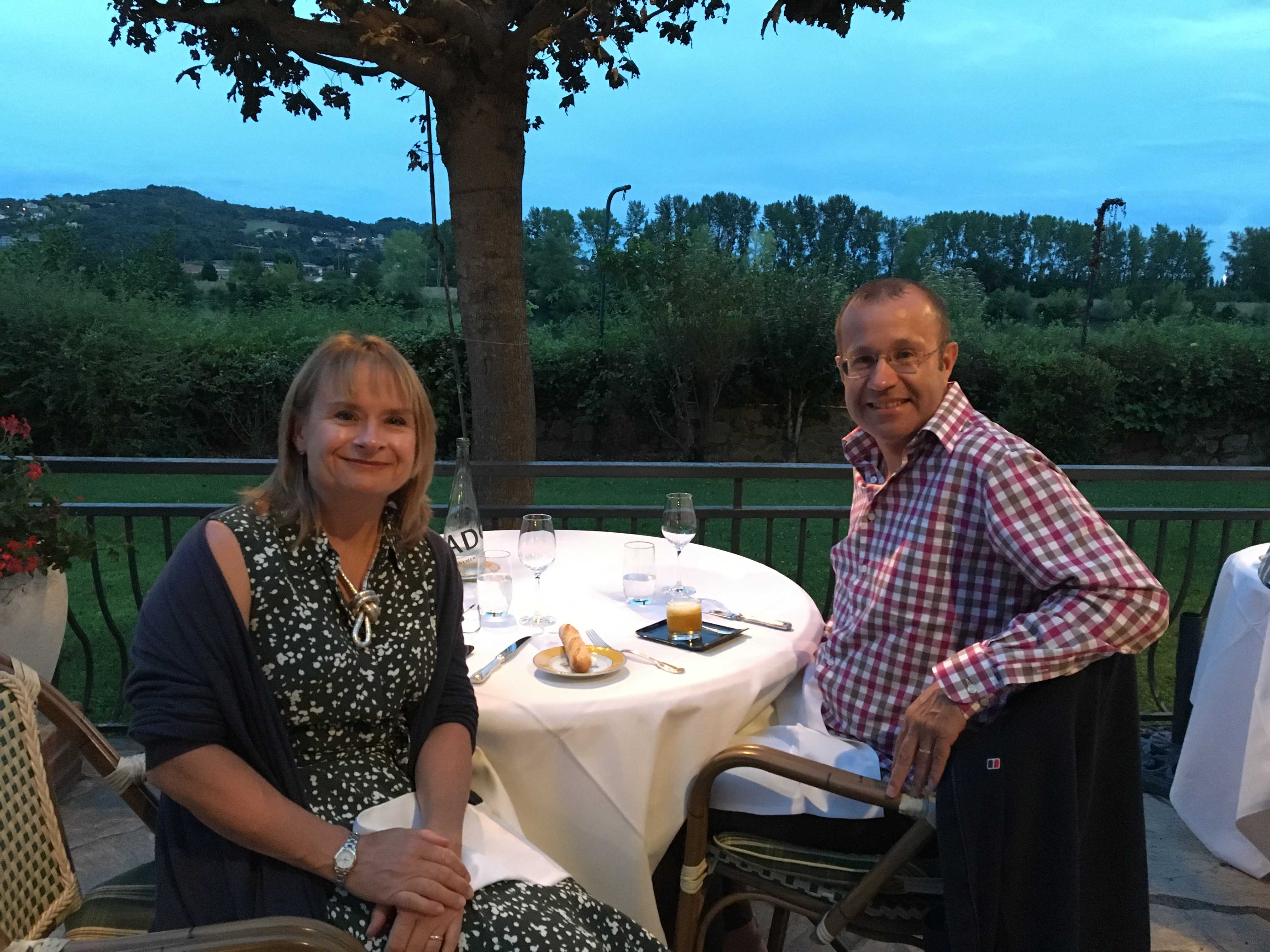
Knowing that it’s our wedding anniversary Julian has reserved us the best table in the garden right next to the still waters of the Rhône.

IMG_3294

Julian naturally recommends us a stunning Condrieu made in a style to perfectly accompany the pork filet mignon with a mustard sauce. The grapes for this wine are grown on terroir that is adjacent to the Chateau-Grillet AOC, the most prestigious in the Condrieu area but at prices out of my league.

IMG_3259

Condrieu Coteau du Chery 2015 Andre Perret
This wine is medium gold in appearance, with a medium plus intensity of peach and smokiness from partial oak. It is developing in character. On the palate it’s dry with medium plus acidity, high alcohol and a full bodied rounded rich mouthfeel with aromas of apricot and toasted cedar and a long lingering finish. In assesment there is balance in harmony with a great length, and intensity with complex flavours evolving. A great wine drinking well now and with some further ageing potential of a few years.

The richness of this style of Condrieu is perfect to balance the rich flavours of the pork and mustard main course.

We were so enchanted by the Apricot dessert from the tasting menu the night before that we reorder the same again along with a another glass of Muscat de Beaumes-de-Venise.  To our surprise they put their own signature finish to the dish wishing us both a Happy Anniversary! A really lovely touch to bring a perfect day to its close!

IMG_3293

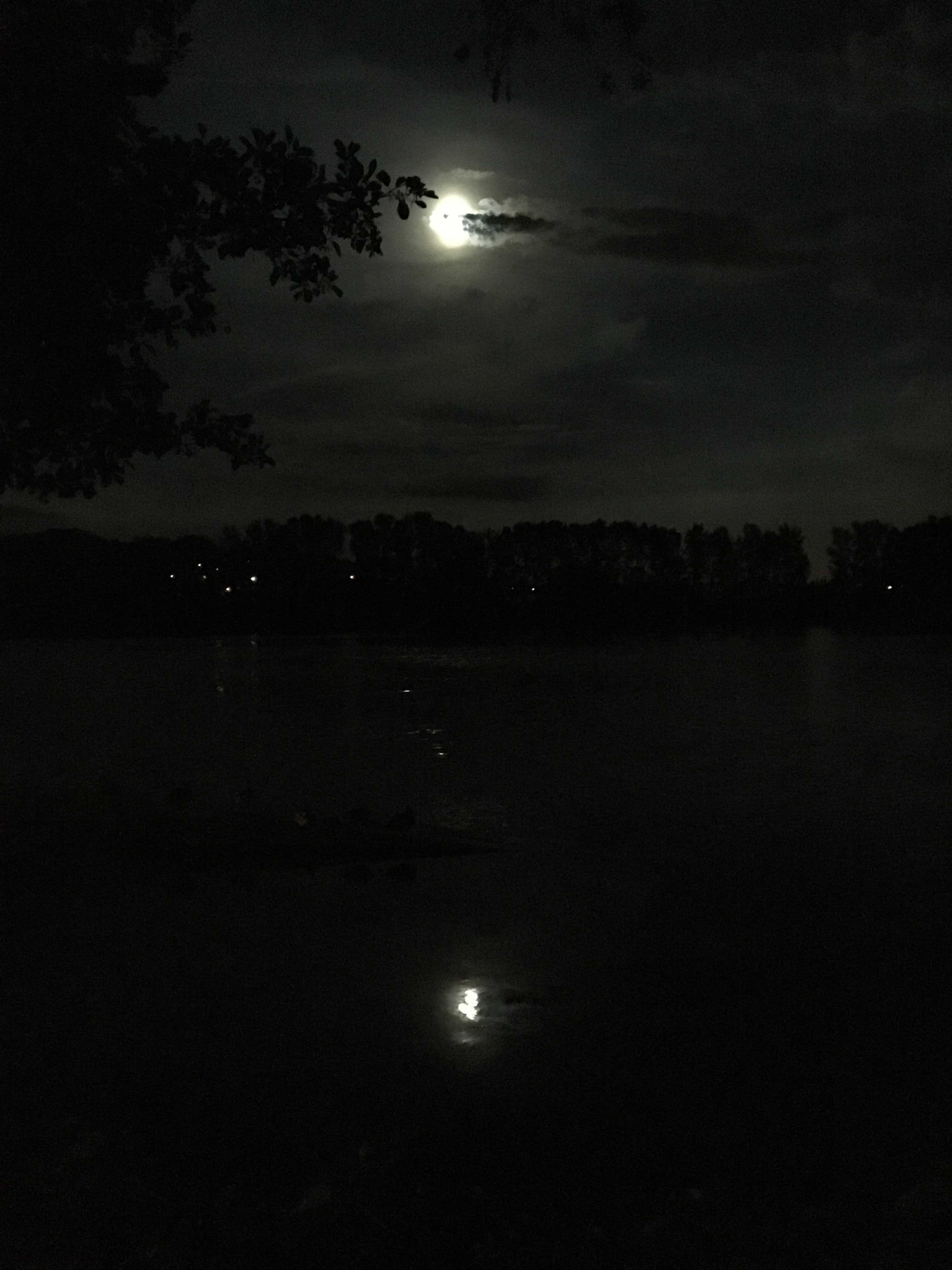
With the moon working its magic on the river we stroll back to our room after another amazing day!

Chateaux, Abbeys Stellar Food and Wine, Wine, Wine!

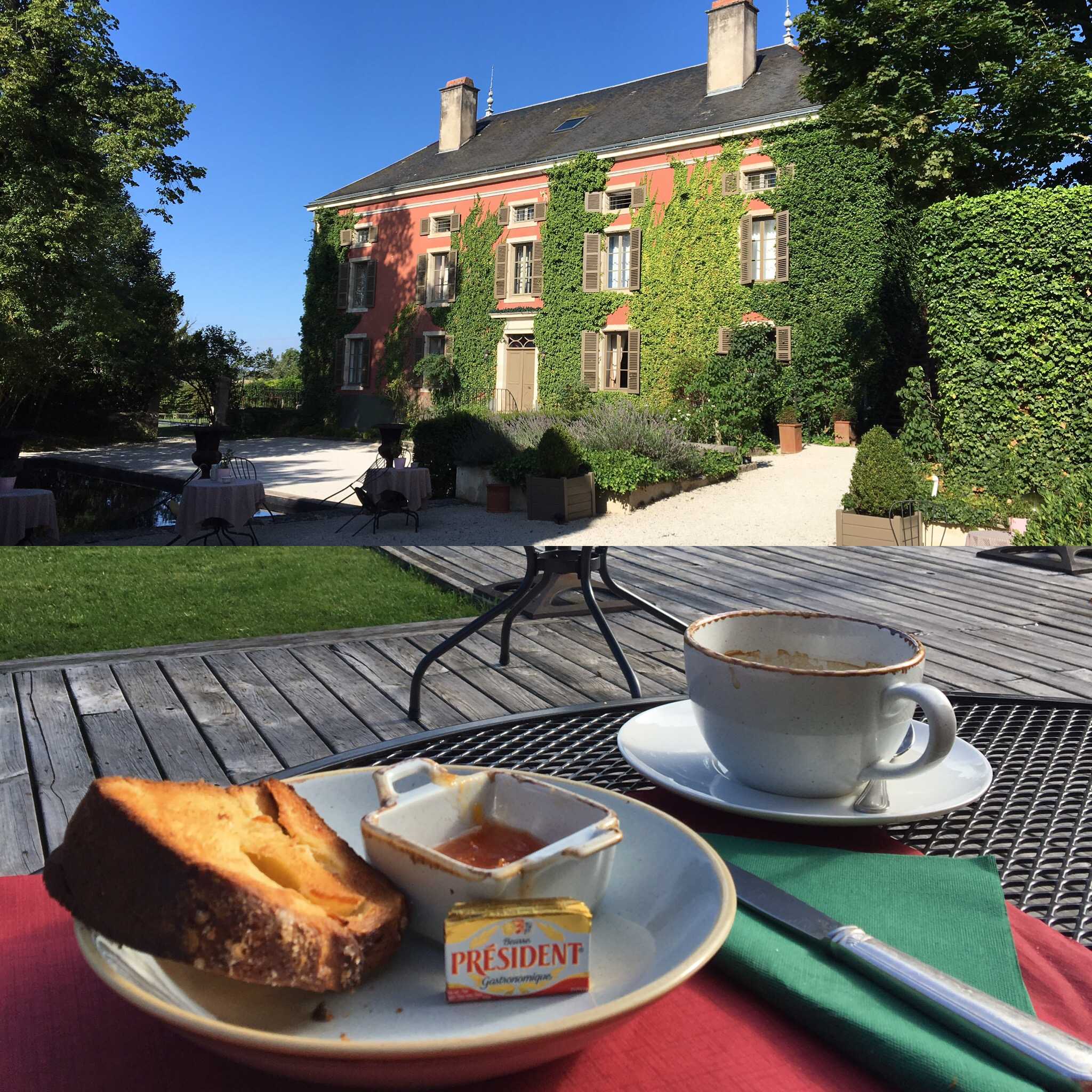
An intense azure blue sky is the opposite to what we saw the day before as we take in our last breakfast at the Chateau de Courban before hitting the road.

Most of the time, when on tour we take a room only so we can experience the delights of the local boulangerie but in Courban it's not really an option as the nearest one is a good five miles away and anyway it's an excuse to indulge in their delicious breakfast buffet! For me the toasted brioche with homemade apricot jam was irresistible.

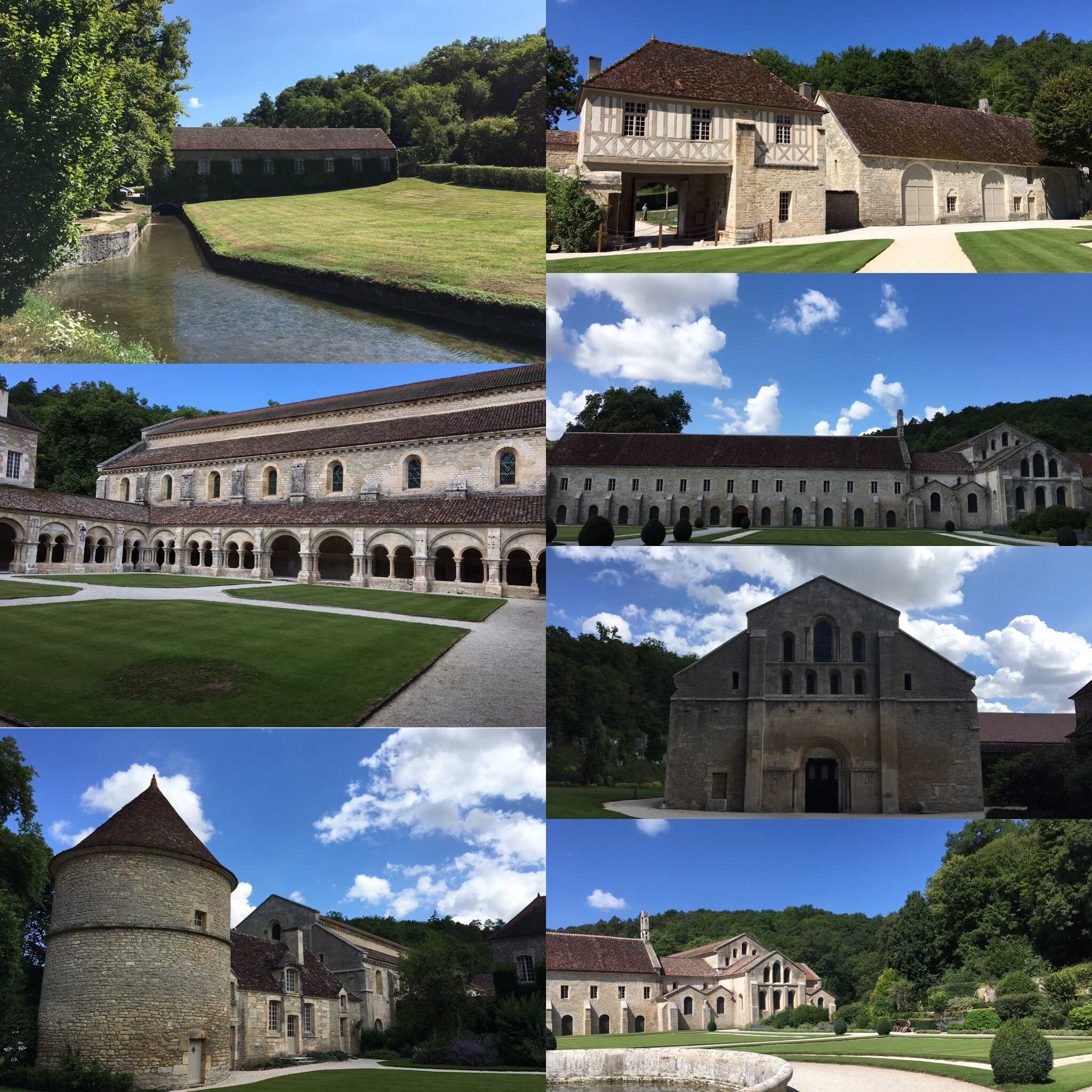
As we loaded up the car we decided to take a small detour to the UNESCO World Heritage site, Fontenay Abbey, a decision we would later congratulate ourselves on!

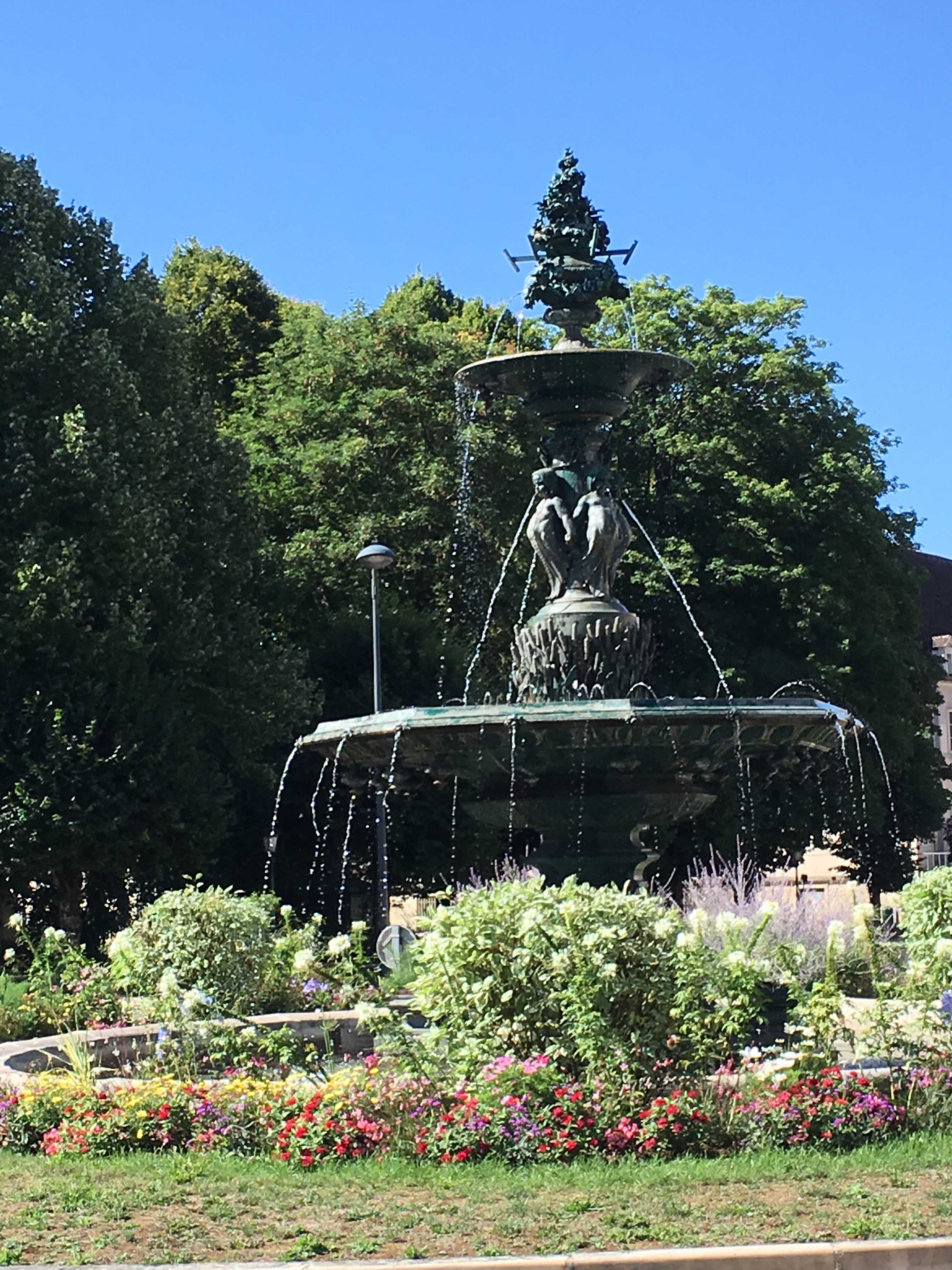
At the centre of Châtillon-sur-Seine we pass this lovely fountain, one of many around the town.

We leave the the bustling town behind us and wind our way out into the beautiful rolling Burgundian hills. A landscape that is a riot of shades of green pastures dotted with the unmistakeable creamy white whisps of Charolais cows! The soothing brogue of Hugh Bonneville on Desert Island Disks is our soundtrack, it's the perfect fusion of the senses to instil peace and a sense of calm.

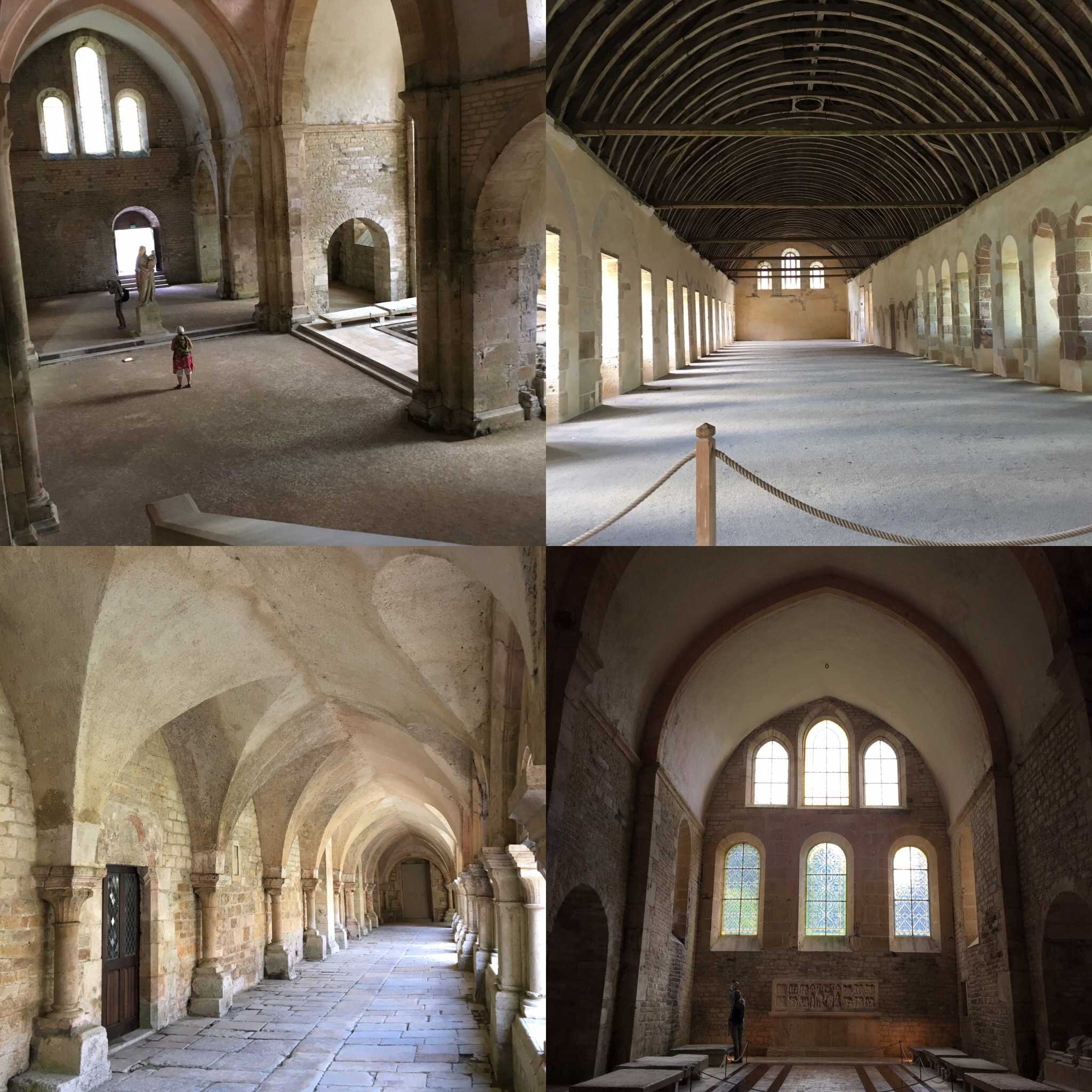
Arriving at Fontenay we estimate a quick pit stop but are unprepared for the sheer wonder of the place.

Founded in 1118 by Saint Bernard it is one of the oldest Cistercian abbeys. The industrious monks cleared a swamp that was here and dried the land to build the abbey and its surrounding buildings. The abbey was wealthy from 12th Century to the 15th Century with a community of more than two hundred monks.

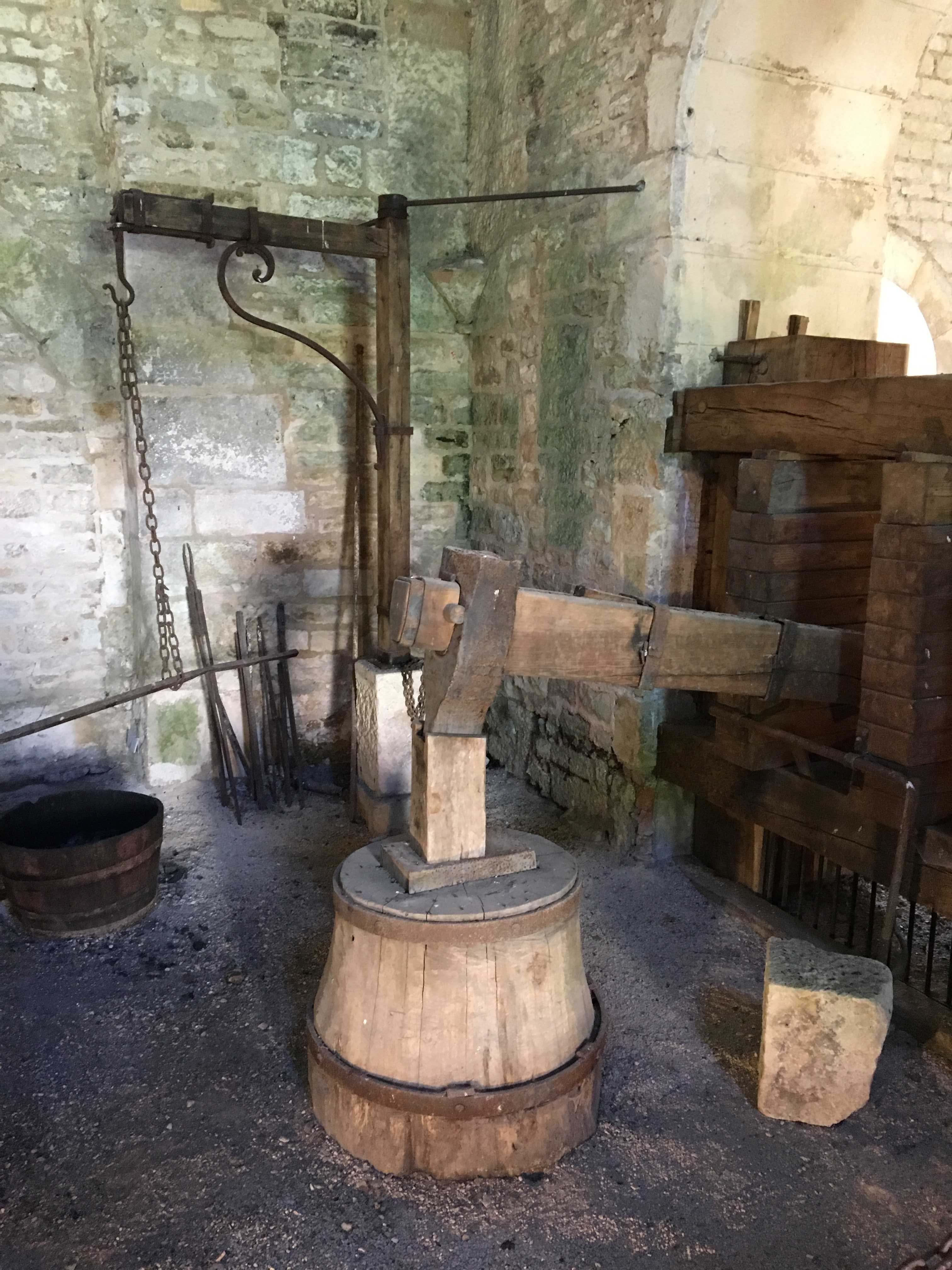
The abbey owned a huge estate which was cultivated and farmed by the monks they even used their engineering prowess to create a novel forge, the first of its kind in Europe. By the 16th Century the abbey started to decline partly as the abbots became appointed by the King!

By the time of the French Revolution there were only twelve monks left. In 1790 the abbey was sold as state property and bought in 1820 by Elie de Montgolfier, a descendant of the famous pioneers of hot air balloon flight. He transformed the abbey into a paper mill. In 1906 Edouard Aynard, a wealthy financier and art collector bought the abbey back from his father in law, Raymond de Montgolfier.

He rescued the former abbey, transforming it from an industrial site and restoring the buildings to their original architectural beauty. The abbey remains in the family's ownership today and is listed as a UNESCO World Heritage site.

Fontenay Panoramic Views 1

Fontenay Panoramic Views 2

Completely wowed by Fontenay we head off with a taste for a little more Burgundian architectural splendour and in search of the King of Burgundian cheeses, Epoisse!

Sadly the dairy which offers five different iterations of this strong and creamy Marc washed cheese was closed as was the local gourmand food store opposite the castle so we settled on a brisk walk around the inside of the castle, which is a perfectly preserved example of a double moated castle.

At the ticket office was a young French student combining his weekend job with some flute practice and this was the result!

Live flute at Epoisse

The temperature was rising and as we raced down the autoroute towards Beaujolais our next pit stop, we decided on an unscheduled stop just outside Beaune to take a dip in the natural outdoor lido!

Refreshed and refuelled with the leftovers of the previous night's picnic we continued towards Beaujolais. We wanted to be in Condrieu before 7pm and thinking that as it was a Sunday afternoon most cellars would be closed we just plucked a lesser known Cru as a wild card on the off chance somewhere would be open.

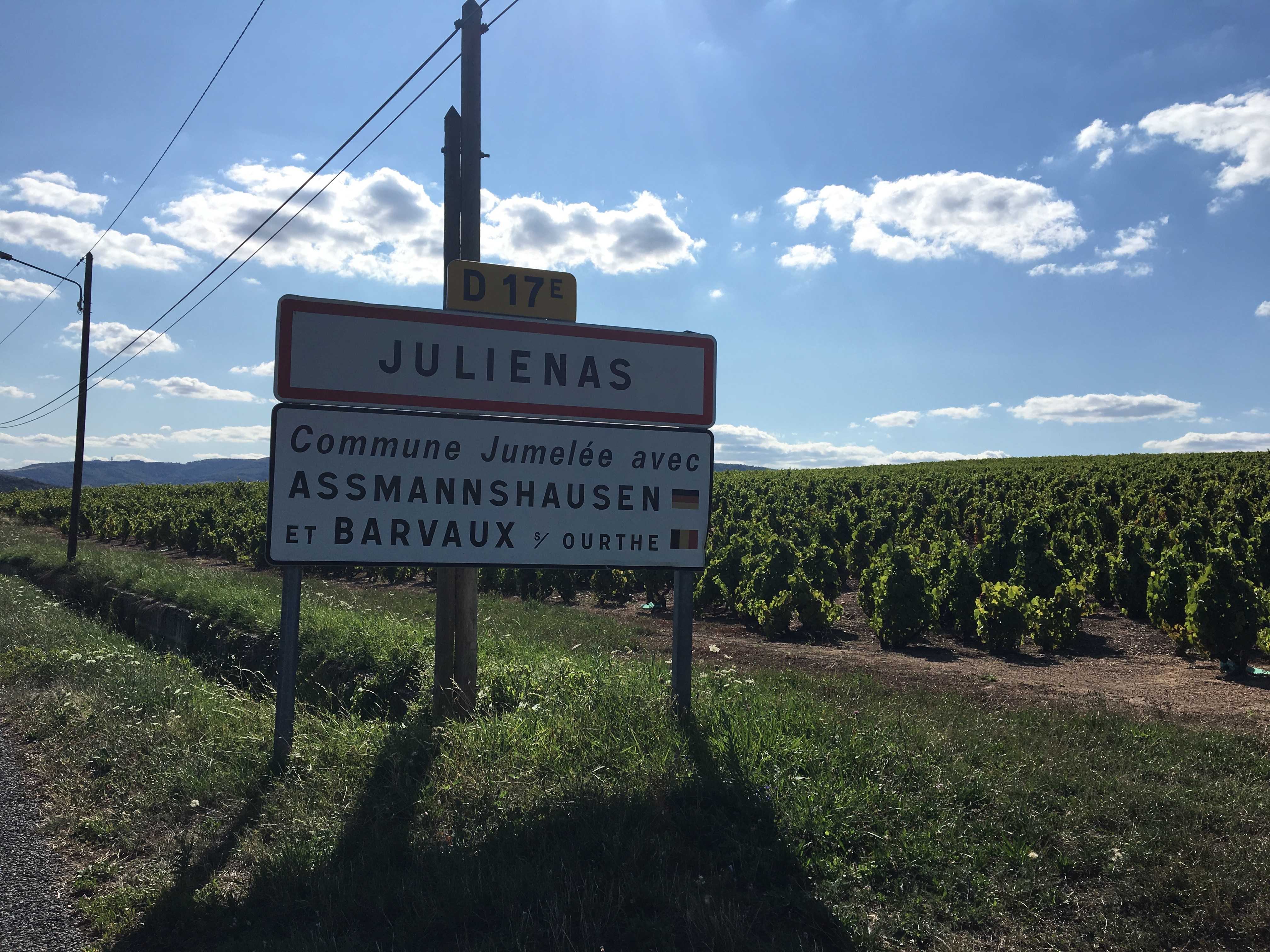
Julienas rewarded us with the local producers association PR centre being open. Housed in a former church and also used as an education centre on the wines of Julienas they also offered tastings! Here's the results!

The terroir of Julienas is granite and shale with clay veins.

Julienas 2013 Red; Medium ruby red in appearance, developing wine with a raspberry nose. More red fruit on the palate in the form of red cherry, dry with light tannin, medium alcohol, medium body and a long finish.

Julienas 2014 Red: Medium ruby red appearance again with a nose of Parma violets and red cherry with more of these flavours coming through on the palate. Dry, with medium tannin, medium alcohol, medium body and a medium plus finish.

Julienas 2015 Red: As predicted medium Ruby appearance, with a nose of bubblegum from the carbonic maceration. On the palate, dry with light tannin, medium alcohol and body lots of red cherry fruit and a medium plus finish. Developing and would benefit from keeping longer although drinking well now if you prefer a lighter, fruitier style.

Julienas 2016 White: Pale lemon in appearance. On the nose, white flowers, green apple and a hint of lemon. No oak. On the palate, dry, with medium plus alcohol and medium plus body, medium plus acidity and a medium plus finish. Aromas of apricot, peach and hints of tropical fruit. A surprising 100% Chardonnay Beaujolais which makes up less than 3% of total grapes grown in the Julienas AOC.

Julienas 2015 Red Oaked: Medium ruby red in appearance with red fruit, red cherry nose. On the palate, light sour red cherry aromas, like a cherry yoghurt. Dry, medium tannin, medium alcohol, light body, medium plus finish.

We arrive at the Le Beau Rivage before sunset in time for a quick change before dinner. Then a leisurely stroll along the Rhone before we drink a glass of Condrieu in Condrieu while studying the extensive wine list and menu as the sun goes down.

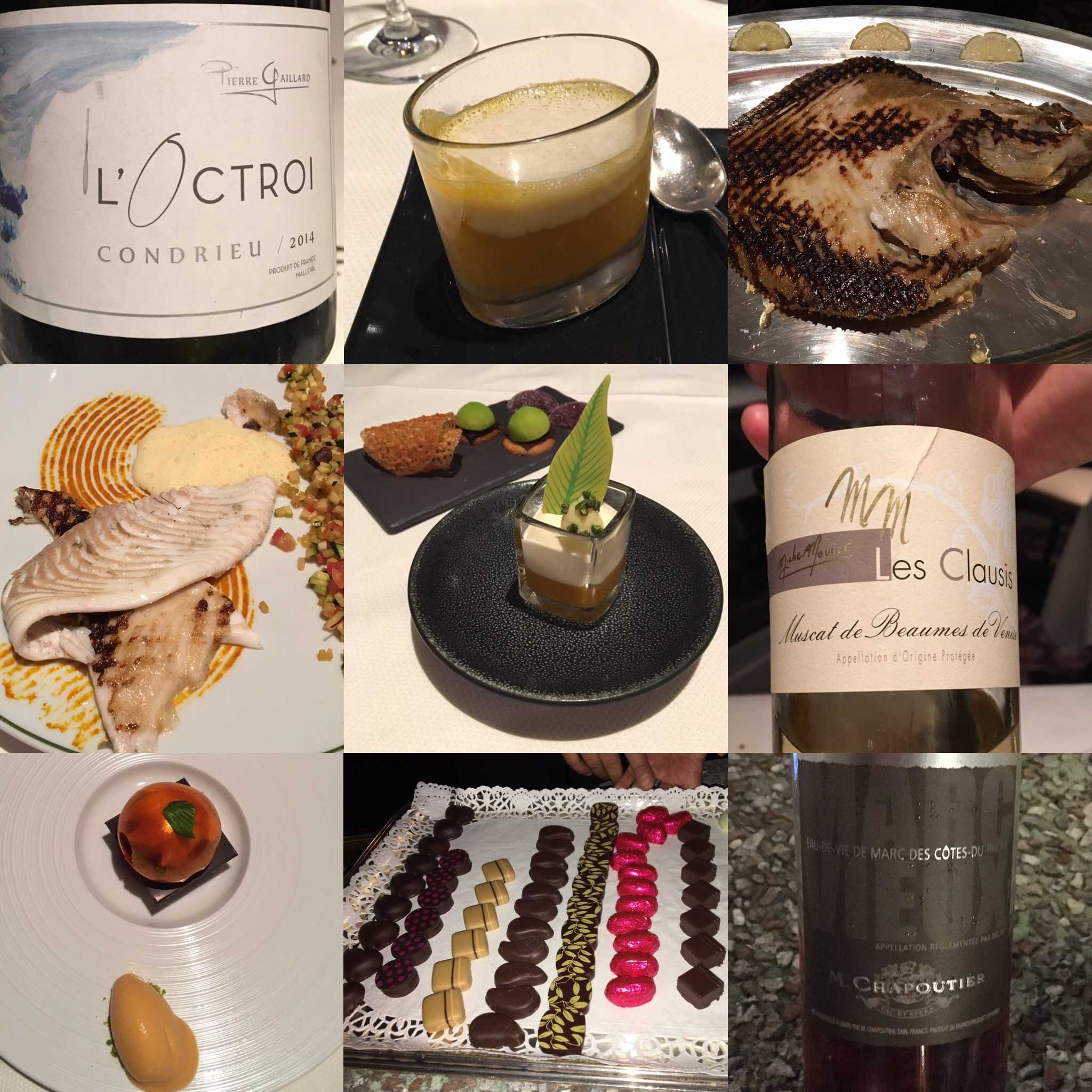
We are looked after by the charming Julian whose knowledge of wines is incredible we think he must be the sommelier and are surprised that he is not! We go for the turbot to share which we thought is a classic Condrieu pairing and our guided by Julian to the sublime 2014 Pierre Gaillard L'Octroi.

Dinner is a triumph of great food as much as great wines to match!

2014 Pierre Gaillard L'Octroi Condrieu

Pale gold in appearance with medium plus intensity on the nose of white peach and honeysuckle. A developing wine which is dry, with medium plus acidity, medium alcohol, medium plus body and a rich intensity of more stone fruits apricot and peach with background refreshing minerality. This is a beautifully balanced wine with a long lingering finish and seamlessly integrated components that are both intensely rich and complex. It is drinking well now and is an outstanding example of a fresh unoaked Condrieu.

The Turbot is amazing. Grilled whole and served by Julian at the table. It is perfectly cooked and is succulent and rich in flavour accompanied by a perfect hollandaise.

Whilst perusing the dessert menu we get food envy seeing the dessert from the tasting menu go to an adjacent table and twist Julian's arm to see if we can have that! Chef agrees and we are excited!

The dessert is a sorbet of apricot with pistachios granules and an apricot sugar dome covering an apricot and rosemary mousse sitting on poached apricots on a dark chocolate square. It's a riot of stone fruits with lots of sweet and sour/acid flavours going on and an incredible dessert which looks spectacular.

Dessert is classicly paired with a Beaumes-de-Venise and followed with coffee and an incredible selection of chocolates from the nearby house of Valrhona.

Dinner is rounded off with a Marc from Maison M.Chapoutier after dinner we take a romantic moonlight stroll along the Rhone.

Its the perfect end to another perfect day.

The Great Sicilian Escape

I’ve been anticipating this trip for several months. A country that’s as rich in its cultural heritage whether that be Greek, Roman or Phoenician as it is in its food and wine whether that be the searing acidity of those legendary Sicilan lemons or the sweetness of their ricotta filled pastries.Leaving a cold and damp Gatwick behind us on a Friday, our first surprise was an upgrade on our car from the charming Simona at Avis Preferred. Within an hour we arrived at the majestic Belmont Villa Sant’Andrea our base for the next 4 days. Set like a jewel into the rocks with an adorning landscaped garden giving way to breathtaking views of the ocean, its not hard to see why this is the hottest ticket in Taormina!

Receiving the warmest of Sicilian welcomes from La Bella Leah on reception we check into our room to be wowed with this view.


A nice touch was a welcome note from the General Manager with complimentary pastries.

After a quick dip in the chilly waters of the Med we headed round to the cove by the picturesque Isola Bella. There we found a beach restaurant, Ristorante La Pizzichella, with a deck which the incoming tide was lapping.

The perfect location we thought for pre dinner Negronis!


The first 2 were sooo good the words Ancora Negroni! Just tripped off our lips!

Such an idyllic location with the water lapping at our toes, it was hard to be beat so we just caught last orders at 19:45 for the kitchen and ordered the chef special,  swordfish linguini. Rounded off with a sublime bottle of Vignavella Chardonnay. Hints of oak and a dry acidity this was delicious although the Negronis impaired my memory any further.

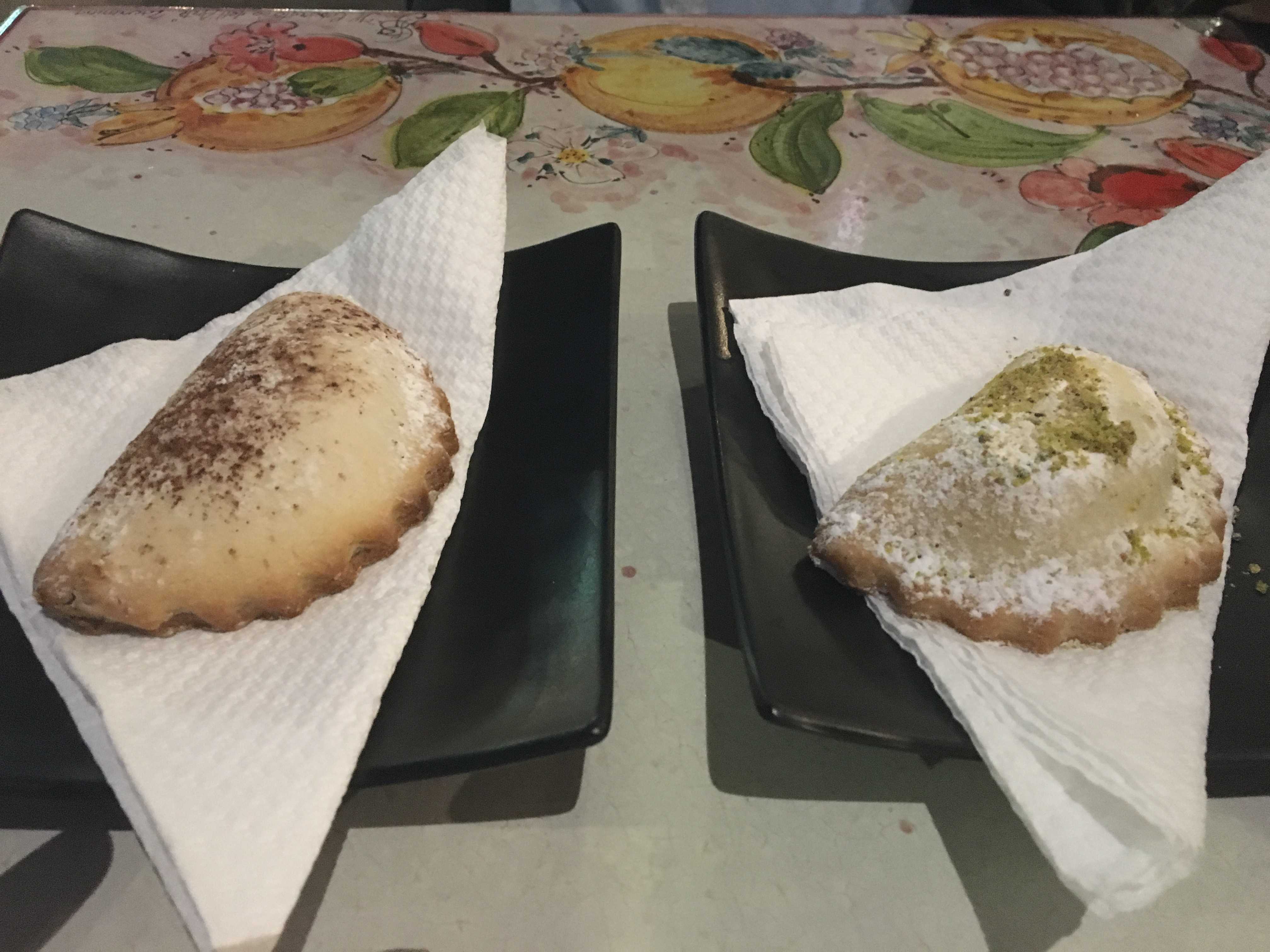
As we strolled back up the steps from the beach we felt a craving for something sweet to finish off! We found a delightful bar and Gelateria, Ai Paladini Cafe, a few metres down the road and fed our cravings with a selection of chocolate and pistachio pastries accompanied of course by some sweet nectar like Sicilian dessert wines.

As we ordered il conto the waiter brought us a local speciality of pistachio cream liquor which was something you could easily get addicted to!


Less than 24 hours in Sicily and we had already fallen in love with the island!


Unspoilt Quiet Beaches, Wine Tasting and a Killer Sunset – Another Day in the Paradise that is Maremma!

After a first full day in the paradise that is the Maremma, we wonder what day two would hold in store for us.

We had already researched that we could join a guided trek in English through the wilderness that is the Maremma National Park at 9am that morning. So we make an early start, leaving behind us Porto Santo Stefano, already bustling with life, its marina awash with daytrippers ready to board the shuttle service to Isola del Giglio.

We arrive in the sleepy village of Alberese just before 9am and make our way to the Tourist Information Centre to book ourselves onto the trek.

To our surprise we find that the English tour was the next day and that the Italian tour that day didn’t start until 10am!

Undeterred by this seemingly large setback we decide to take a flyer on the Italian tour with my limited knowledge of spoken Italian our restricted audio guide!

With an hour to spare before the tour begins we head over to a little cafe bar opposite, where we order two doppios and two large glasses of iced water and settle down in a shady spot to take refuge from the already searing heat with our holiday reading for amusement.

At five to ten the transfer bus rolls up with our guide who to our relief speaks some English and was an Ecologist from the University of Pisa.

Within 15 minutes we are in the thick of the park with wild boars and deer visible from the bus as we drive to the drop off.

The Maremma is one of the last great unspoilt ecosystems in Italy. Its biodiversity and beauty fiercely protected by controlled entry. Access to the park by vehicle is restricted to guided tours and these are limited to just a few a day.

One of the commonest trees indigenous to the park is the Mediterranean Oak which has evolved so that it can survive drought. Unlike our native English Oak it is an evergreen and is characterised by hard small green leaves. When thriving en masse like in the park it gives the hills and mountains an intense green colour that contrasts against the azure blue sky.

img_0830

Droughts here can be extreme, exacerbated by the permeability of the limestone rock which causes the winter rains to rapidly drain away.

The only sound we hear is the faint swish of waves lapping the shore below and a few odd cicadas at the end of their season, this is in contrast to late spring and early summer when their chorus of mariachi can be deafening.

All along the Maremma coast there is a series of defensive towers a relic of the sixteenth century when this area was prone to raids by Saracen pirates

img_0831

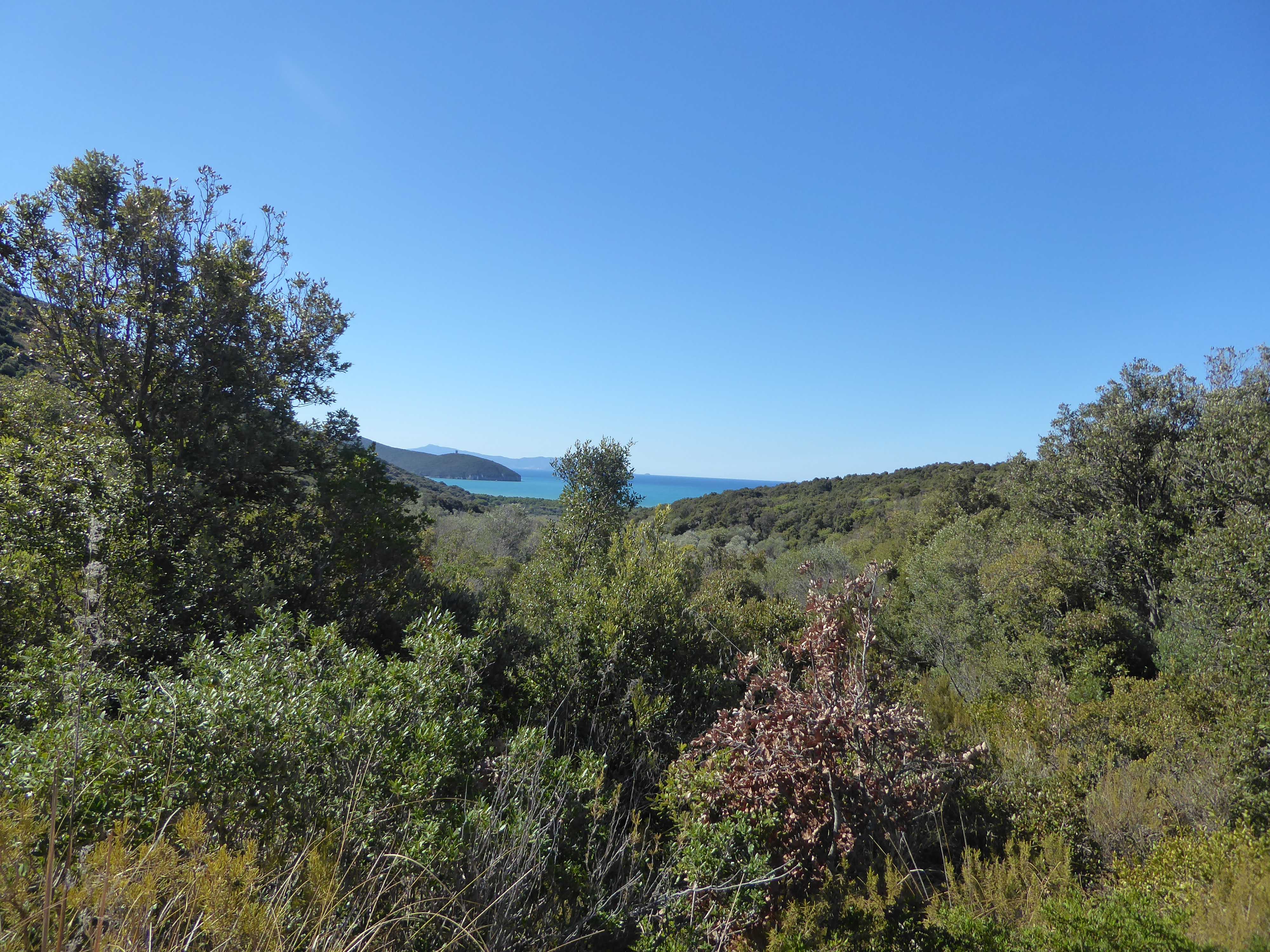
A rich canvas of olive green hues leads out to the turquoise sea, beyond which the islands of Elba, Montecristo and even the faint outline of Corsica creep along the horizon.

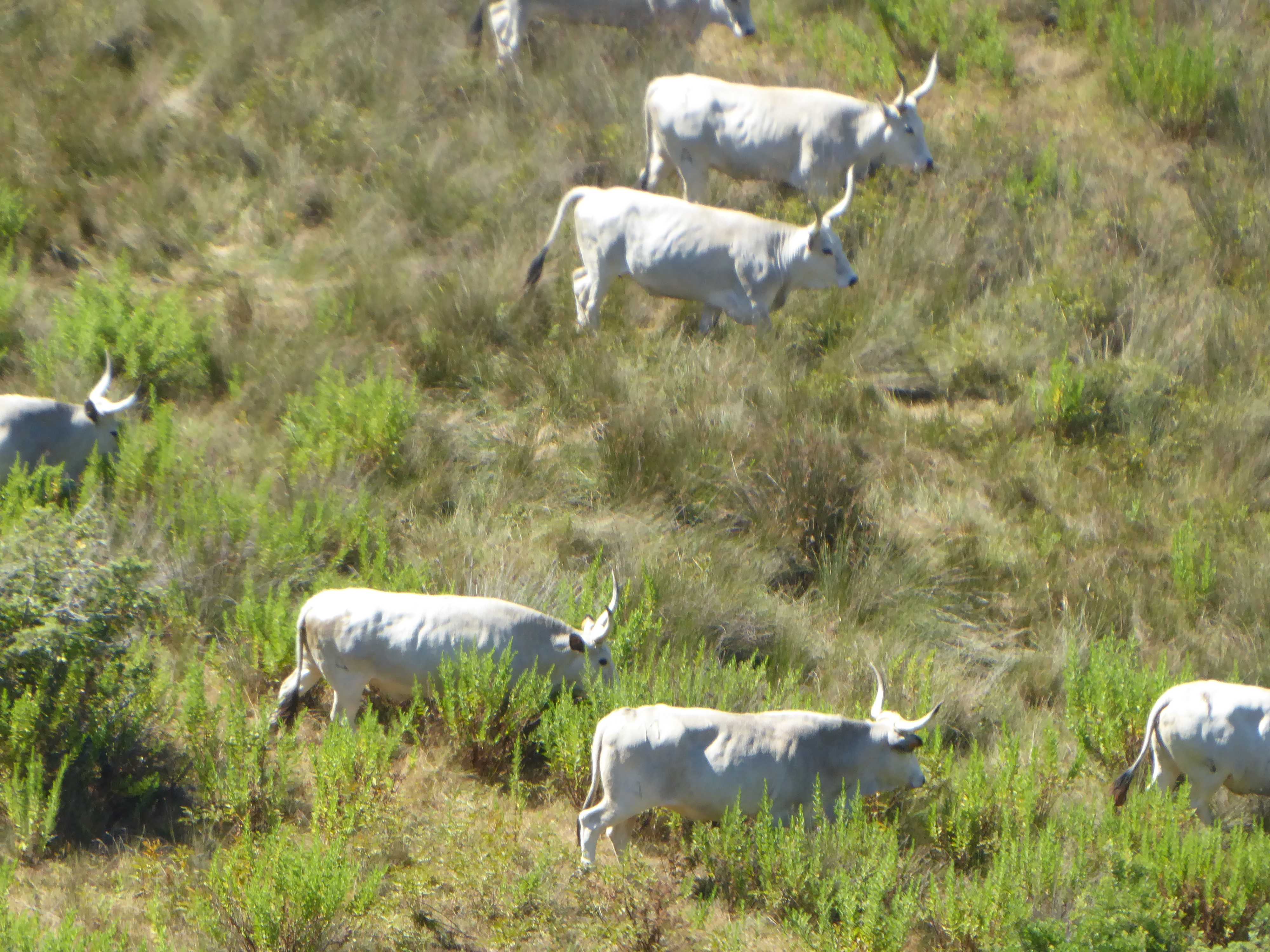
The Maremma is also home to the Maremmana longhorned breed of cattle which can be traced back to the Etruscan period. After a period of population decline it has reasserted itself, thriving in the harsh environment of the Maremma.

image

We descend down through the rocky path onto a huge expanse of wild beach, completely unspoilt and with just a handful of people sprinkled across the shoreline. Our guide advises us we have twenty minutes to take a refreshing dip before the short hike back to our bus so we take full advantage of this tranquil paradise.

image

We work up quite an appetite during our morning hike  and decide to head to the recommended nearby Osteria La Nuova Dispensa.

The recommendation is insightful! We sit in the shade under a pergola our table covered in a rustic style patterned cloth.

Highlights on the menu are the local charcuterie with cheeses and beef T-bone cooked Florentine style.

img_0921

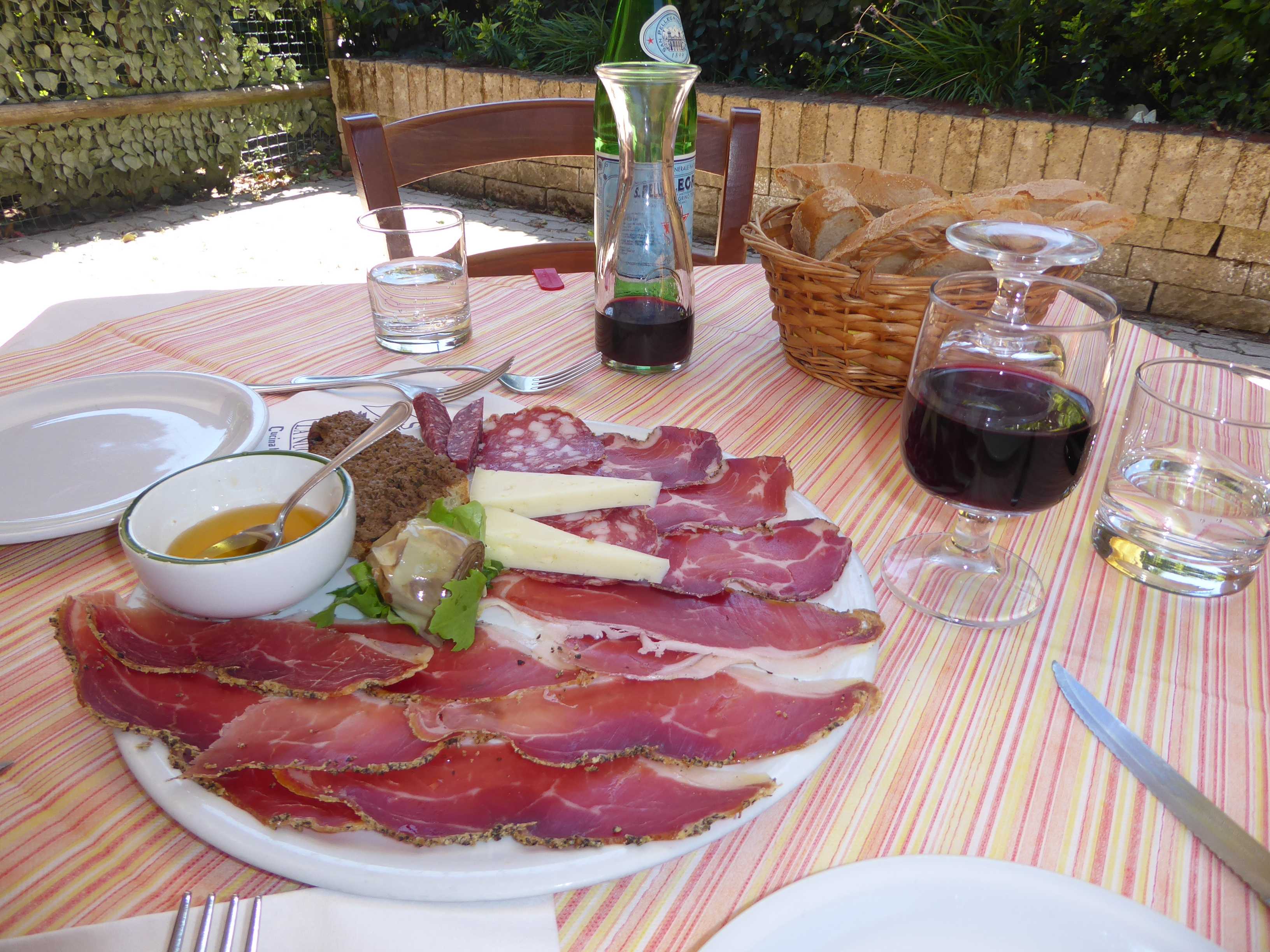
We opt for both! The starter is a mix of spicy wild boar salami, strong flavoured capo collo and a silky prosciutto Umbria with strong umami. A glass of Maremma Sangiovese from the nearby Santa Lucia vineyard  accentuates the flavours even further. A crumbly pecorino cheese is served with wild honey from a local bee keeper.

image

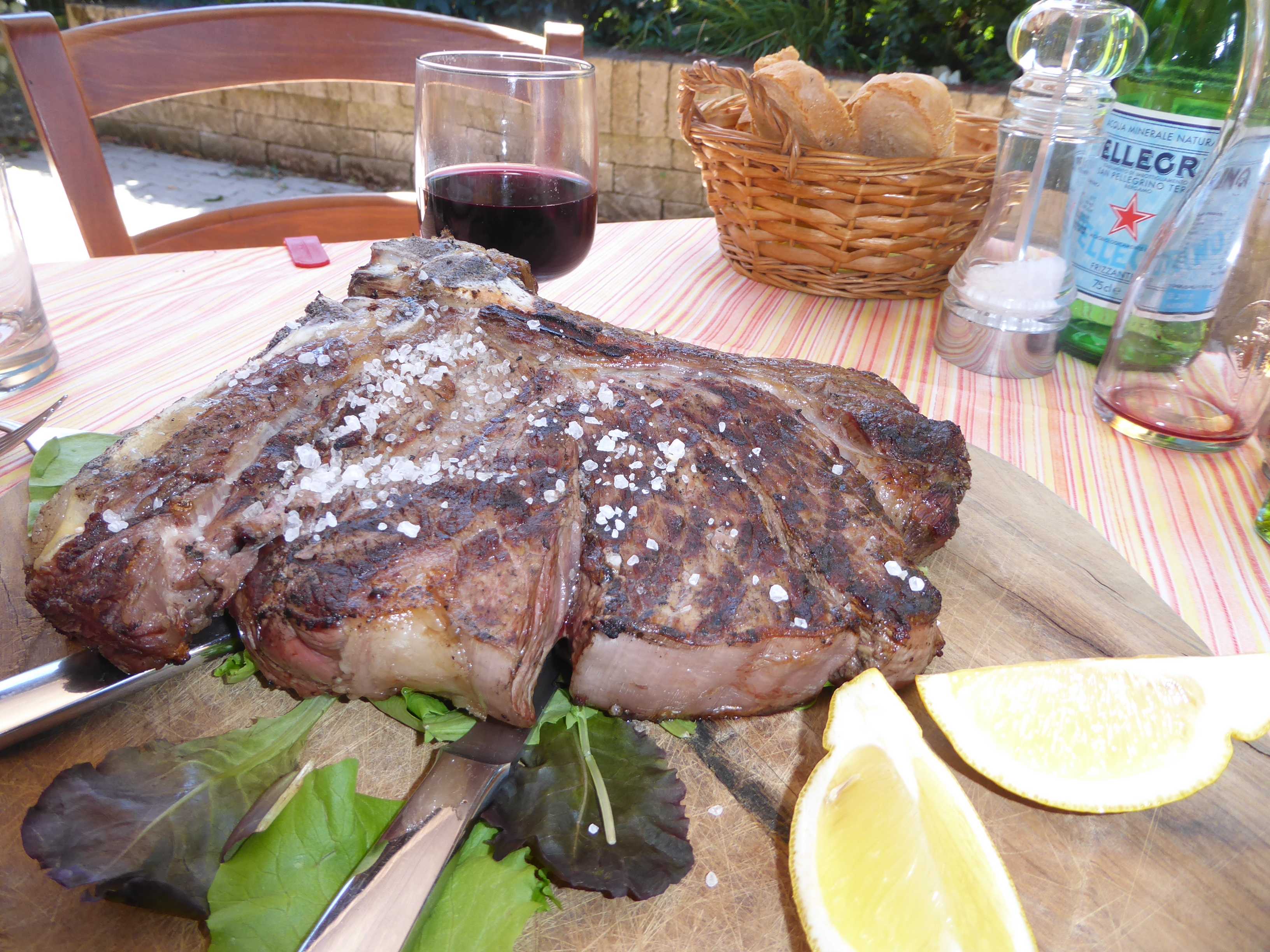
The main course arrives with a simple garnish,it’s a full on fest of rare cooked meat on the bone simply flavoured with salt and pepper.

Our bellies full we head off in search of the Santa Lucia vineyard. Located near Grosseto it’s a fairly modern affair with a tasting room located in a large bungalow style building at the heart of the estate.

image

We had the opportunity to taste 3 wines:

Brigante: 100% Vermentino.

Betto: A Super Tuscan comprising Sangiovese, Cabernet Sauvignon and Merlot. Sour cherries balanced with sweetness of the Merlot to produce a great example.

Santa Lucia: 100% Ansonica. A great expression of the local varietal that is crisp with a steely minerality and aromatic nose.

We arrive back at Cala Piccola in time to catch the last shuttle down to the little cove at the foot of the hotel.

image

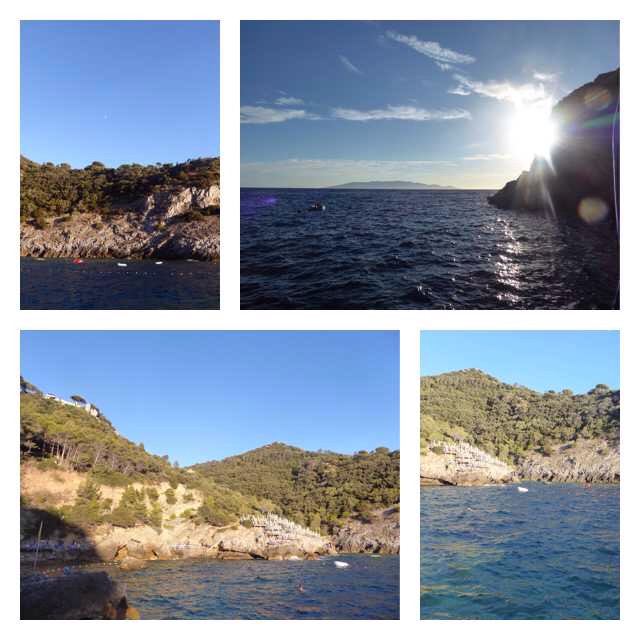
As the mountains start to shade the falling evening sun we indulge in some open water swimming in the warm clear turquoise waters and for a finale sip on some ice cold tequila sunrises!

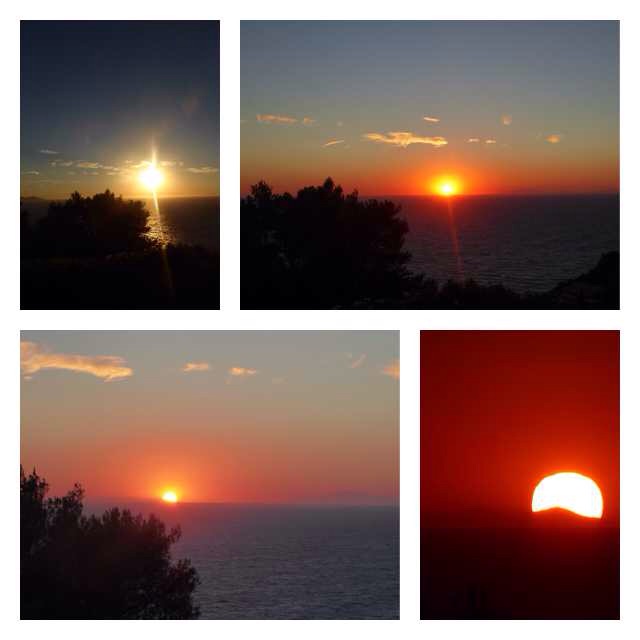
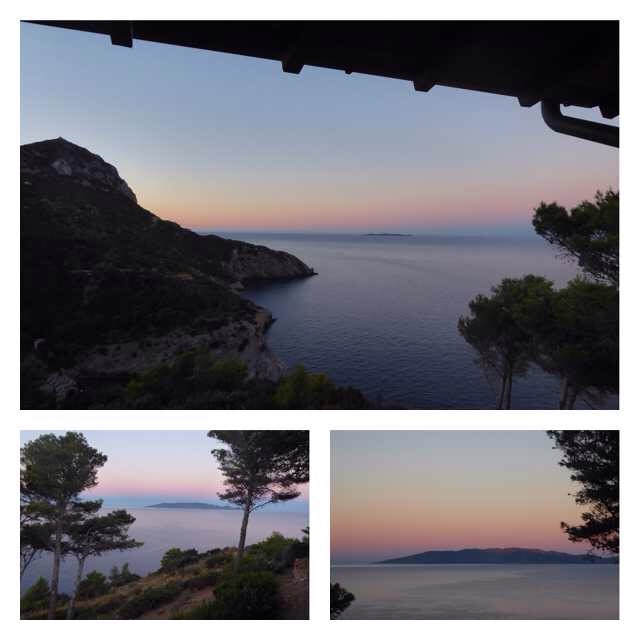
Before dinner we are treated to one of the most dramatic sunsets we have ever witnessed.

image

As we sip our pre dinner drinks on our balcony the sun finally slips behind the distant Isola di Giglio and a cooling sea breeze blows in as we descend into darkness.

image

Dinner is a simpler affair this evening after our meatfest for lunch.

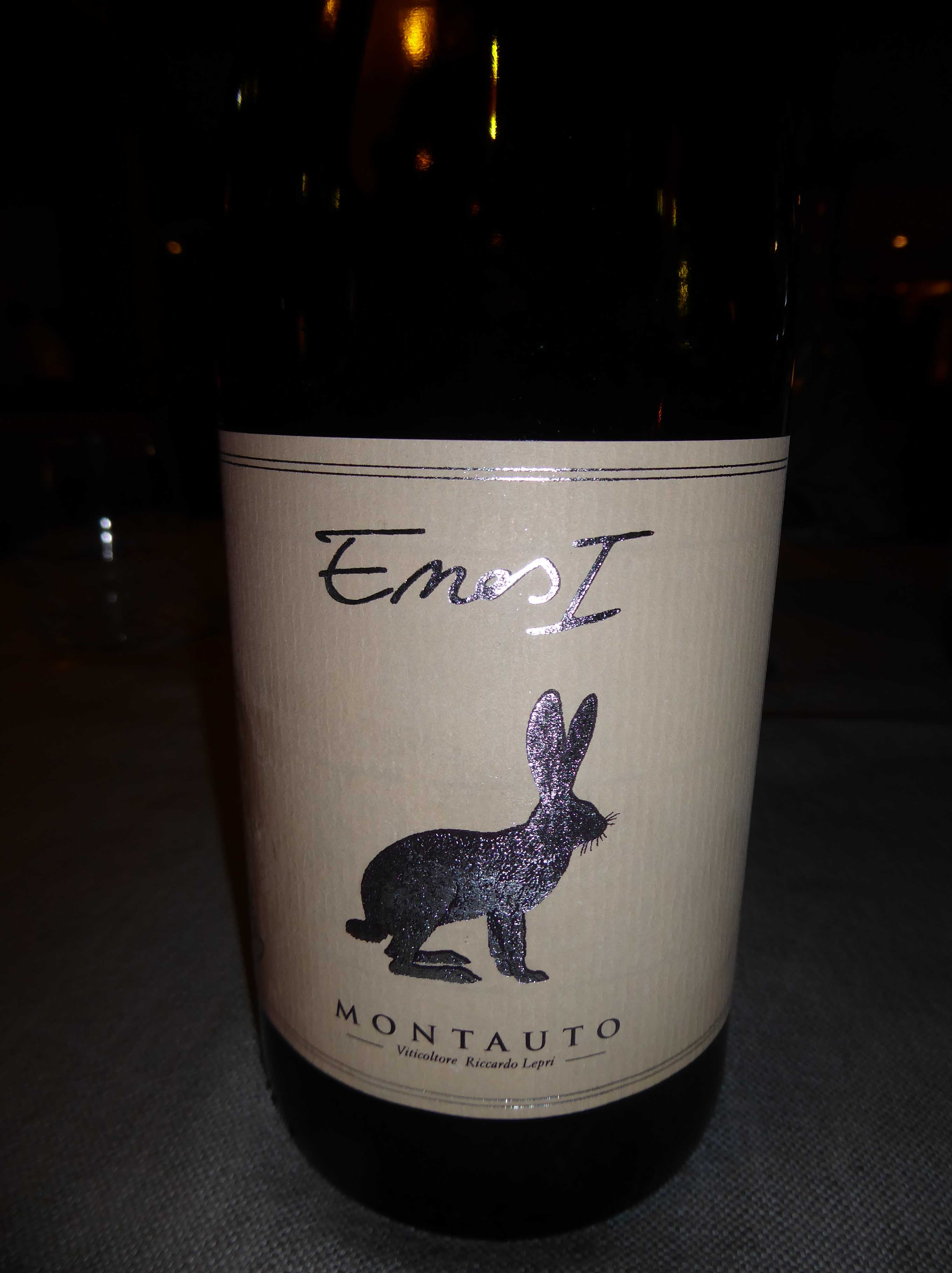
Emilano, the sommelier again delivers a perfect recommendation:  Vini Montauto Enos I, DOC Maremma Toscana. A wine made by one of Tuscany’s new generation of winemakers who are reinvigorating their family owned vineyards with new enthusiasm for producing stunning wines that really express the terroir in which they are grown.

Exhibiting a classic nose of Sauvignon Blanc with gooseberry, fresh grass and Granny Smith, a great balance of acidity and minerality with notes of white fruits, herbs, apple and star fruit rounded with a long finish and perfect with the light summer pasta.

img_0929

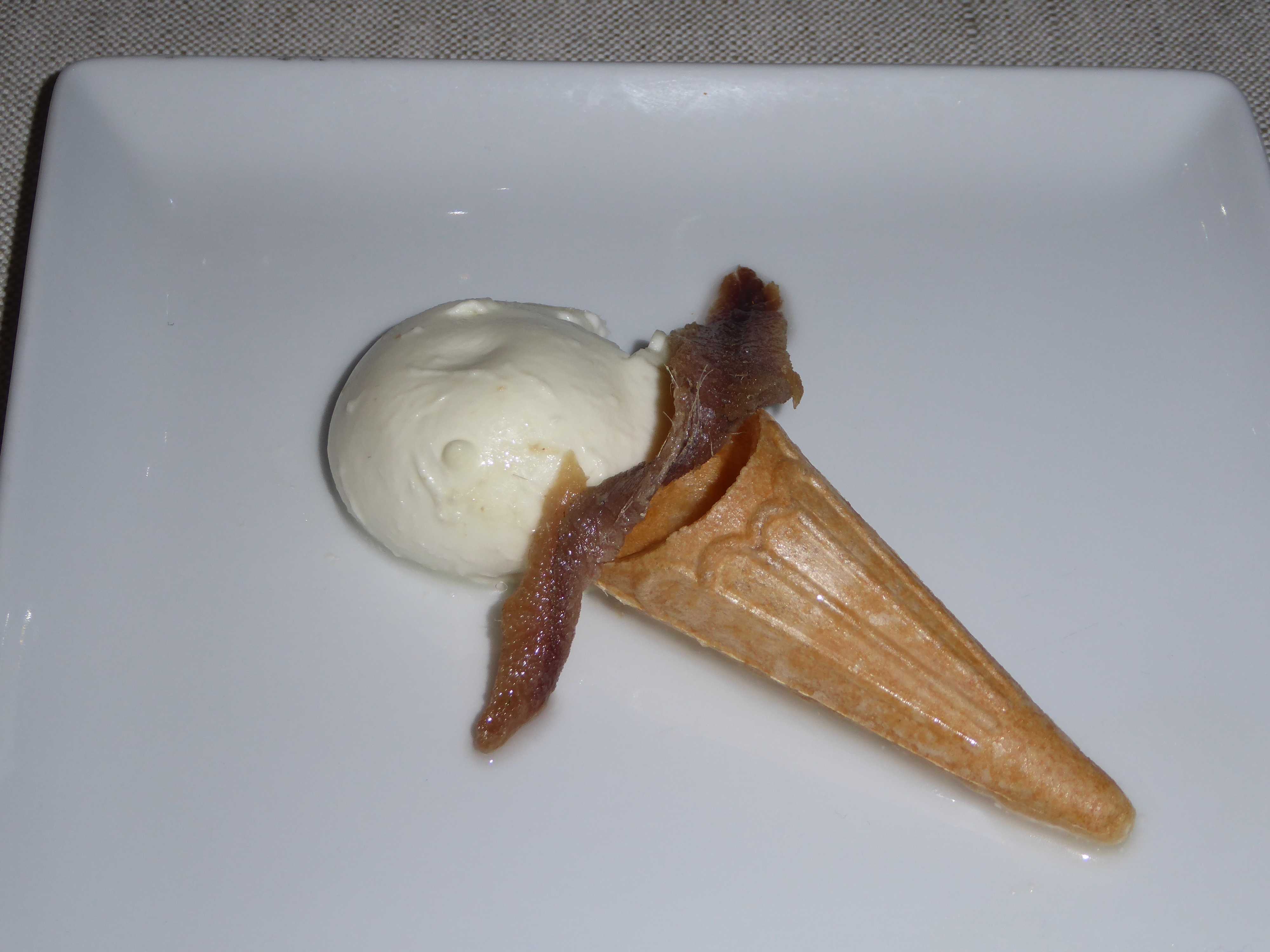
An appetiser of anchovy and buffalo mozzarella is very light, sourced directly from the farmer and served in a slightly quirky style. Nonetheless the saltiness of the anchovy balances nicely with the rich cream of the mozzarella!

img_0928


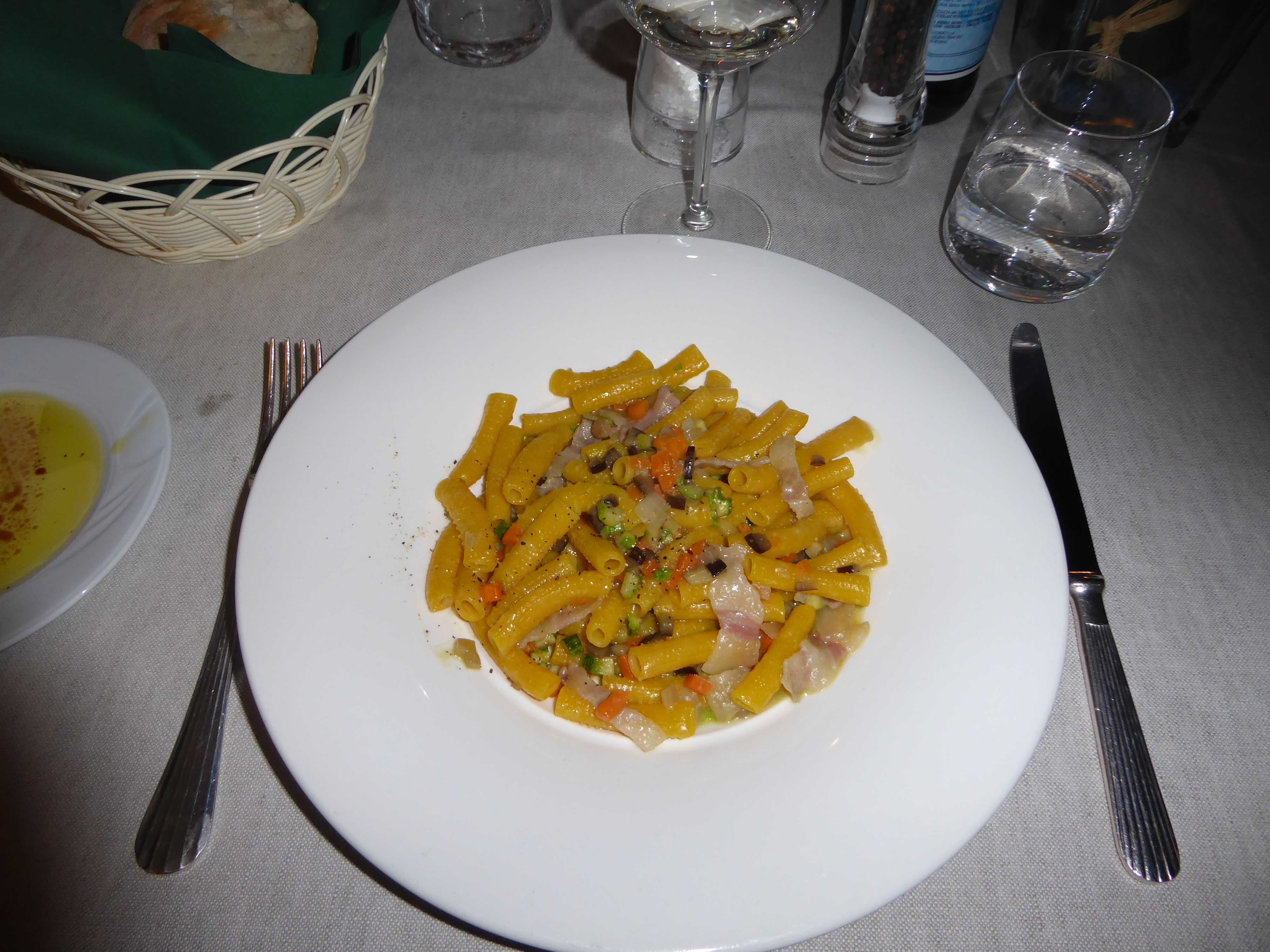
Our main course is macaroni with a mirepoix of carrot, aubergine and bacon bound in a light pea velouté. The silky yet fresh execution of this dish sings a ballad of summer with every mouthful.

image

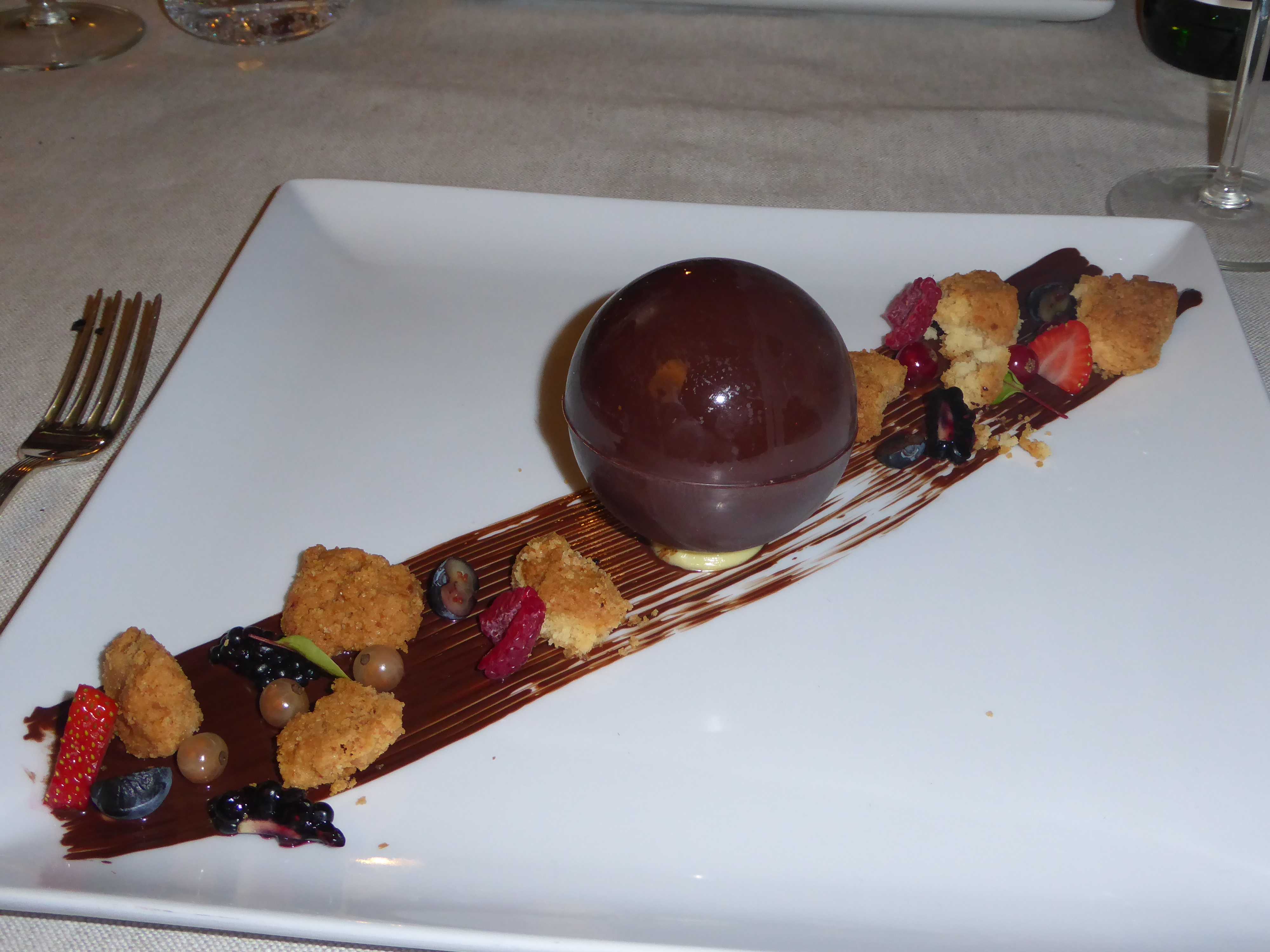
We are again seduced by the Valrhona chocolate dome with passion fruit ganache and dried fruit crumbs. As spectacular in its delivery as it was the night before!

img_0931

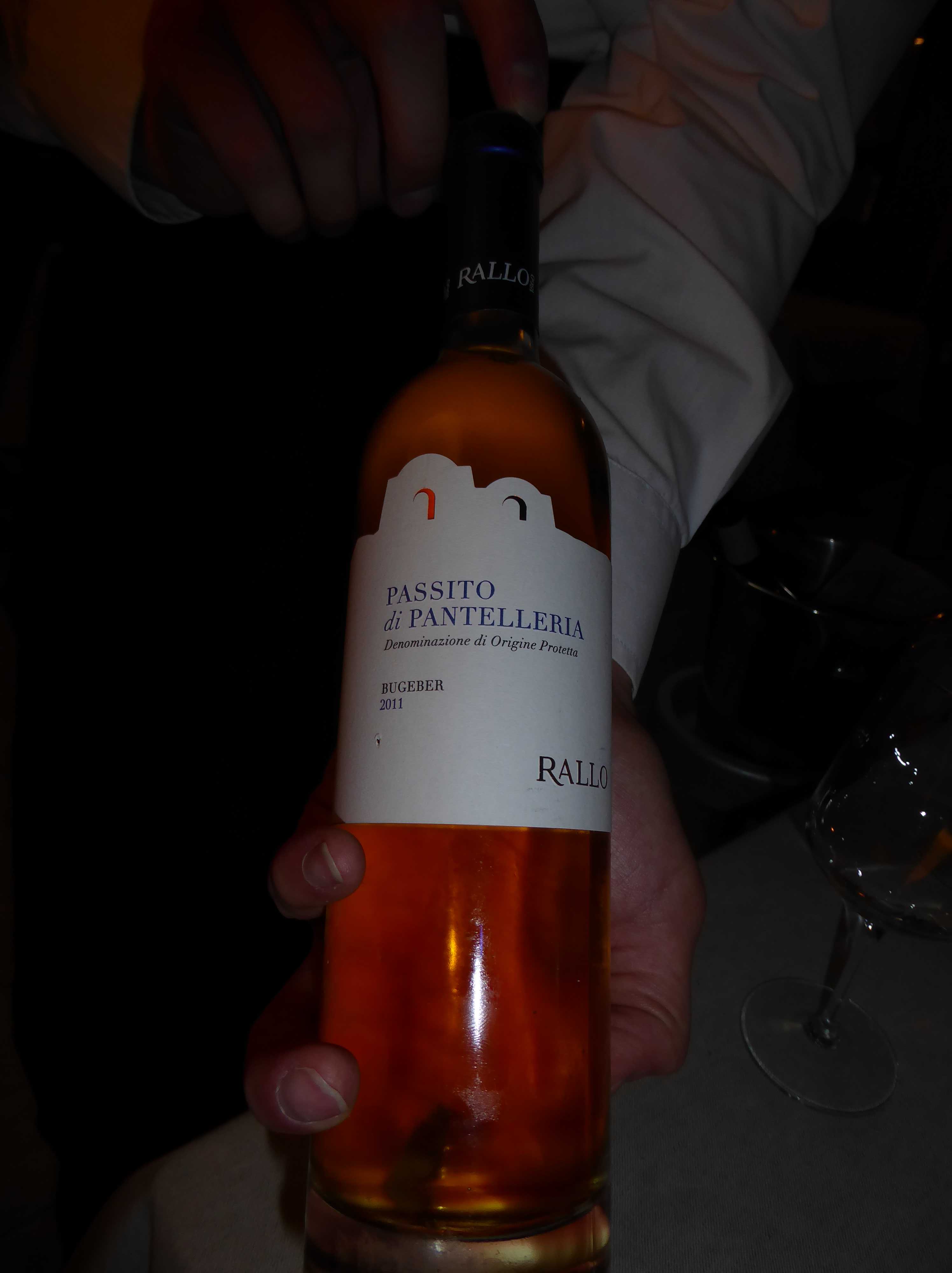
Notching up the ante just a little Emilano our sommelier recommends one of my favourite dessert wines the rare Passito Pantelleria from the tiny Italian island that is closer to Africa than Italy!

Its a heady fusion of honey and honeycomb which is a rich golden colour, with a palette of rich marmalade.

img_0930

With our second day in paradise drawing to a close we take a stroll around the gardens of the hotel serenaded by cicadas!